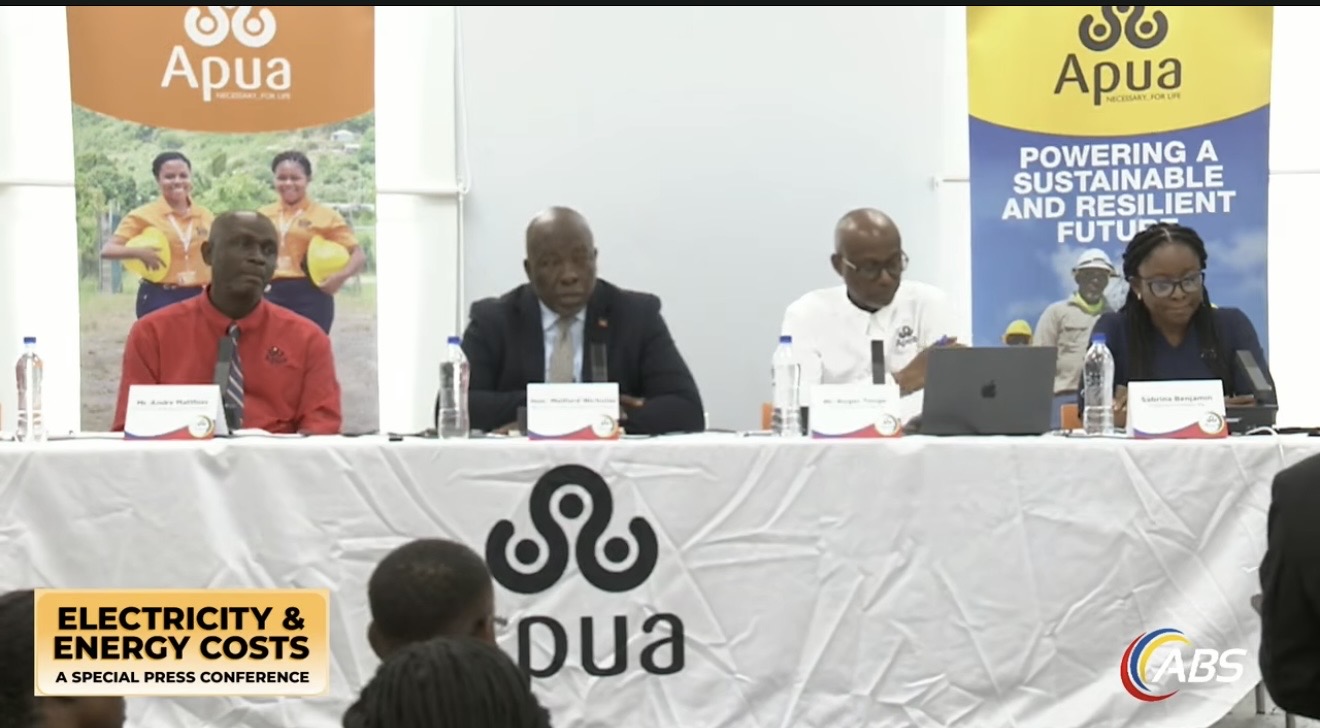
Residents across Antigua are facing steeper household electricity bills this season, with a combination of record-breaking heat, shifting energy usage behaviors, and global market volatility driving the unexpected increases, according to the Antigua Public Utilities Authority (APUA).
Andre Mathias, who leads APUA’s Electricity Business Unit, explained that the prolonged period of unusually high temperatures has forced local homeowners to run their air conditioning systems far longer than they do during average seasonal conditions. Even as many households have upgraded to more efficient inverter air conditioning units — models engineered to cut energy use compared to older traditional systems — the net effect has still been a net rise in total consumption for most homes. For households that previously went without any air conditioning at all, adding even an energy-efficient cooling unit adds entirely new energy demand that did not exist before, Mathias noted.
The APUA manager emphasized that consumer usage patterns are just as critical as appliance efficiency when it comes to determining monthly energy costs. He drew a parallel to the widespread adoption of compact fluorescent lightbulbs years ago: when these lower-energy bulbs hit the market, many consumers assumed their lower power draw meant they could leave lights on for extended periods without consequence, canceling out the energy savings the bulbs were designed to deliver. The same dynamic plays out with cooling systems today, Mathias said: even efficient units will drive up bills if they are run far more frequently than before.
Beyond local weather and consumer behavior, global market forces are also adding upward pressure to energy costs. Mathias confirmed that rising global fuel prices, stoked by ongoing geopolitical tensions around the world, are also contributing to higher electricity rates. These external price shifts are outside the control of the local utility authority, leaving APUA with limited ability to offset the increases for consumers.