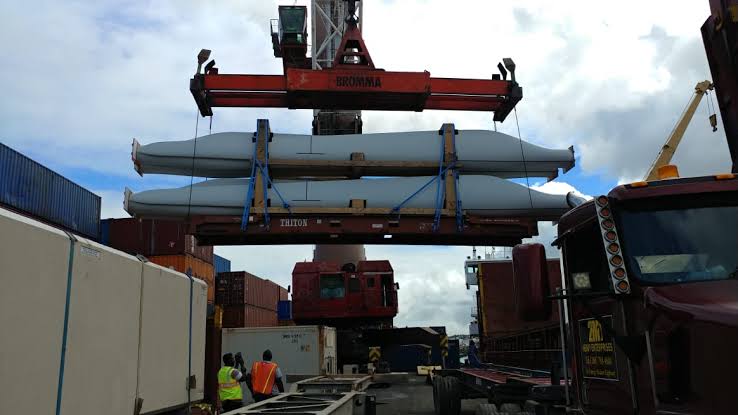
Against a backdrop of skyrocketing international fossil fuel prices that have strained energy budgets across small island nations, Antigua and Barbuda has launched renewed efforts to bring a long-stalled five-megawatt wind energy project online, according to the country’s Utilities Minister Melford Nicholas.
The initiative, which was first envisioned as a core part of the country’s clean energy transition, has been stuck in limbo for an extended period, with administrative and logistical delays halting progress for months. But following the appointment of new leadership at the nation’s Department of Environment and Department of Energy, government teams have restarted work to advance the project, Nicholas confirmed in a recent statement.
“Both teams are working fastidiously to ensure that we can bring on board that wind energy project,” the minister said, noting that the new leadership has injected fresh momentum into what had become a stagnant initiative. The project was originally engineered to deliver up to five megawatts of power to the national grid, a capacity that would make a meaningful contribution to cutting the country’s reliance on imported fossil fuels. However, Nicholas issued a cautious note: because the project’s equipment has been stored in Antigua and Barbuda for years without being deployed, ongoing inspection work could uncover hidden wear and tear that reduces the facility’s final operating output.
“Because of issues that may be uncovered, because the facilities have been here for quite a while, it may result in less [generation capacity],” Nicholas explained. Even if the final output falls short of the original target, he emphasized, the project will still represent a key step forward for the country’s energy diversification goals, and it will not be the only wind energy development the government pursues in the coming years.
The revitalized wind project sits at the center of a broader national push to shield consumers from volatile global fossil fuel markets. Right now, the Antigua Public Utilities Authority (APUA), the country’s main electricity provider, relies almost entirely on diesel and heavy fuel oil to generate power. That dependence has hit public finances hard in recent months: APUA’s monthly fuel bill jumped from 11 million Eastern Caribbean dollars (roughly $4 million USD) in January to 21.8 million Eastern Caribbean dollars by July, a near-doubling that has put massive pressure on the authority’s budget and threatened higher rates for consumers.
Nicholas argued that the recent sharp spike in fuel prices has laid bare the critical vulnerability of small island nations that rely entirely on imported fossil fuels to meet their energy needs. That vulnerability has given the clean energy transition a new urgency, he said, with policymakers no longer able to delay action. “The urgency is now,” Nicholas stressed. “It’s a fierce urgency because we cannot sit idly by and allow another fuel spike to occur.”
Beyond the revived wind project, APUA is also exploring the development of a large-scale solar energy facility, with plans to integrate utility-scale battery storage to stabilize the national grid. Andre Mathias, APUA’s Electricity Business Unit Manager, explained that adding variable renewable energy sources like wind and solar requires careful grid planning, as their output fluctuates with weather conditions. To maintain consistent, reliable power for homes and businesses, Mathias said targeted upgrades to the national grid and widespread battery storage will be essential to balance variable renewable output.
Ultimately, Nicholas said, Antigua and Barbuda is working to build a hybrid energy system that combines wind power, solar generation, battery storage, and liquefied natural gas. This mixed system will cut the country’s dependence on fossil fuels dramatically, he noted, but will not eliminate the use of carbon-based fuels entirely in the near term, as the nation gradually scales up its renewable energy capacity.