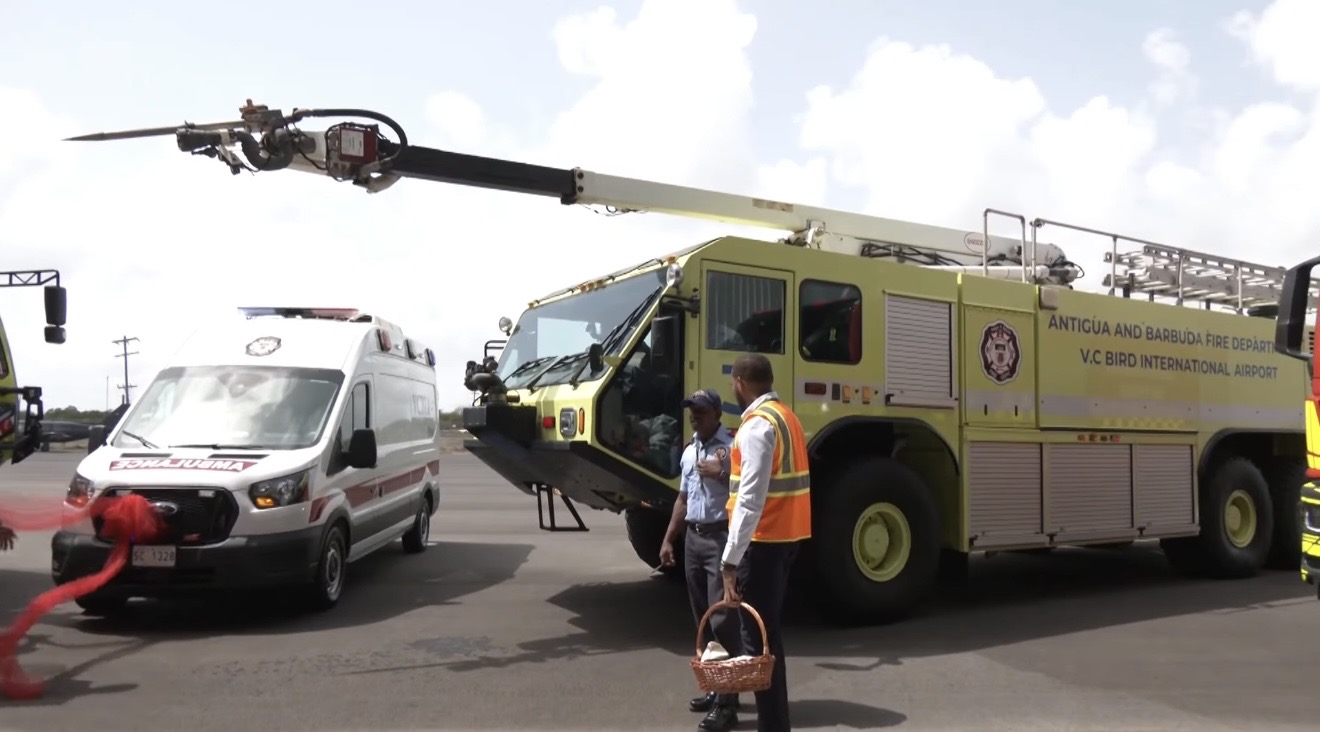
V.C. Bird International Airport, a key air gateway for the Caribbean nation of Antigua and Barbuda, has significantly boosted its emergency readiness capabilities through the addition of purpose-built rescue and firefighting vehicles, plus a fully outfitted medical ambulance, government officials confirmed this week.
The total investment in the new safety infrastructure amounts to roughly US$1.3 million, with $1.2 million allocated to the two specialized firefighting vehicles and an additional $100,000 covering the cost of the new ambulance. Among the new firefighting assets is a Volkan Lion Class 6×6 truck, engineered to carry up to 14,000 liters of water for large-scale aircraft emergency responses. The fleet also includes a high-reach extendable turntable vehicle, which is backed by two supporting water tankers to ensure uninterrupted water supply during extended emergency operations.
Charles “Max” Fernandez, the country’s Minister of Tourism and Civil Aviation, emphasized that this strategic upgrade is a clear reflection of the national government’s unwavering commitment to upholding the highest standards of safety and emergency preparedness at the island nation’s primary international airport. As a popular tourism destination that relies heavily on air travel to welcome visitors from around the globe, maintaining top-tier airport safety is a core policy priority for Antigua and Barbuda’s administration.
Deputy Police Commissioner Vivian Parker added that the new safety equipment sends a tangible, actionable promise to all passengers, commercial airline operators, and local residents: that airport safety will remain a top public safety priority for authorities moving forward. Prior to this upgrade, the airport’s firefighting fleet faced capacity gaps that limited its ability to handle large aircraft emergencies aligned with global operational standards.
With the arrival of the new vehicles, the airport is now fully equipped to support Category 9 airport operations, a global classification that corresponds to handling the world’s largest commercial aircraft. Beyond meeting international safety classification requirements, the new fleet will also cut critical response times during aircraft-related emergencies, a change that is expected to save lives and reduce property damage should a serious incident occur at the airport.