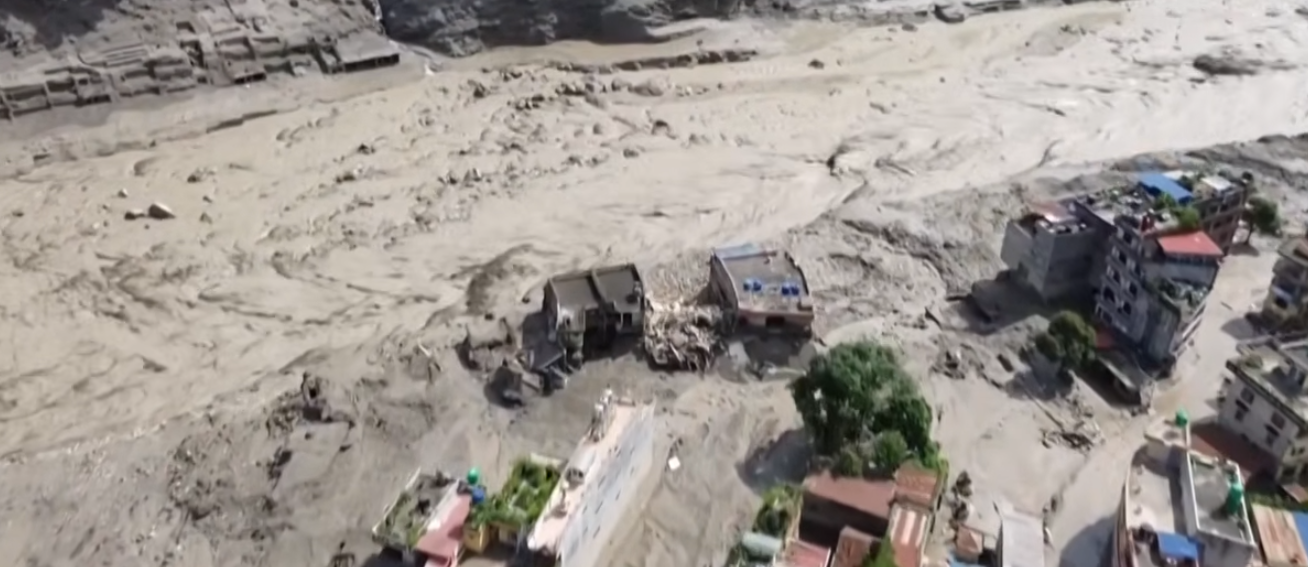
A devastating natural disaster has unfolded across the China-Nepal border, where catastrophic flash flooding has claimed the lives of more than 150 people and left hundreds unaccounted for, according to multiple international news reports. The unfolding crisis began when a massive landslide blocked the course of the Bhote Koshi River, sending a powerful wall of water surging downstream from Tibet into Nepali territory. Glaciologists suggest the initial landslide may have been triggered or amplified by a collapsing glacier that broke free from its mountain hold and crashed into the valley below.
The scale of human impact is staggering. On the Chinese side of the border, official state media has confirmed three fatalities and 265 people missing in the Tibet Autonomous Region. A destructive mudslide also hit Gyirong Port, a key border crossing, prompting Chinese President Xi Jinping to order all-out search and rescue operations to locate trapped and missing people. Dramatic aerial footage captured by rescuers shows floodwaters engulfing entire rural villages, with military helicopters deployed to pluck stranded survivors who had climbed onto rooftops to escape the rising current.
Among the missing are dozens of foreign nationals, drawn to the region which is a popular destination for Himalayan trekkers and religious pilgrims. Citing Nepal’s national tourist board, BBC News reports that more than 100 Indian nationals, 33 UK citizens, and between 47 and 54 Americans are among those unaccounted for, alongside more than 100 local Nepali people. Nepali police officers, army personnel, and utility workers who were responding to the initial disaster are also counted among the missing.
As cross-border rescue teams continue working around the clock to locate survivors and assess the full scope of the destruction, authorities are warning of an imminent second flood that could worsen the crisis. Qianggong Zhang, head of climate and environmental risks at the International Centre for Integrated Mountain Development, told AFP that a large blockage from the original landslide remains stuck in the river upstream along the shared border, creating conditions for another downstream water surge.