The small Caribbean island of Dominica is often framed as a postcard-perfect tropical paradise, but for those who grew up in its mid-20th century communities, it was far more than that: it was a vibrant, self-sustaining nation brimming with agricultural innovation, local manufacturing, cultural vitality, and a deeply ingrained culture of dignified, productive work. Today, as widespread dependency on political handouts and growing idleness erode the fabric of Dominican society, one native son looks back on the island’s industrious past to sound a clarion call for renewal.
The author frames his critique around a deliberate reworking of a classic economic concept: the “beggar-thy-neighbour” policy, a short-sighted strategy that lifts one nation’s fortunes at the expense of others. In modern Dominica, he argues, this principle has been turned inward. A ruling oligarchy has adopted a “beggar-the-nation” ethos: neglecting core domestic sectors like agriculture and manufacturing to enrich a small connected circle, while leaving the broader population mired in dependency that erodes the national pride and initiative once defined Dominican life.
Looking back on mid-20th century Dominica reveals a bustling, productive economy built from the ground up. The island was once the British Empire’s leading lime producer, with massive processing operations at Bath Estate turning out cordial, juice, and aromatic lime oil for global markets. Rows of tobacco at Hillsborough Estate fed the local J.A.S. Garraway & Company, where the author earned his first wages as a nine-year-old summer worker in the 1970s. Before household refrigeration became widespread, a bustling ice factory next to Goodwill Junior High supplied two-foot ice blocks hauled away in sawdust-dusted crocus bags for local ice cream vendors, who turned out homemade batches in hand-cranked tubs with names like “Ma Taste Me” walking the streets of Roseau selling their treats.
Adjacent to the ice factory stood a massive seasonal citrus boxing plant, where hundreds of trucks loaded with grapefruit and oranges from across the island’s valleys and hillsides rolled in annually for export to the United Kingdom. Local children even repurposed the protective fruit wrapping paper to build summer kites, blending industrial activity with childhood creativity. A DOMTRAC dealership displayed towering bulldozers and heavy machinery, a tangible symbol of the young nation’s ambition to build progress, while Karam Beverages, the local soft drink factory, became a childhood playground for local schoolchildren who would beg for rejected bottles of sweet fizz during recess, staining their uniforms with purple, red, and orange in what they saw as a badge of joy.
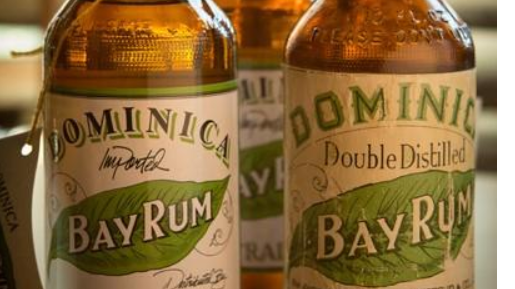
Small local enterprises were equally foundational to Dominican dignity. Long before global fast food chains and imported processed snacks flooded local markets, women vendors sold homemade treats like coconut tablets, tamarind balls, and local doughnuts, keeping money within local communities and sustaining a culture of self-made enterprise. Larger industries dotted the island: a Coca-Cola plant on Valley Road, Ju-C and 7-Up bottling operations on Goodwill Road, a network of local rum distilleries producing beloved brands from Belfast to Bay Rum, and master boat builders at the mouth of Portsmouth’s Indian River turning out 70 to 80-foot motorized cabin vessels, a craft that survives today only in the hands of octogenarian builders like Neville Wade.
One landmark of Dominican industrial ambition was Eric’s Bakery, founded by engineer Eric Shillingford after he returned home from studies in England. Built on the legacy of Shillingford’s mother and stepfather, it became the Eastern Caribbean’s first automated bread and cake factory, delivering a range of baked goods across the island via dedicated bread vans and offering a vision of homegrown progress.
Agriculture was also organized around scientific innovation and self-sufficiency. The Government Stock Farm, located beneath the WIBS radio antenna on Stock Farm hill, operated as a living laboratory: grazing Holstein and Zebu cattle, raising 600-pound Scottish Saddleback pigs, cultivating tilapia, and supplying farmers across the island with breeding stock to grow their own operations. In northern Dominica, vast banana plantations – the island’s “green gold” – employed a thriving rural class that earned a living independent of political patronage, with crop dusting planes regularly roaring overhead to tend the extensive crops. Even beyond agriculture, the island supported a range of resource industries: pink pumice mining at Tarish Pit for regional terrazzo and tile production, a Canadian-Dominican timber venture at Canefield processing giant gommier trees, and a Dominica Coconut Products soap factory in Mahaut that earned international acclaim, proving the small island could compete in global markets.
Mid-century Roseau was also defined by civic order and disciplined public life. A truancy officer named Frank patrolled the streets on bicycle, rounding up children skipping school to loiter by the river or the Botanic Gardens, while sanitary inspector Solomon “Town Board” enforced strict cleanliness rules that kept the capital healthy. When the Dominica Cadet Corps, a decades-old youth development program that folded after independence, was revived in 2000 under Prime Minister Rosie Douglas, the author and other veteran leaders worked to reverse growing waywardness among young people, though the program has struggled for resources. The author argues more investment is needed in such character-building institutions, from Scouts and Girl Guides to 4H Clubs, that once gave young people clear, noble purpose.
Cultural life was equally vibrant and rooted in local identity. Two local cinemas screened everything from Hollywood blockbusters to groundbreaking African American and Caribbean films, while Creole cultural activist Mable “Cissie” Caudeiron led a revival of traditional Dominican music and dance that spawned generations of beloved local performance groups, from the Siffleur Montagne Chorale to Alwin Bully’s People’s Action Theater. These cultural leaders reinforced the core Dominican value: that honest work, whether on stage or in the fields, builds national strength, while dependency erodes it. That ethos was embodied by Premier Edward Oliver LeBlanc, a visionary leader and committed advocate for self-reliance who prioritized public education, agricultural development, and industrial growth with rare integrity.
Music also became a core pillar of national identity, with generations of local bands – from the mid-century Gaylords Power Union and Swinging Stars to the later cadence-lypso explosion of Exile One and Grammacks – creating a uniquely Dominican sound that served as a source of national pride, far from the debased commercial music that dominates local airwaves today.
For the author, these values were not abstract: they were lived from childhood. Raised in a civil servant family, he tended a family garden and raised livestock from elementary school through his early teaching career, stepping into the role of head of household as a teenager when his father was stationed away and his brothers studied abroad. Young people of his generation were almost never idle, and the discipline of hard work carried many to success overseas as model representatives of their island, far from the drug and gang activity that plagues many communities today.
The author lays the blame for modern Dominica’s crisis of dependency squarely at the feet of a new generation of short-sighted, self-serving political leaders. Instead of building on the foundation laid by earlier generations, they have prioritized patronage over progress: importing foreign workers for major public projects while Dominican youth idle waiting for handouts, enriching their inner circles while abandoning core domestic sectors, and trading long-term national prosperity for short-term personal gain. This has created a culture of spiritual beggary that erodes the very foundations of national strength.
The Dominica of the past was no perfect postcard paradise, but it was a nation built on honest work, dignity, and self-reliance. Under the mid-century Dominica Labour Party government, the island advanced with a social democratic commitment to lifting up all working people, not just political insiders. To reverse the current decline, the author argues, Dominica must reject the culture of dependency and revive the self-reliant ethos of the island’s greatest leaders. Hard, productive work frees the mind and builds national power, while idleness and handouts corrode a nation from within. The legacy of an industrious, dignified Dominica is still there to reclaim – before it is lost forever.