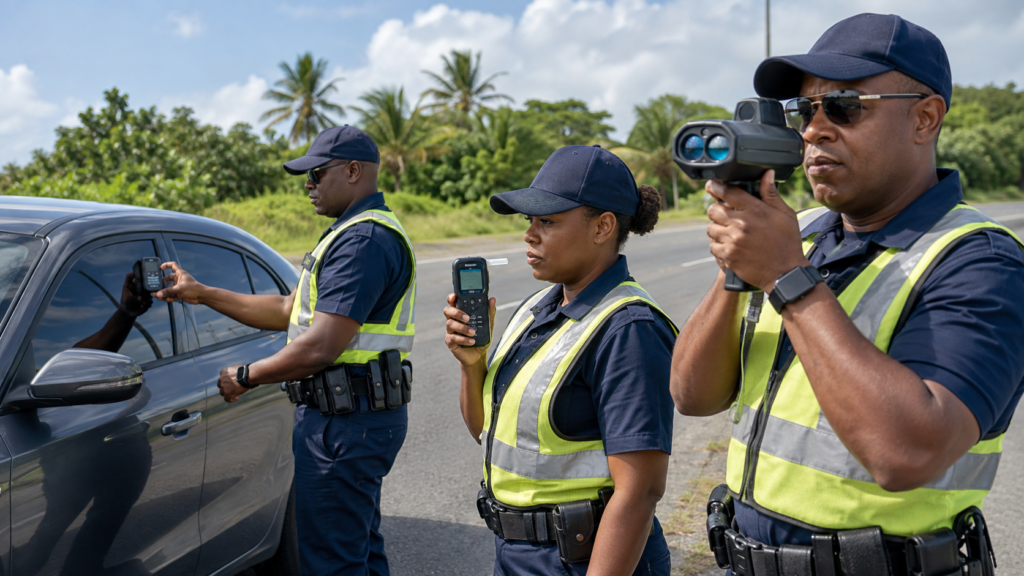
The Caribbean nation of Antigua and Barbuda is moving forward with a targeted initiative to boost road safety across the country, after its Cabinet greenlit a $30,000 investment in modern traffic enforcement technology. The funding comes as local law enforcement prepares to ramp up a crackdown on three high-risk driving violations: illegal excessively dark vehicle window tint, speeding, and drunk driving.
Maurice Merchant, the country’s Director General of Communications, confirmed the spending decision to reporters at a post-Cabinet press briefing held on Thursday. Under the approved allocation, the Royal Police Force of Antigua and Barbuda will take delivery of 62 new pieces of specialized equipment: 25 portable tint meters, 25 professional-grade breathalyzers, and 12 handheld speed detection radar devices.
The expenditure was endorsed by the nation’s top governing body following a formal recommendation from Attorney General and Public Safety Minister Sir Steadroy Benjamin. The core goal of the equipment upgrade is to bolster the operational capacity of the Police Traffic Department, enabling officers to more consistently and accurately enforce existing national traffic legislation and reduce preventable road incidents.
This latest approval builds on a directive Cabinet issued just one week prior, which ordered police to launch a national public education and enforcement campaign targeting non-compliant vehicle tint. Under that earlier order, officers are instructed to immediately remove illegal tint whenever they find it during traffic stops.
Cabinet decision-makers were briefed on the urgent need for new equipment amid growing concerns over rising traffic accident rates, with excessive speed and alcohol-impaired driving consistently cited as major contributing factors in severe, often fatal, road collisions across the islands. Law enforcement leadership has also highlighted growing safety risks stemming from the widespread use of overly dark tint: heavily tinted windows block officers’ ability to see into vehicles during stops, creating unnecessary hazards for personnel carrying out routine and high-risk enforcement duties.
The 25 new tint meters will eliminate subjective guesswork from compliance checks, allowing officers to take precise, objective measurements of window tint darkness to confirm whether vehicles meet the legal limits set out in Antigua and Barbuda’s traffic code. The upgraded professional breathalyzers will significantly improve the force’s ability to accurately test motorists suspected of driving under the influence of alcohol, while the handheld radar units will give patrol officers a portable, reliable tool to identify speeding motorists on all types of roads across the country.
Overall, the acquisition of new enforcement technology marks a key pillar of the Antigua and Barbuda government’s broader ongoing effort to overhaul traffic enforcement and crack down on reckless, dangerous behavior that puts all road users at risk.