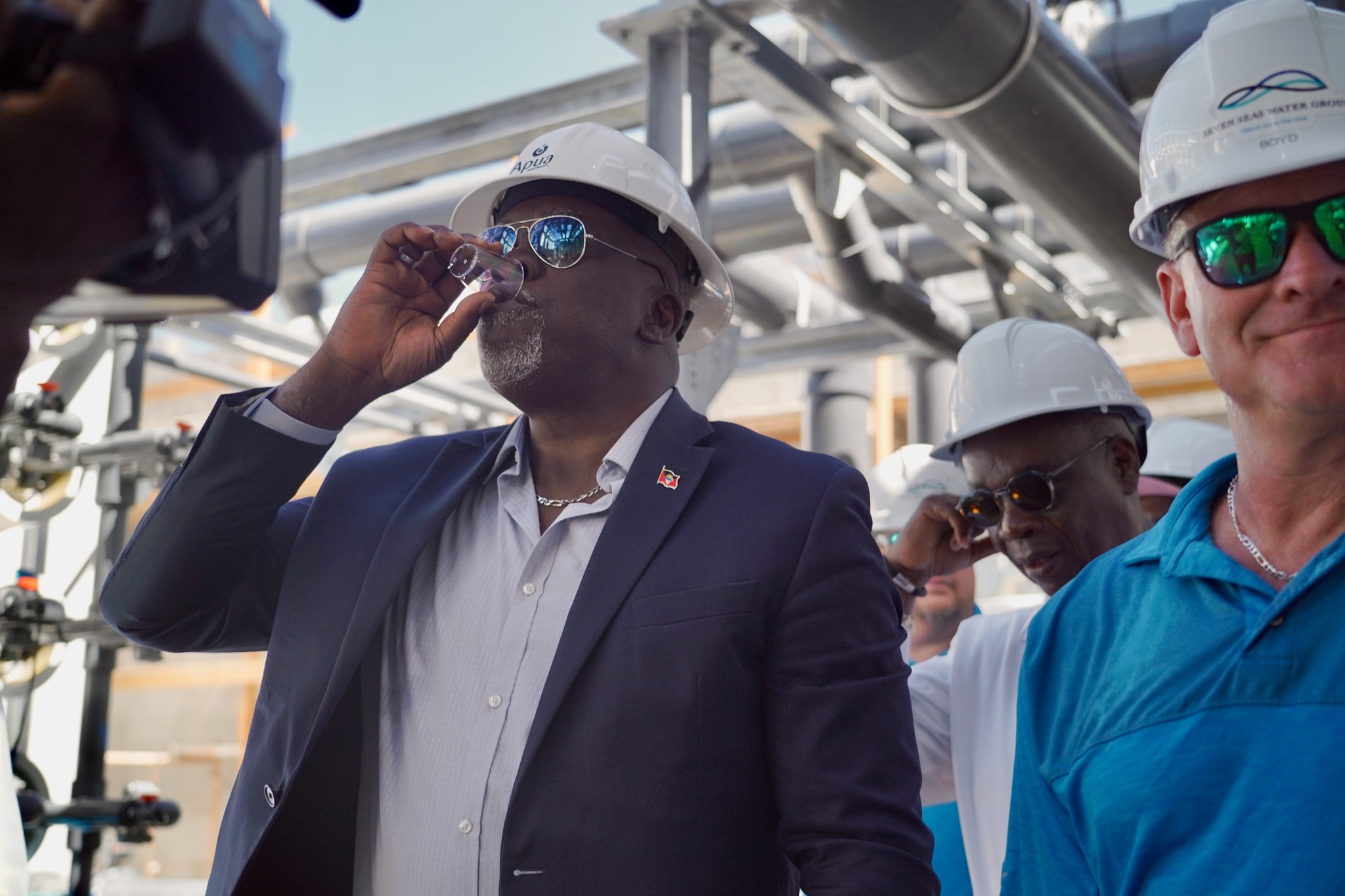
A critical infrastructure project aimed at easing Antigua’s persistent water crisis has hit an unexpected setback, with the completion of the new Crabbes reverse osmosis desalination plant now facing a possible two-month delay. Utilities Minister Melford Nicholas confirmed that the project’s handover, originally targeted for December, will likely be pushed to February, triggered by a six-week holdup in the delivery of essential plant components.
The Strait of Hormuz, a major global shipping chokepoint that the original cargo route passed through, has faced widespread transport disruptions in recent weeks. Nicholas explained that key equipment for the facility is being manufactured and shipped from Dubai, forcing project managers to reroute the shipment overland after the original maritime route became unviable. This last-minute logistics change has added a full six weeks to the component delivery timeline, creating a ripple effect that pushes back the entire construction schedule.
Speaking on the government’s weekly public affairs radio program “Taking Stock” on Tuesday evening, Nicholas emphasized that the delay is not a fatal setback for the long-term viability of the project. However, he acknowledged that the timeline shift means the government will miss its original publicly announced completion target. “Whereas I promised the Cabinet that we could deliver the 1.6 million gallons in December, it may push us back a little bit towards February,” he told listeners.
Once fully operational, the new desalination plant is designed to add 1.6 million gallons of potable water to Antigua’s national supply every day. The facility forms a core part of the government’s broader strategy to expand national water production capacity and reduce the country’s heavy dependence on rainfall, which has left the public grid repeatedly vulnerable to prolonged drought conditions.
The timing of the delay is particularly challenging, as Antigua is already grappling with severe drought that has cut the country’s total daily water output by roughly 2 million gallons. The Antigua Public Utilities Authority (APUA) currently produces around 9 million gallons of drinking water per day, most of which already comes from existing reverse osmosis facilities, after widespread drought depleted much of the nation’s accessible surface and groundwater reserves.