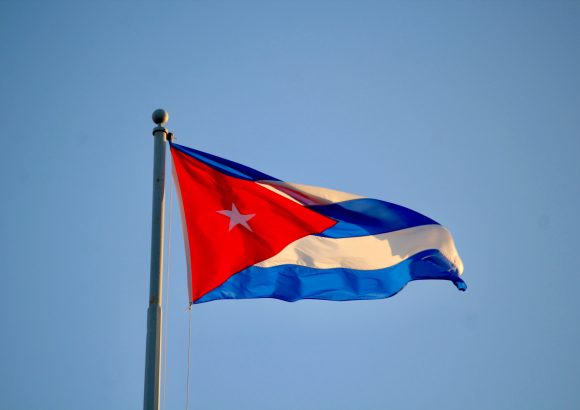
When a group of expelled Cuban diplomats touched back down on home soil in Havana this week, they did not arrive as disgraced representatives—instead, they framed their forced expulsion from the Dominican Republic as a politically motivated attack orchestrated by outside forces, and a testament to their unwavering commitment to Cuban principles.
Odín Ysla Hernández, one of the expelled Cuban diplomatic officials, described the Dominican government’s order to remove his delegation as nothing less than an imperial maneuver, designed to erode Cuba’s standing and prestige across the global stage. In remarks delivered shortly after his arrival, he emphasized that he and his fellow expelled diplomats had returned home with every part of their professional duty fulfilled, going so far as to call the expulsion a badge of honor that reaffirmed their loyalty to the core tenets of the Cuban Revolution.
The returning delegation received an official welcome from Cuba’s Ministry of Foreign Affairs, where senior Cuban officials pushed back against the expulsion, arguing that the Dominican government had failed to provide any credible, sufficient justification for the drastic measure. Cuban leaders stressed that the entire diplomatic delegation had operated strictly in line with the terms of the Vienna Convention on Diplomatic Relations, as well as all local laws governing foreign diplomats within the Dominican Republic, and praised the delegation’s professional conduct throughout their posting.
Josefina Vidal Ferreiro, Cuba’s Deputy Foreign Minister, laid out the Cuban government’s formal assessment of the incident, saying the expulsions were a direct outcome of relentless pressure from the United States. She argued that the move fits into a long-running Washington-led strategy to isolate Cuba diplomatically, and cut off the island nation from its key regional partnerships across Latin America and the Caribbean.
The sequence of events began on August 13, when the Dominican government issued an order requiring nine Cuban officials and their immediate family members to leave the country within a tight three-day window. That deadline expired on August 16, and in total, 21 people—including the accredited diplomats, their spouses, and their children—completed their return to Cuban territory.
Cuba’s national government has issued a formal condemnation of the Dominican decision, calling it a clear example of the Dominican Republic’s political subordination to U.S. interests. Cuban officials also pointed to a series of recent public and private disagreements between the governments of Santo Domingo and Havana as evidence of a worrying shift in the Dominican Republic’s official policy toward Cuba, one that has strained long-standing bilateral ties between the two Caribbean nations.