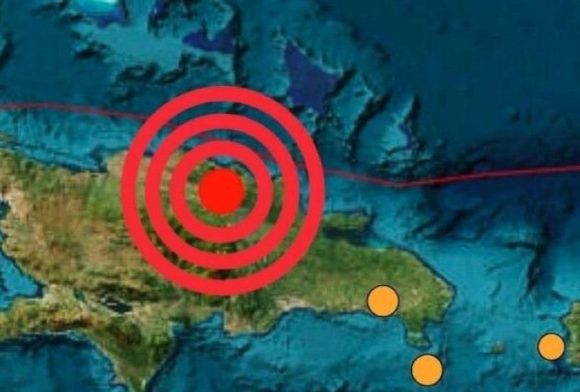
Recent devastating back-to-back earthquakes measuring above magnitude 7.0 that struck the Andean regions of Venezuela and Colombia in just 50 days have sent ripples of anxiety across the Dominican Republic, reviving long-held collective fears over what a similar seismic event could mean for the Caribbean nation. Local seismic experts are now sounding the alarm, calling for urgent preventive action to shore up the country’s built environment and close critical gaps in seismic preparedness.
Leonardo Reyes Madera, director of the National Office of Seismic Evaluation and Vulnerability of Infrastructure and Buildings (ONESVIE), notes that no nation across the globe can claim to be fully ready to withstand a major earthquake. Even so, he argues that the Dominican Republic must prioritize immediate assessments and structural reinforcement for critical public infrastructure, including schools, hospitals, and other strategic facilities that form the backbone of the country’s emergency response and daily services.
Madera, a leading engineering expert in seismic risk, told reporters that the Dominican Republic already has clear evidence of the challenge it faces. Even in the absence of major seismic activity, the country has recorded multiple unprovoked building collapses, highlighting pre-existing structural vulnerabilities that would be catastrophic during a major quake. “The collapses we have recorded in the country in different buildings, even without an earthquake having occurred, allow us to understand the challenge we have ahead of us before facing a major seismic event,” he said.
Against this backdrop, Madera emphasized that proactive prevention must take center stage in national disaster risk management policy. Currently, three core priorities guide the country’s work: ongoing assessment of seismic vulnerability across all public and private infrastructure, expanded technical training for seismic assessment professionals, and sustained public awareness campaigns to build a national culture of seismic preparedness.
As part of a multi-year assessment initiative running from June 2024 to June 2026, ONESVIE has already completed 4,718 vulnerability evaluations across the country. These assessments cover 3,345 buildings and 833 pieces of transport infrastructure, most notably bridges that are critical to national connectivity. Of the evaluated buildings, 2,853 are public facilities and 492 are private, with the highest concentration of assessments in heavily urbanized provinces including the National District and 31 other high-density infrastructure territories. The evaluated structures span a full range of critical public and private assets: health facilities, primary and secondary schools, universities, government administrative buildings, security and emergency facilities including fire stations, public service hubs, community centers, and residential housing.
The Dominican Republic’s geographic location puts it at inherently high seismic risk: it sits in a highly active tectonic zone where the Caribbean Plate and North American Plate interact continuously, making major earthquakes a constant geologic threat. Despite this, many members of the public underestimate the risk, a complacency Madera calls the country’s biggest barrier to preparedness. “That’s our first obstacle. The fact that, since earthquakes aren’t frequent, we think the earth won’t shake here,” he warned during a recent visit to leading Dominican outlet Listín Diario.
During that appearance, Madera detailed the most at-risk structure types across the country. Buildings with pre-existing structural deficiencies, those constructed with substandard building materials, and structures built on unstable soil face the highest risk of severe damage or total collapse during a major quake — and this includes many of the country’s hospitals and schools, which serve large groups of people every day. Common vulnerabilities already identified in assessments include water leaks caused by deteriorating concrete, detached exterior cladding, exposed steel reinforcement, and foundation undermining. For educational facilities in particular, inspectors have repeatedly found dangerous captive columns, structural supports whose length is restricted by overlying structural elements, leaving them far weaker and more prone to failure during seismic shaking.
To address these gaps, Madera has proposed the development of a more advanced national seismic risk monitoring and mitigation system. He also called for expanded training and certification for professionals affiliated with the Dominican Network of Structural Evaluators (REED), the national body that oversees infrastructure vulnerability assessments. Currently, ONESVIE has certified 950 REED professionals, but expanding this workforce will be critical to scaling up the country’s ability to identify and address structural vulnerabilities across all regions before a major event occurs.