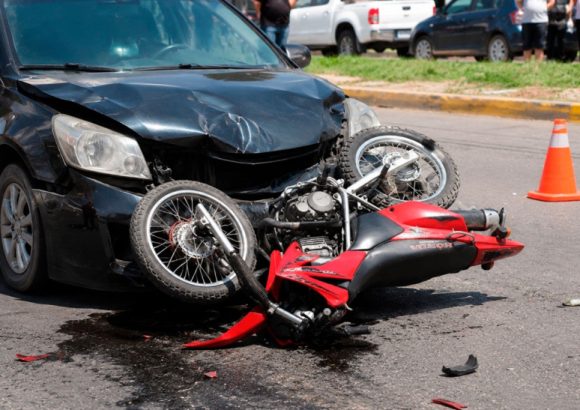
SANTIAGO, Dominican Republic — A decades-long rising trajectory of workplace and commuting-related accidents has reached a new high in the Dominican Republic, with latest official data showing total incidents hitting 35,670 in 2025, and motorcycle use for daily work commutes standing out as the single largest source of risk.
New figures released by the Dominican Institute for Prevention and Protection of Occupational Risks (IDOPPRIL) lay bare the steady growth of occupational safety threats across the country. Annual incident counts have climbed consistently year over year: 25,913 recorded in 2020, 28,733 in 2021, 28,800 in 2022, 29,878 in 2023, and 33,130 in 2024, before reaching the 2025 peak of 35,670.
Agustín Burgos, executive director of IDOPPRIL, broke down the 2025 data: roughly 20,000 of the incidents occurred directly on job sites, while the remaining 15,000 took place during workers’ commutes to or from their workplaces. Of all commuting accidents reported last year, more than 80% involved motorcycles, a statistic Burgos tied to the overwhelming prevalence of two-wheeled vehicles in the country’s overall transportation fleet. Motorcycles currently account for more than 52% of all registered vehicles in the Dominican Republic, and a large share of working residents rely on them for daily travel to their jobs. Among all provinces, Santiago — the country’s second-largest city — ranks second nationwide for the number of motorcycle-related commuting accidents reported to IDOPPRIL.
Aggregated data spanning from 2019 to 2025 reinforces the scale of the crisis: over that seven-year window, a total of 224,585 workplace and commuting accidents were reported, alongside 14,462 documented occupational diseases, bringing the combined total of work-related health and safety incidents to 239,047. Of the 86,863 total commuting accidents recorded in this period, more than half — 45,899 cases — were linked to motorcycle use.
When highlighting economic sectors with disproportionately high risk, Burgos pointed specifically to the country’s free trade zones, where a large majority of the workforce depends on motorcycles to get to and from their shifts daily. “We see a lot of companies in Free Trade Zones, where there is a significant segment of the population, and their motorcycle, with rare exceptions, is their means of transportation,” Burgos explained.
Beyond acute accidents, IDOPPRIL also flagged ongoing gaps in addressing occupational diseases. Burgos acknowledged that widespread underreporting has made it impossible to pin down an accurate count of affected workers. Among the most commonly documented work-related conditions are infections and chronic respiratory disorders tied to specific job tasks. To address this gap, Burgos noted that authorities need to update the national catalog of occupational diseases and improve outreach to medical providers, helping clinicians recognize when patients’ health conditions are tied to their professional activities.
Work-related injuries and illnesses also place a substantial economic strain on the country’s occupational safety system. By the end of 2025, IDOPPRIL had accrued RD$1,378.9 million in operational expenses, against a revised annual budget of RD$2,081.2 million. While the agency did not break out how much of this spending was directly allocated to accident response and worker compensation, the overall expenditure figure underscores the significant public cost of the rising incident trend.
Burgos emphasized that proactive occupational risk management delivers dual benefits, protecting both worker well-being and company productivity by reducing unplanned absenteeism. “When you manage a workplace risk, you’re not only preventing illness in that worker, but you’re also supporting the economic stability of that company,” he said. Looking forward, the top priority for national authorities remains building a widespread culture of prevention that engages both employers and employees, a challenge that sits at the center of efforts to reverse the years-long upward trend in work-related harm.