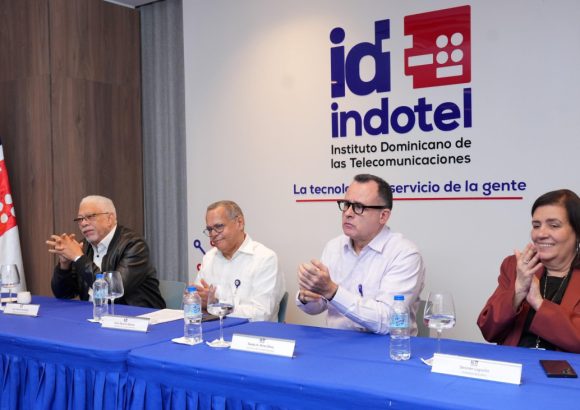
SANTO DOMINGO — As the Dominican Republic undergoes rapid digital transformation, the nation’s top telecommunications regulatory body has unveiled a sweeping new piece of legislation designed to bring the country’s outdated sector rulebook into the 21st century. The Dominican Institute of Telecommunications, widely known as Indotel, has formally presented its proposed General Law on Telecommunications, Digital Infrastructure and Connectivity, a framework crafted to address gaps in current regulation that have emerged alongside new technological advances.
Built as an update to the country’s existing 1998 Telecommunications Law (Law 153-98), the new draft integrates clear regulatory provisions for critical modern technologies and infrastructure that were not comprehensively addressed in the original legislation. This includes foundational assets such as fiber optic networks, next-generation advanced mobile communications, satellite connectivity, international submarine cables, and large-scale data centers — all core components of today’s digital ecosystem.
Fausto Rosario Adames, an Indotel board member speaking on behalf of institute chairman Guido Gómez Mazara, outlined the draft’s intentional scope: regulation is concentrated exclusively on telecommunications networks, core services, physical infrastructure, and associated critical resources. Notably, the legislation excludes oversight of digital content, general e-commerce operations, and digital platforms that do not have direct ties to the core telecommunications sector.
The proposed law introduces a suite of structural reforms to streamline sector operations and boost competitiveness. Key measures include the implementation of a unified concession system for operators, a single centralized digital portal to cut red tape and speed up infrastructure deployment, mandates for increased network sharing across providers to reduce redundant buildout, updated rules to strengthen fair market competition, and more efficient, data-driven management of the country’s finite radio spectrum.
Consumer protection is also a central priority of the new framework. The draft codifies strict requirements for consistent service quality and continuity, mandates transparent billing practices to eliminate hidden fees, preserves and expands consumer right to number portability, enforces accessibility standards for users with disabilities, and establishes improved, streamlined mechanisms for resolving customer complaints. Additionally, the legislation creates a dedicated cybersecurity regime specific to the telecommunications sector, designed to protect the integrity, availability, and resilience of critical national communications networks and infrastructure against growing cyber threats.
Indotel confirmed that the completed draft has already been submitted to the Executive Branch’s Office of Legal Counsel for review. Before the bill is forwarded to the Dominican Congress for formal legislative consideration, it will undergo a multi-stakeholder consultation process, gathering feedback from telecommunications operators, residential and business end users, academic researchers, industry experts, technology entrepreneurs, and civil society organizations across the country.
The ultimate goal of this regulatory update, Indotel officials emphasized, is to deliver a refined, widely supported proposal that lays a solid legal foundation for building a more connected, inclusive, innovative, and globally competitive Dominican Republic that can adapt to future technological shifts.