Against a backdrop of growing global recognition for Indigenous communities’ rights and legacy, the Caribbean Community (CARICOM) is joining the international community to observe the 2026 International Day of the World’s Indigenous Peoples, shining a light on the lasting resilience, enduring heritage, and irreplaceable contributions of Indigenous populations across the Caribbean and the globe.
For the Caribbean region, the wisdom, cultural traditions, and ongoing contributions of Indigenous communities form an inseparable foundation of the area’s collective shared history. CARICOM emphasizes that elevating Indigenous voices, supporting Indigenous leadership, and advancing Indigenous prosperity are non-negotiable prerequisites for building an equitable, sustainable regional community.
This year’s official United Nations observance theme — “Honouring Indigenous Midwives: Safeguarding Life and Well-being” — puts a spotlight on the critical role Indigenous knowledge systems play in fostering healthy communities and preserving cultural identity across successive generations. Indigenous midwives, the theme notes, act as three core pillars for their communities: custodians of centuries-old ancestral wisdom, trusted frontline caregivers, and stewards of cultural traditions that bind families and neighborhoods together. The intergenerational knowledge they carry embodies a holistic perspective on health, life, and the deep interconnectedness between people, their culture, and the natural world that surrounds them.
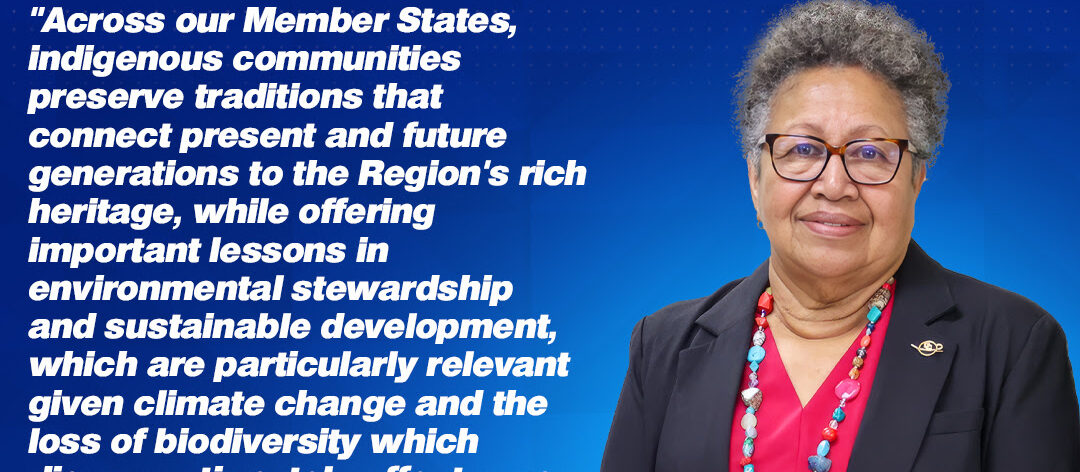
As the original stewards of Caribbean lands, ecosystems, and natural resources, Indigenous Peoples carry centuries of refined knowledge that continues to strengthen regional societies and reinforce collective cultural identity. This knowledge spans sustainable agricultural techniques, traditional medicinal practices, endangered languages, unique cultural expressions, and community governance models. Across CARICOM’s member states, Indigenous communities work tirelessly to preserve traditions that tie current and future generations to the region’s rich ancestral heritage, while also offering critical, actionable insights into environmental stewardship and sustainable development. These insights carry particular urgency today, as climate change and accelerating biodiversity loss hit Indigenous communities disproportionately harder than most other populations.
To advance equity for Indigenous populations across the region, CARICOM recently relaunched its landmark policy framework: the *CARICOM Ten-Point Plan for Reparatory Justice: A Manifesto for the Coming Enlightenment*. The updated document reinforces the regional bloc’s call for the creation of a dedicated Indigenous Peoples Development Programme, designed to foster thriving Indigenous communities by expanding access to social and economic development opportunities. CARICOM stresses that addressing historical and ongoing inequities faced by Indigenous populations will require intentional, meaningful dialogue and policy frameworks that center and respect Indigenous rights, dignity, and self-determined aspirations.
As the regional bloc marks this annual observance, CARICOM’s leadership is calling on all stakeholders across the Caribbean to join in celebrating the rich cultural diversity of the region’s Indigenous communities, honor the critical contributions of Indigenous midwives and other traditional knowledge holders, and renew collective commitments to protecting Indigenous rights and advancing full, equal participation of Indigenous Peoples in every sector of Caribbean public and social life. Closing out the observance message, CARICOM extended warm greetings to Indigenous communities globally and regionally: Happy International Day of the World’s Indigenous Peoples!