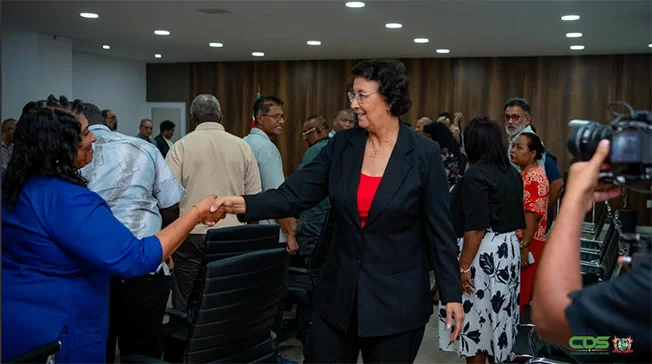
On August 7, Suriname’s government confirmed that it has found limited fiscal room to negotiate gradual purchasing power improvements with public sector trade unions, marking a small step forward amid the country’s ongoing economic challenges. President Jennifer Simons personally notified representatives of multiple major labor organizations of the development during a consultative meeting at the Presidential Cabinet on Thursday, with formal negotiations set to kick off next week.
While the nation’s overall financial position remains fragile, Minister of Internal Affairs Marinus Bee noted that modest economic improvements have created the opening for wage discussions. Speaking via Suriname’s Communication Service, Bee emphasized, “We all know our situation is far from rosy, but it has improved enough that we can now enter into wage negotiations.” He added that talks between the government and unions over working conditions have been ongoing for some time, and that President Simons’ direct engagement on the new negotiation opportunity was an important milestone for the process.
Thursday’s meeting drew representatives from six of Suriname’s largest labor bodies: the Suriname Council of Trade Union Centres (Ravaksur), the Confederation of Civil Servant Organizations (COL), the Central Civil Servant Organizations (CLO), the Teachers’ Union (BvL), the Alliance of Teachers in Suriname (ALS), and the Federation of Teachers’ Organizations in Suriname (FOLS).
Alongside wage talks, the meeting also addressed the government’s current fuel price cap policy. Robby Berenstein, chair of the C-47 labor coalition, reported that President Simons confirmed the cap will not remain in place indefinitely, though no timeline for its removal has been finalized.
Unions have pushed for the upcoming purchasing power negotiations to include protections for workers across both public and private sectors. To build a comprehensive support package for all working people, Berenstein said unions have called for discussions on tax relief measures for the private sector as well as public sector wage adjustments.
Union leaders have declined to set a firm deadline for concluding negotiations. While labor groups aim to wrap up talks as quickly as possible, Berenstein noted they are willing to adjust to the government’s fiscal constraints, with regular reviews of government revenue trends to guide next steps. “We cannot give a concrete date for completion, and we will ask for our members’ understanding on that,” he said.
Beyond wage adjustments, unions also raised pressing outstanding issues including delayed bonus payouts and stalled appointment processes across multiple government ministries. Ravaksur has called for quick decisions on administrative matters that do not require additional government funding to resolve.
Moving forward, a presidential working group composed of senior government officials including Minister Bee, Minister of Finance and Planning Adelien Wijnerman, and Deputy Minister of Health, Welfare and Labor Raj Jadnanansing, along with policy advisors, will lead continued negotiations with labor organizations. Official invitations for the first formal negotiation session will be sent to all participating union groups next week, and the government has confirmed that all issues relevant to working people will be placed on the agenda for discussion.