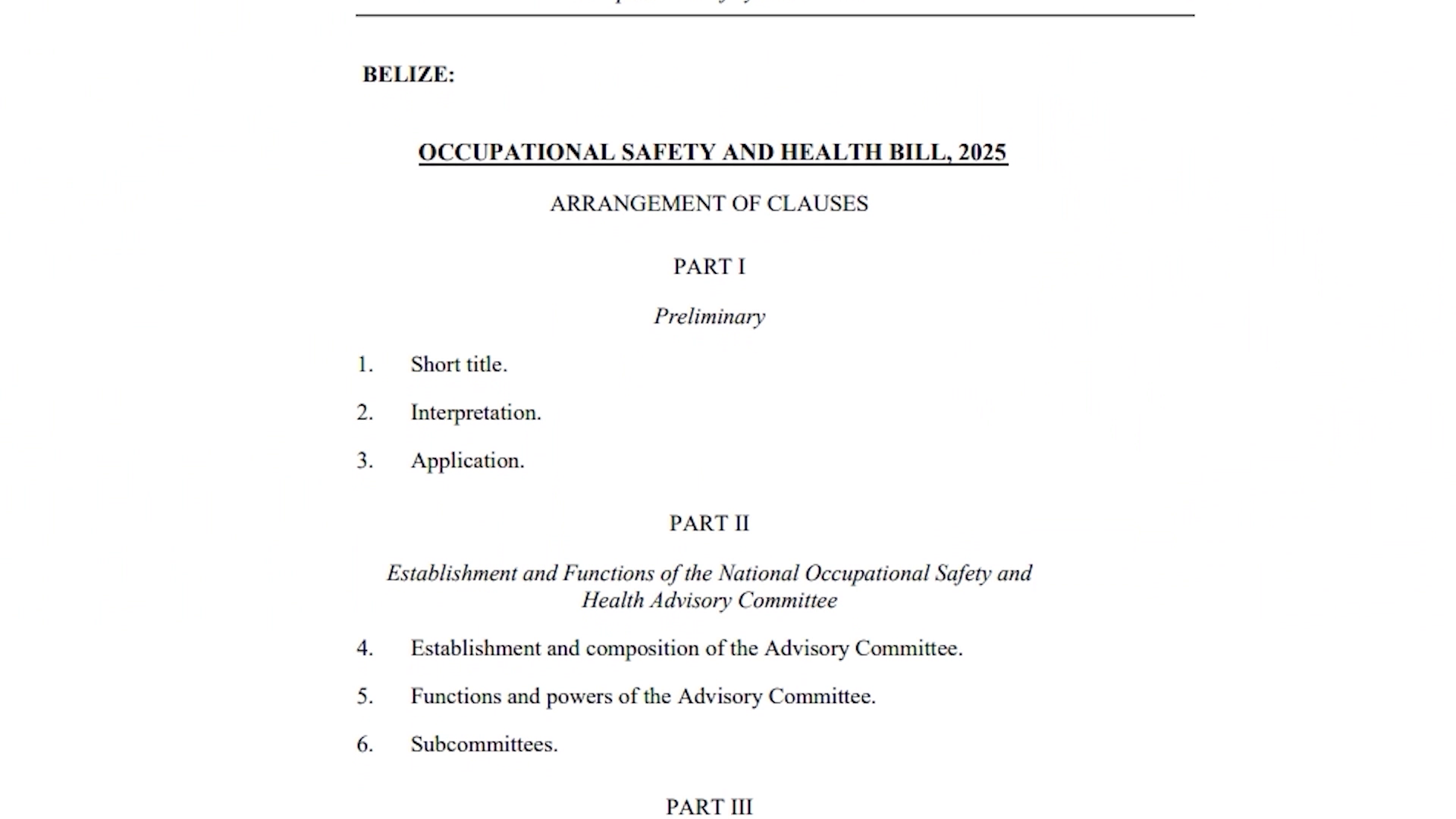
Nearly a month after the long-awaited Occupational Safety and Health (OSH) Bill was tabled in the national senate, the legislation remains stalled in the upper legislative chamber, drawing sharp criticism from opposition leaders who say the government has failed to lay the groundwork for the law to succeed.
United Democratic Party (UDP) Senator Patrick Faber delivered a scathing rebuke of the government’s approach to the new safety framework in remarks on the senate floor August 4, arguing that even before the bill receives a final vote, administrative and resourcing gaps already set the core enforcement body up for collapse.
At the heart of the proposed legislation is a dedicated OSH Inspectorate tasked with enforcing the new workplace safety rules. But Faber says the body lacks two critical foundations to carry out its mandate: a trained workforce and sufficient, dedicated funding. He told the chamber that when he asked technical advisors how many inspector candidates were already undergoing training ahead of the bill’s passage, the answer confirmed his worst fears: training would not begin until after the bill becomes law.
“If the law enters into effect and none of the people assigned to the inspectorate have been trained, how can this system possibly function as intended?” Faber said during his address.
Beyond staffing shortfalls, Faber raised red flags about the funding structure laid out for the new inspectorate. According to the government’s own whitepaper outlining the reform, operational funds for the inspectorate will be pulled from the existing, stretched-thin annual budget of the relevant government ministry — a budget that Faber notes has already been cut to minimal levels to offset broader fiscal constraints.
“That ministry openly admits it does not have enough money to cover its current obligations,” Faber said. “Pulling additional funds for a new inspectorate from that depleted budget is functionally nothing more than a meaningless gesture. This makes it clear the government is not actually serious about implementing this legislation effectively.”
Faber also questioned the institutional independence of the proposed inspectorate, arguing that its structural design leaves the body open to outside political influence that could undermine its ability to enforce safety rules fairly and consistently.
The criticism comes as the OSH Bill, a years-in-the-making reform aimed at updating outdated national workplace safety regulations, continues to languish without a timeline for a final vote in the senate. Faber’s remarks have added new momentum to opposition pushback against the legislation, with lawmakers calling on the government to outline a clear, resourced implementation plan before moving forward with a vote. This report is adapted from a transcript of an evening television news broadcast.