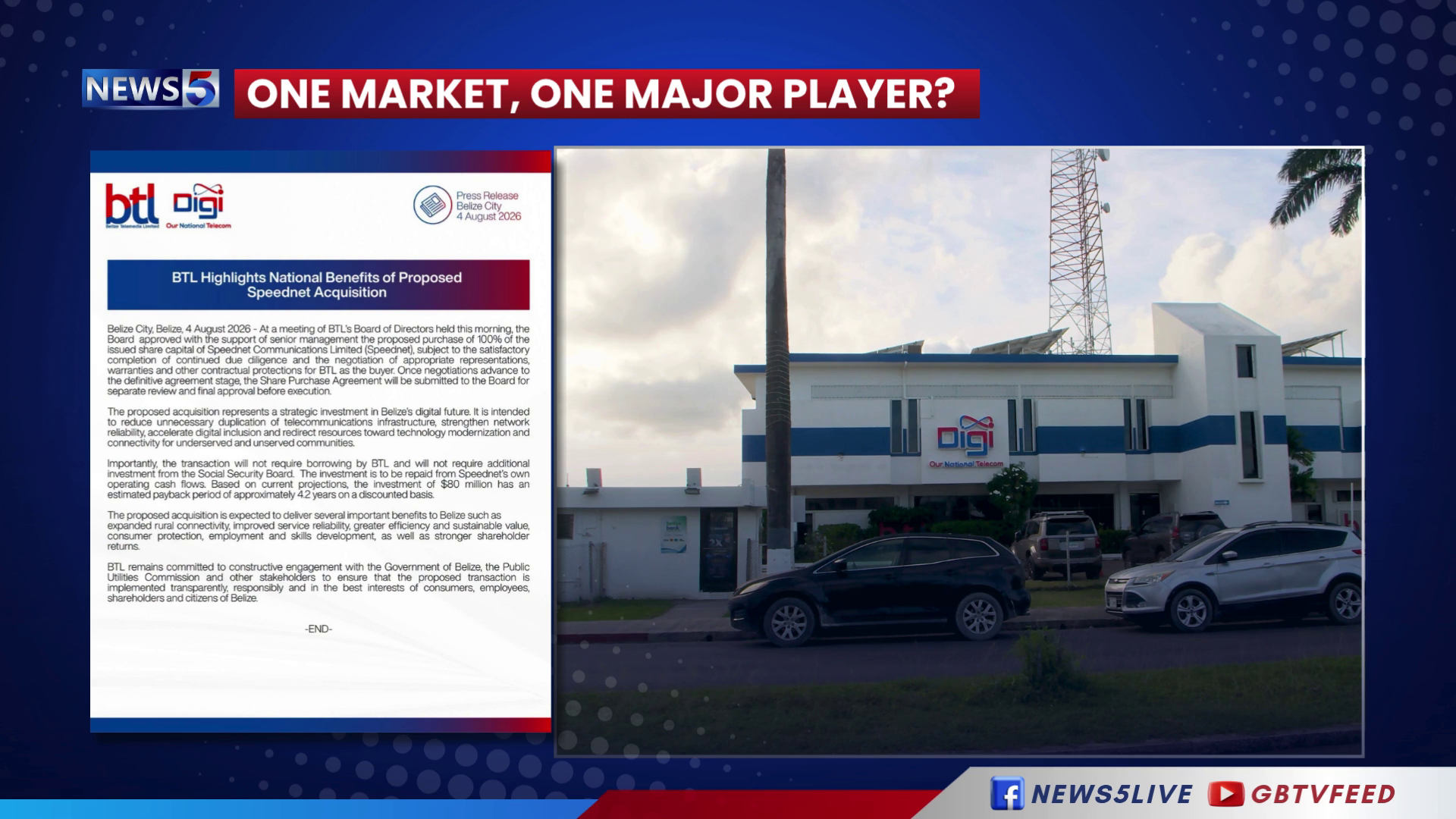
On August 4, 2026, Belize Telemedia Limited (BTL) announced that its board of directors, backed by the company’s senior leadership, has formally approved a proposal to acquire 100% of the issued share capital of rival telecommunications provider Speednet Communications Limited. Valued at an estimated $80 million, the proposed transaction is not yet final: it remains contingent on the completion of ongoing due diligence processes, further negotiations between the two firms, and a final formal review and sign-off from BTL’s board of directors before any binding share purchase agreement can be executed.
In its official statement on the proposed deal, BTL has framed the acquisition as a transformative, forward-looking investment in Belize’s digital infrastructure and long-term digital development. Company leadership argues that merging the two operations will eliminate redundant overlapping telecom infrastructure across the country, freeing up capital that can be redirected toward critical upgrades, expanded connectivity for underserved rural communities, and overall improvements to service reliability for end consumers.
BTL has also moved to address early financial concerns, confirming that the acquisition will be completed without taking on new debt, and that the Belize Social Security Board will not be required to commit additional capital to fund the transaction. When local outlet News Five reached out to BTL Chairman Mark Lizarraga for additional comment following Tuesday’s board meeting, Lizarraga directed reporters to the company’s published official statement.
Despite these assurances, the proposed takeover has ignited widespread public and regulatory debate over the future of Belize’s telecommunications market. Critics and market observers have raised pressing questions that will require formal scrutiny before the deal can move forward: Will the acquisition actually deliver on promises of better, cheaper, and more reliable services for consumers, or will it further reduce competition in a market that already offers very limited choices for retail and commercial customers?
The deal also forces a broader national conversation about market concentration in critical infrastructure sectors: How much industry consolidation is acceptable in the name of operational efficiency and technological modernization, and at what point does reduced competition start to harm the very consumers the merger is supposed to benefit? With due diligence underway, all eyes now turn to regulators and stakeholders to evaluate the long-term impacts of the proposed acquisition for Belize’s digital economy.