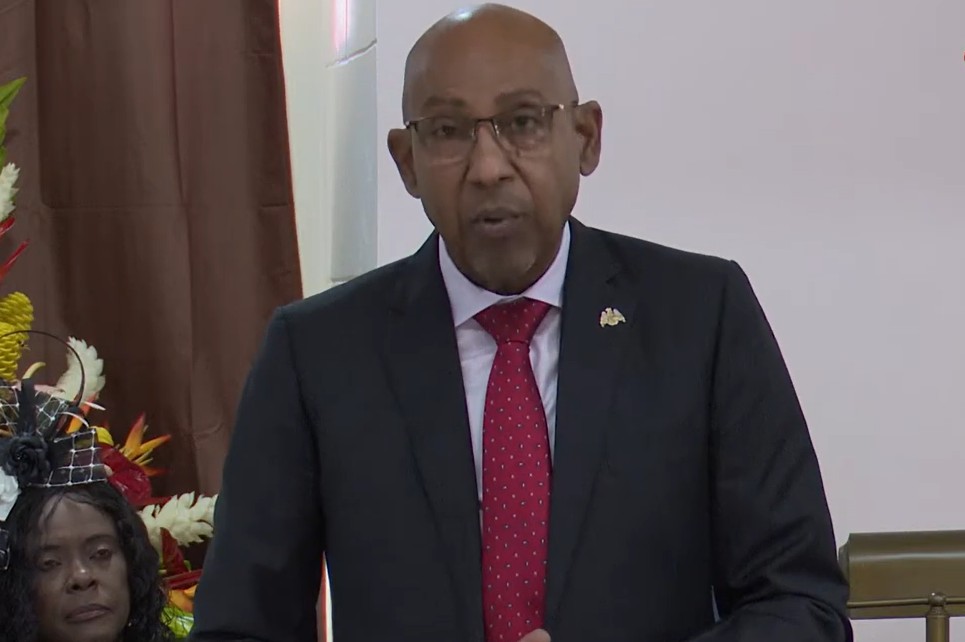
In a landmark announcement delivered to Dominica’s Parliament on Tuesday, Finance Minister Dr. Irving McIntyre has introduced what he calls the most expansive personal income tax reduction in the nation’s history, paired with a total EC$1.125 billion national budget for the 2026-2027 fiscal year. At the core of the reform is a sweeping shift to a uniform 10% flat income tax rate, a policy set to enter into force on January 1, 2027.
The new single-rate framework will replace Dominica’s current three-bracket progressive tax system, which imposes rates of 15%, 25%, and 35% on different income levels. Crucially, the reform preserves the existing tax-free threshold: individuals earning $30,000 or less annually will still not be required to pay any personal income tax.
McIntyre emphasized that the new tax overhaul builds on over two decades of consistent policy from the ruling Dominica Labour Party administration, which has centered its economic agenda on easing the tax burden for working people and helping residents keep more of their hard-earned income. He provided historical context to frame the scale of the 2027 reform, noting that when the current government first took office in 2000, the nation’s income tax structure carried far higher top rates of 20%, 30%, and 40%, with a tax-free threshold set at just $12,000 annually.
Following Dominica’s steady economic recovery and the successful conclusion of its International Monetary Fund-backed economic stabilization program, the government began rolling out incremental tax relief measures starting in 2009. Those earlier reforms cut the top marginal tax rates to the current 15%, 25%, and 35%, while gradually raising the tax-free threshold from $25,000 to its current $30,000. Over the years, the administration has also introduced a range of additional tax concessions, including expanded deductions for mortgage interest, full deductions for student loan payments, and additional allowances for home and medical insurance premiums. These changes have already lowered tax bills for thousands of workers and removed many low-income Dominicans from the personal income tax system entirely.
“Today, despite a global environment marked by widespread economic uncertainty, this government will again provide relief to further empower the hardworking people of Dominica,” McIntyre told lawmakers during his budget address.
The finance minister framed the new 10% flat rate as an intentional fiscal sacrifice for the government, but one that will deliver tangible, long-term benefits for residents while simplifying the entire tax system and making it far more equitable for all working people. Unlike broad-based tax cuts that disproportionately benefit high earners, this reform retains protections for low-income workers while delivering proportional relief to all residents earning above the $30,000 tax-free threshold.
To help the public understand the immediate impact of the change, McIntyre shared concrete examples of annual and monthly savings for workers at different income levels. A full-time worker earning $48,000 per year ($4,000 monthly) will take home an extra $75 each month, adding up to $900 in additional annual disposable income. For a worker earning $60,000 per year with no additional deductions, monthly tax bills will drop from $458 to just $250, translating to $208 in monthly savings, or roughly $2,500 per year. Higher-earning residents will see even more substantial savings: an individual earning $84,000 annually will gain an extra $541.67 per month, totaling around $6,500 in annual tax savings. For multi-income households, the benefits are cumulative: a family with two working members each earning $4,000 per month will save an extra $150 monthly, or $1,800 per year, before accounting for other applicable deductions.
McIntyre noted that the extra disposable income from the tax cut will be entirely at the discretion of Dominican households, who can put the savings toward covering basic household expenses, paying down mortgage or other consumer debt, boosting health insurance coverage, building personal savings, investing in small local businesses, or funding further education for family members. Ultimately, he said, the tax reform reaffirms the government’s commitment to strengthening household financial stability while driving broad-based economic growth by putting more money directly into the pockets of working Dominicans.