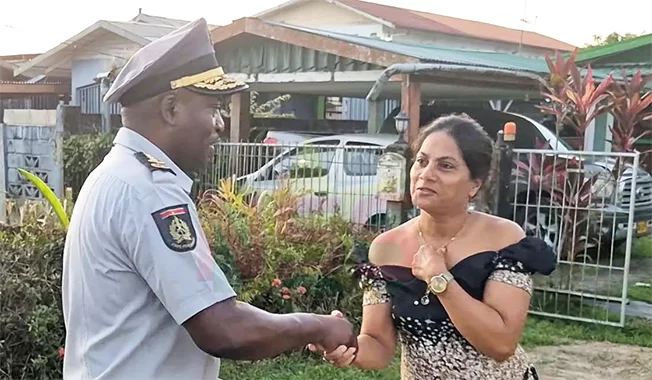
On a recent Saturday, Suriname Police Chief Melvin Pinas led a community walkthrough in the De Nieuwe Grond neighborhood, cutting through bureaucratic layers to hear directly from residents about their experiences with and expectations for local law enforcement. The outreach initiative forms a core part of Pinas’ long-stated goal to bridge the growing gap between police forces and the communities they serve.
Since taking office, the chief has emphasized that sustained, close engagement between police and the public is non-negotiable for effective public safety. Sitting behind a desk only gives leadership secondhand accounts from officers, Pinas explained during the walk, noting that on-the-ground conversations offer unfiltered insight into how community members actually experience policing.
While many residents reported that their neighborhood currently remains relatively calm and expressed a desire to preserve that stability, almost all shared key priorities for improving local police services. The most commonly cited demands included faster processing of police reports, more decisive action against criminal activity, clearer, visible outcomes following police interventions, and an increase in regular neighborhood patrols to deter crime. Even residents satisfied with overall local safety pushed for more consistent, visible police presence to maintain current low crime rates.
Other residents voiced more specific frustrations with systemic delays in police work. Multiple attendees called out the months-long wait for accident reports required for insurance claims, a burden that leaves crash victims waiting extended periods for compensation they are owed. Complaints also included the complete lack of follow-up updates provided to victims of crimes such as robbery, even when surveillance footage clearly identifies potential suspects. Many residents also shared a widespread perception that preferential treatment is common, claiming that connections within the police force are required to get cases processed in a timely manner.
Following the walkthrough, Pinas hosted a follow-up community meeting at the Penny and Jon School to continue the conversation. While turnout for the meeting was lower than expected, attendees raised a broad range of additional public safety concerns that require police attention. These issues included reckless driving by e-bike users and bus drivers particularly during peak commuting hours, groups of people loitering outside retail establishments late into the night, repeated vandalism of critical fiber optic infrastructure, excessive noise from overnight neighborhood parties, suspicious unfamiliar individuals loitering in residential areas, and vehicles with heavily tinted windows parked for extended periods in neighborhood streets, which residents view as a potential security risk.
Throughout both the walk and the subsequent meeting, Pinas shared his personal contact number with all attendees and gave a formal commitment that the police service would prioritize addressing every complaint and tip received during the outreach. In a major policy announcement tied to the engagement push, Pinas revealed that the national police is developing a dedicated mobile application that will allow residents to submit anonymous tips, and upload photos or other evidence related to suspicious activity or crimes. Pinas noted that the app is designed to remove barriers to reporting and enable faster, more effective responses to criminal offenses across communities.
Reflecting on the day’s outreach, Pinas said he viewed the initiative as a success, but acknowledged that future events need more proactive publicity to draw a larger, more representative cross-section of neighborhood residents. Similar face-to-face community engagement sessions are already scheduled for the coming months in other Surinamese communities including Para, Galibi, and Tamanredjo, as the police force continues its push to build closer, more trust-based ties with the public.