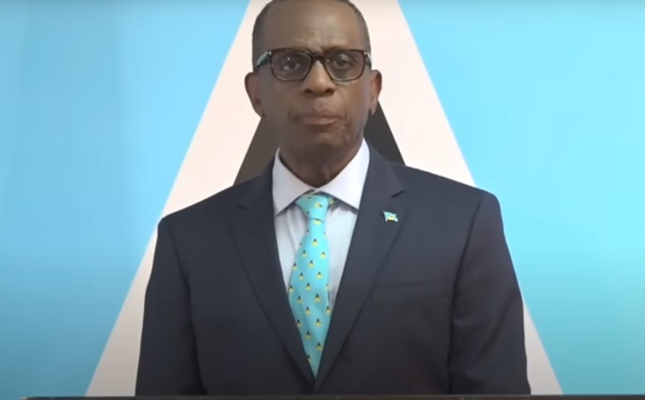
As Caribbean nations prepare to mark Emancipation Day 2026, pausing to honor the generations of enslaved ancestors who fought and sacrificed for freedom, the Chairman of the Caribbean Community (CARICOM) and Prime Minister of St. Lucia has delivered a powerful call to action, arguing that the region’s centuries-long fight for full emancipation remains unfinished until widespread economic empowerment is achieved for all Caribbean people.
Across the bloc, countries celebrated the annual commemoration over a long holiday weekend, and in a keynote address from Basseterre, St. Kitts, Pierre emphasized that true freedom extends far beyond the hard-won political independence many Caribbean nations secured in the 20th century. For emancipation to be meaningful, he argued, Caribbean communities must gain equitable access to wealth creation pathways, asset ownership, and inclusive economic opportunity. “They deserve opportunity. They deserve ownership. They deserve prosperity,” Pierre stated. “We must build economies where Caribbean people are creating wealth, not merely consuming it. Where our young people see opportunity at home. Where our entrepreneurs can succeed. Where our farmers, fishers and manufacturers are valued. Where hard work is rewarded with dignity. That is the Caribbean we must build.”
A central pillar of Pierre’s vision centers on prioritizing youth in all regional development strategies. He stressed that the next generation must be equipped with the cutting-edge skills needed to lead innovation and drive sustainable growth across the bloc. “Every child deserves the chance to dream. Every young person deserves the chance to achieve,” Pierre said. He called on regional education systems to refocus curricula to prepare young people “to innovate, to lead, to build businesses, to master technology, to transform our societies,” while encouraging young Caribbean people to leverage their unique talents and perspectives to strengthen both their home nations and the broader CARICOM community.
Beyond youth development, Pierre identified two critical infrastructure priorities as foundational to genuine regional independence: food security and energy security. Addressing food security first, he warned that no Caribbean nation can claim true sovereign security if it remains unable to feed its own population. Against a backdrop of persistent global economic uncertainty, skyrocketing commodity costs, and shifting international trade frameworks, Pierre urged regional governments to accelerate investments in local agricultural, fishing, and food production sectors. “Every acre cultivated, every farmer supported, every fisher encouraged, every Caribbean product placed on our supermarket shelves brings us one step closer to genuine independence,” he noted. Currently, the Caribbean collectively carries a massive food import bill, leaving most small island developing states in the region dangerously exposed to external shocks, from global supply chain disruptions to sudden shifts in global trade policy.
Turning to energy security, Pierre framed the transition to affordable, reliable, cleaner energy as both an economic and environmental imperative for the region. “Our future depends upon affordable, reliable and cleaner sources of energy,” he said. “Not only because it protects our environment, but because it strengthens our economy, creates jobs and lowers the cost of living for our people.” For Pierre, both food and energy sovereignty are not just routine development goals—they are core components of the “unfinished journey of emancipation” that began with the abolition of chattel slavery.
Pierre also addressed the Caribbean’s longstanding collective campaign for reparatory justice for the transatlantic slave trade and centuries of chattel slavery, clarifying that the regional call for reparations is rooted in demands for truth and historical accountability, not blame or retaliation. “The pursuit of reparations for slavery is not about blame, not about revenge. It is about the truth and justice for the human suffering of slavery,” Pierre explained. He reflected on the resilience of the millions of enslaved African people who retained their dignity, hope, and resistance across generations of systemic dehumanization. “Today, we remember the women, men and children whose bodies were enslaved, but whose spirits could never be conquered,” he said. “Because they endured, because they resisted, because they believed, we stand here today as a free people.”
Pierre emphasized that Emancipation Day is far more than a historical commemoration: it is a persistent reminder of the struggles past generations overcame, and the uncompleted responsibilities that rest on current Caribbean leadership and communities. “Freedom was never handed to our ancestors. Freedom was demanded. Freedom was fought for. Freedom was paid for with sacrifice, with courage and with an unbreakable faith,” he said. He added that while the abolition of slavery marked a pivotal turning point in the region’s history, it did not erase systemic inequality or deliver full, inclusive freedom overnight.
Reflecting on the Caribbean’s complex and often traumatic history—including Indigenous dispossession, African chattel slavery, indentured labor systems, and centuries of colonial rule—Pierre highlighted the extraordinary resilience and achievements of Caribbean people that emerged from that trauma. “Out of pain our people created beauty. Out of struggle our people created strength. Out of oppression our people created hope,” he said. “We built nations. We built communities. We built democracies.” He pointed to the region’s globally celebrated contributions to music, literature, art, and culture, reminding Caribbean citizens that they have every right to be proud of their shared identity and collective progress. “We are Caribbean people. We are a proud people. We are a resilient people. And we have every reason to believe in our future.”
In closing, Pierre urged all Caribbean residents to frame freedom as both an inherited privilege and an intergenerational responsibility. “Every generation inherits more than freedom; it inherits a responsibility,” he said. “Our responsibility is to honour the sacrifices of those who came before us by building a society that is more just, more united and more prosperous than the one they entrusted to us.” He closed with a call to build a unified CARICOM where emancipation is not only marked by annual celebrations, but reflected in the equal access to opportunity and prosperity that shapes the daily lives of all Caribbean people.