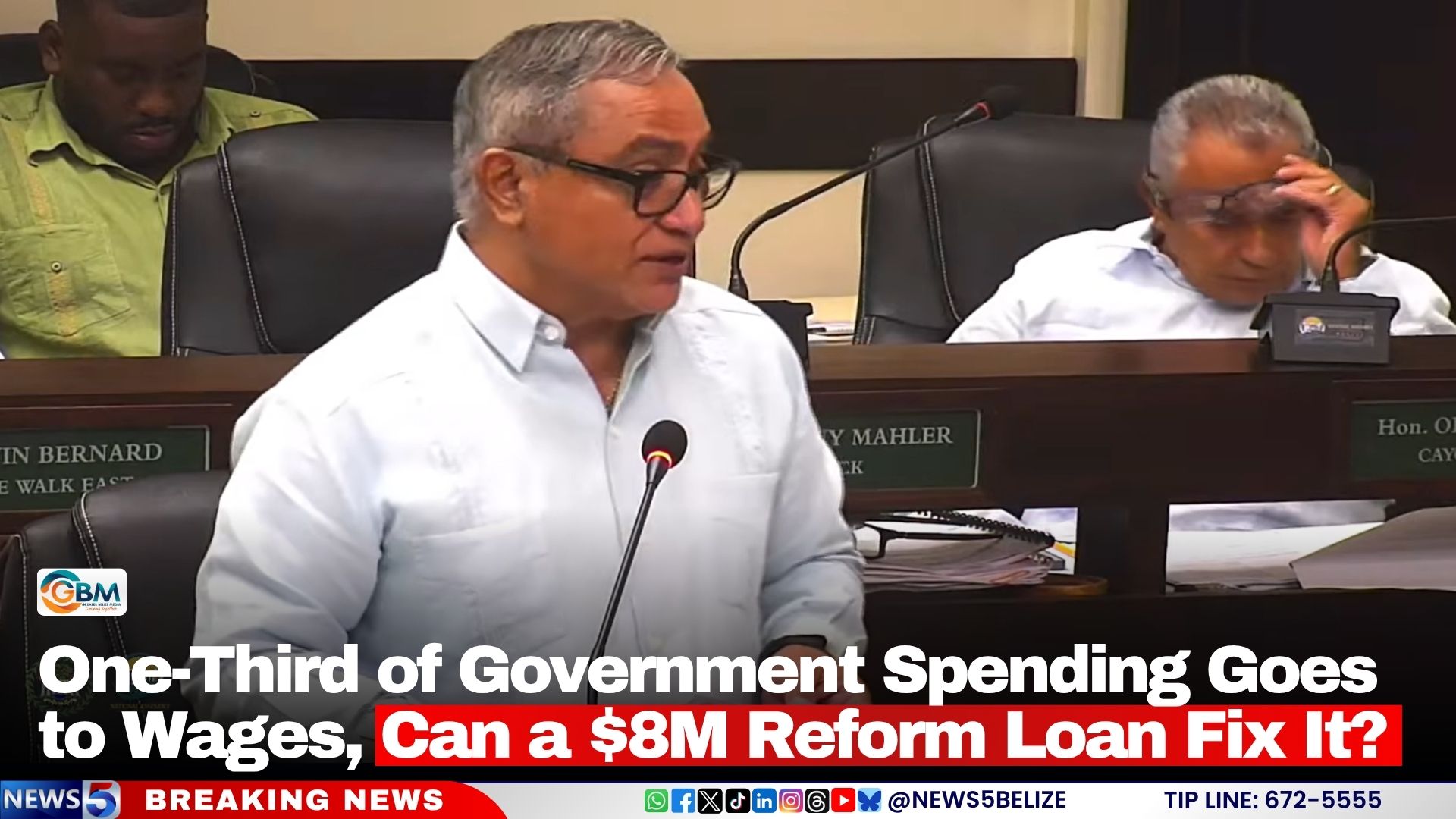
On July 31, 2026, the Briceño administration of Belize tabled a critical $8 million loan motion before the House of Representatives, aiming to address a long-running fiscal challenge: the public sector wage bill that now consumes more than one-third of the country’s total government spending.
According to official projections, the public sector wage allocation for the 2025–2026 fiscal year will account for 33.2% of total government expenditure, equal to roughly 8% of Belize’s national Gross Domestic Product. While the current administration has already achieved a major fiscal milestone—cutting the country’s public debt ratio from 120% to 60% of GDP—Prime Minister John Briceño acknowledged that unsustainable wage bill growth remains a persistent hurdle to long-term fiscal stability.
The proposed 25-year loan from the Inter-American Development Bank will fund a broad public sector modernization project, with a total estimated cost of $9 million. The Belizean government will contribute $1 million in local counterpart funding to the initiative, which will be executed by the Ministry of Public Service and Disaster Risk Management, led by Minister Henry Charles Usher.
Briceño framed the initiative as a forward-looking investment rather than a short-term patch. The project’s core goals are to cut unnecessary public expenditure, strengthen strategic workforce planning across the public sector, drive digital transformation in human resources management, integrate data analytics into public service HR operations, and build institutional capacity for HR governance across all central government agencies.
For Usher, the funding marks a key milestone in the government’s ongoing push to bring Belize’s outdated public service into the 21st century through systematic reform and modernization. “We have been undergoing a series of reforms, a series of modernisation… a series of initiatives to bring the public service into the 21st century and this project will take us there,” Usher said of the planned overhaul.
Under the agreed loan terms, Belize will benefit from a 66-month grace period before the first principal repayment is due. The full $8 million principal will be repaid through 39 semi-annual installments, each totaling approximately $205,128.21.
While opposition leader Tracy Panton has announced her conditional support for the loan motion, she has called for full transparency throughout the project’s implementation. Panton emphasized that her backing depends on the government providing regular, detailed updates to ensure the investment delivers tangible, lasting change to Belize’s public sector rather than temporary fiscal relief.