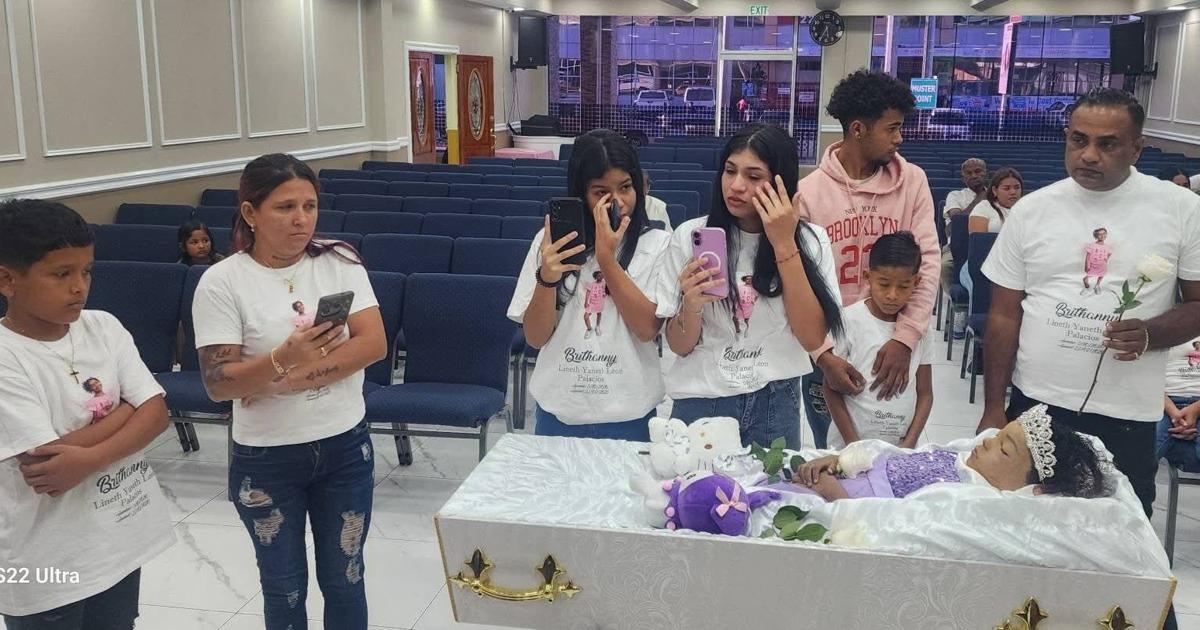
A five-year-old Venezuelan girl, Brithanny León Palacios, never got the chance to walk across the kindergarten stage to collect her graduation certificate, cut short by a migrant vessel disaster off the southwestern coast of Trinidad that claimed at least two lives and left a grieving family forever scarred.
Brithanny had boarded an overcrowded wooden pirogue two weeks prior near the Trinidadian coastal town of Erin, alongside her mother and two older siblings. The group was heading back to Tucupita, Venezuela, where Brithanny had been enrolled in school, to reunite with her grandparents and mark her first major academic milestone. What should have been a hopeful journey home turned into a deadly tragedy when rough seas capsized the overloaded craft, throwing Brithanny and at least 28 other migrants into the churning open ocean.
One day after the little girl’s final funeral rites were held at the Boysie Boodoo crematorium in Penal, her Trinidadian stepfather Sharzam Hosein opened up about the catastrophic incident that has ripped his family apart. Hosein, who stepped into the father role just a year after beginning a relationship with Brithanny’s mother, said the fateful journey began on July 22, when Brithanny, her 8-year-old brother, 10-year-old sister, and their mother set out for Venezuela, taking the dangerous coastal route to reunite with family.
Just a short distance from the Trinidadian coast, a massive rogue wave hit the small vessel, and the captain lost all control. Seawater quickly flooded the hull, and the pirogue began to break apart, triggering a desperate panic among passengers scrambling to save the children on board. Brithanny’s mother pulled her 10-year-old daughter to safety, while another passenger grabbed hold of the 8-year-old boy. Edwin Parra, another migrant traveling on the boat, managed to reach Brithanny and pulled her into his arms to swim for shore.
In the chaos of the disaster, however, both Parra and Brithanny vanished before they could reach safety. A day after the sinking, their bodies washed ashore along Trinidad’s southwestern coast.
“The man who grabbed Brithanny tried to swim with her to shore. When the other survivors reached land, they couldn’t spot either of them,” Hosein recounted. “We still don’t know exactly what went wrong. The official cause of death was drowning, but when their bodies were found, they were badly battered. Brithanny’s head was swollen. Her mother refused to leave the beach that night, waiting and hoping her little girl would still turn up alive.”
Hosein confirmed what many survivors and rescue teams have observed: the small vessel was drastically overloaded. According to his account, the boat carried nearly twice its intended passenger capacity, plus all the migrants’ luggage, leaving it dangerously unstable in even minor rough seas.
The grieving stepfather described Brithanny as a gentle, bright, affectionate child who had formed a deep bond with him from their first meeting, calling him “Papa” almost immediately. “She was never rowdy, never in a bad mood. Her mother raised her so well, and we had a very special father-daughter connection from day one,” Hosein said. While Brithanny’s mother has tried to remain strong for her two surviving children, she remains deeply traumatized by the loss of her youngest child. “It has been completely devastating for all of us. I try to take her out of the house just to keep her from being alone with her grief. She’s not in crisis, but she’s far from okay,” he added.
The family was forced to fund Brithanny’s funeral through small donations Hosein collected from friends, as they have no extra resources to cover unexpected end-of-life costs. In the wake of his loss, Hosein is calling on the public to show greater empathy for Venezuelan migrants, who he says are only making these dangerous journeys because of the crippling economic crisis that has left millions without food or opportunity in their home country.
“People need to be more compassionate and helpful. They don’t take these risks for fun — they come to Trinidad just to survive. I spend a lot of time around migrants, and I know they leave everything behind because they have nothing left in Venezuela. Because of that hardship, a child has lost her life,” he said. “At the end of the day, God created all people, and only he can judge them. They come here to build a better life for their kids. Most people can’t imagine going an entire day without a meal, which is the reality many of them face back home.”
Following the disaster, members of the Hunters Search and Rescue Team recovered dozens of personal items along the Los Iros beach shoreline, belonging to the estimated 30 migrants who were on board the overturned vessel. The team confirmed two bodies were recovered from the beach: Brithanny and Edwin Parra.