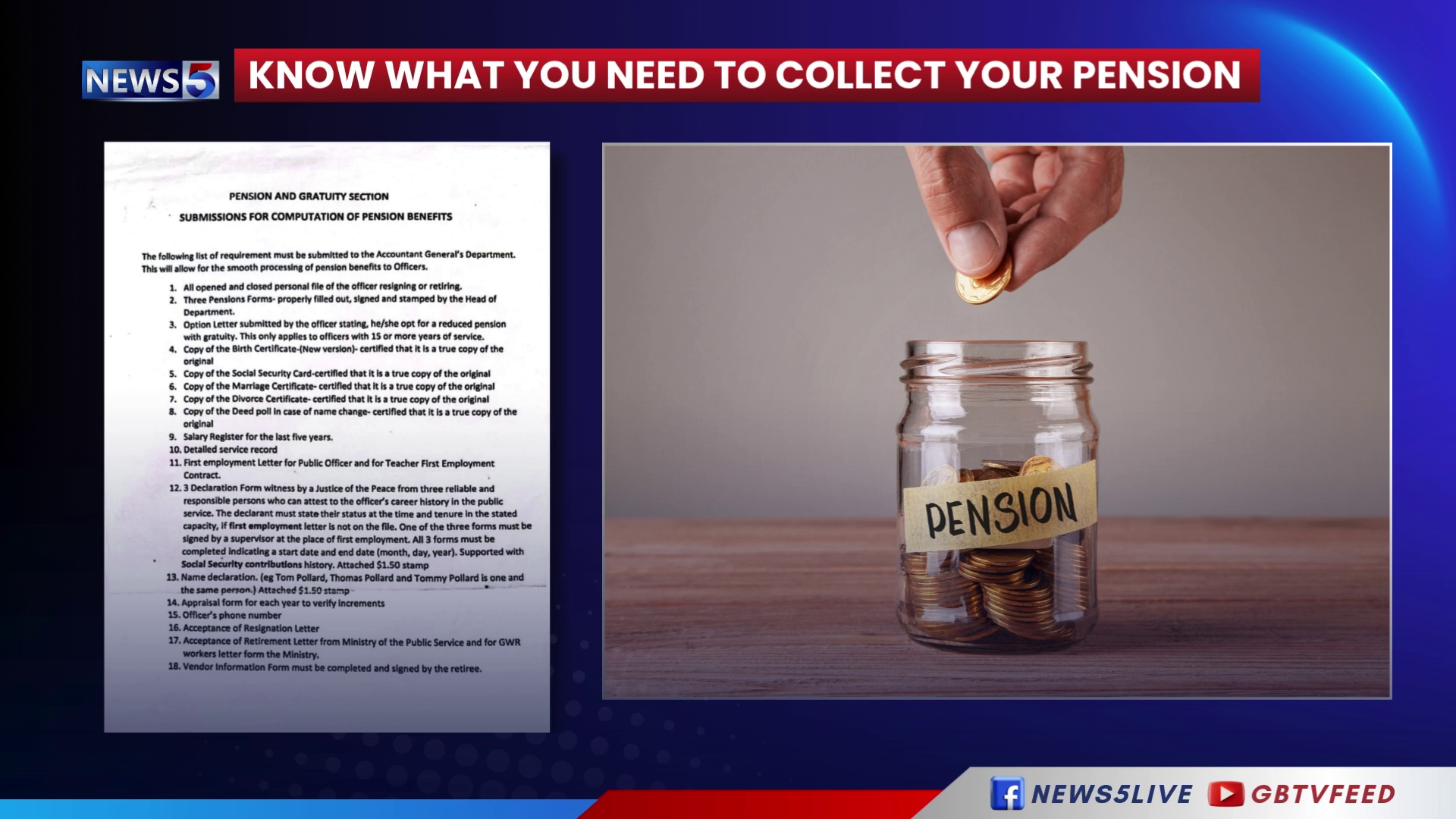
July 30, 2026 — For public sector employees across Belize, the dream of a financially secure retirement hinges on a smooth, timely pension disbursement — a reality that has grown increasingly out of reach for many workers who have dedicated decades to public service. Growing public frustration over crippling processing delays, with some retirees passing away before ever accessing their earned benefits, has sparked renewed calls for proactive, pre-retirement planning to cut through bureaucratic gridlock and prevent avoidable complications. News Five reporter Britney Gordon explores the key steps public officers can take years before leaving service to protect their hard-earned pension benefits, and addresses systemic gaps that have turned the post-retirement benefit process into a chaotic, exhausting ordeal for many families.
Retirement stands as the capstone milestone of a public officer’s decades-long career, with promised pension benefits designed to deliver consistent financial stability once they step away from their duties. But for far too many Belizean public servants, the journey to accessing those benefits has become nothing short of a bureaucratic nightmare, marked by long waits, lost paperwork, and unnecessary hurdles that leave retirees in financial limbo. Local attorney Richard “Dickie” Bradley has emerged as a vocal critic of the broken system, pointing to the most extreme example of its failure: retirees who die without ever receiving the pension they spent their working lives earning. “People die and no seeing pension. What kind of country we run?” Bradley asked, amplifying widespread public anger over ongoing inefficiencies.
While systemic reform will take time, industry and retired administrative experts agree that proactive personal action years in advance of retirement can drastically reduce the risk of costly delays. According to Carol Gentle, a retired administrative officer who spent nearly 40 years working within Belize’s public service system, successful pension processing is a shared responsibility between the employee and the administrative teams that manage their employment files.
Gentle emphasized that all public officers hold a clear legal right to review their official employment files at any point during their career, and encouraged workers to start the review process long before their planned exit from service. “I recommend to public officers, when you reach the age of, say, between fifty to fifty-three, you try and find your administrative officer and ask them to set a date for you to go through your file, because you have that right to see your file. You peruse your file, check to see what’s on your file, and ask questions,” Gentle explained.
The core of pre-retirement preparation is confirming that every required document is properly filed and accurate, from approved leave histories and updated personal records to all mandatory performance evaluations. Gentle noted that it is the employee’s own responsibility to follow up on missing paperwork, even for workers who have reached the top of their pay scale. Pension processing officially begins one year before a public officer’s planned retirement at age 55, so any gaps in documentation discovered that late can already trigger major delays. “If it is not, it is you the officer’s responsibility to ensure that your supervisor do your appraisal and have it affixed to your file. Even if you’re at the end of your pay scale, it’s your obligation to get it done or else your file will not be processed,” Gentle said.
The most common avoidable issues that slow pension and gratuity calculations include missing employment history records, incomplete performance appraisals, and discrepancies between the name on a worker’s employment file and their official birth certificate. Gentle explained that these name mismatches are surprisingly common, and resolving them can take months of extra work if left until the last minute. “I found in my experience a lot of people are in the public service with one name, and for some reason when they go to the vital statistics for their birth paper, they are registered in a different name. They have to go through the process, and that’s why I advise them that they get their birth paper way in advance, years in advance,” she added.
Rather than waiting for the official pre-retirement processing window to open, Gentle advised public officers to conduct annual reviews of their employment files to catch gaps early. This regular audit schedule gives workers enough time to locate missing documents, resolve discrepancies, and correct errors long before their retirement package is submitted for processing, eliminating the avoidable delays that have derailed so many Belizean public servants’ retirement plans. Britney Gordon, News Five, Belize.