A high-profile medical negligence case in the Bahamas has concluded without further legal challenge, after the nation’s Public Hospitals Authority (PHA) announced it would not appeal a Supreme Court ruling that found a public hospital’s 27-minute gap in foetal monitoring directly caused the death of a newborn baby in 2022.
In his findings, Acting Justice Raynard Rigby, KC, determined that staff at Princess Margaret Hospital (PMH) and lead consultant obstetrician Dr Agatha Foulkes-Mackey failed to uphold the required standard of care when treating expectant mother Widline Guillaume. While awaiting an emergency caesarean section in a corridor outside the operating room between 4:10 a.m. and 4:37 a.m., Guillaume’s unborn daughter, who had already been diagnosed with foetal distress, was left completely unmonitored. Justice Rigby confirmed that the 27-minute lapse in monitoring cut off the baby’s oxygen supply, leading to fatal brain injury. The newborn, named Elizabeth Lundy, died just two hours after her birth on August 2, 2022.
The judge rejected the defense’s core argument that Elizabeth’s death was caused by an undiagnosed congenital heart condition, instead siding with expert testimony that attributed the death to perinatal asphyxia resulting from oxygen deprivation. He also clarified that there was no unreasonable delay in the decision to perform an emergency caesarean or in executing the procedure once approved. The negligence, he ruled, stemmed entirely from the gap in monitoring while Guillaume waited for the results of a mandatory pre-surgery COVID-19 test. No medical staff could provide evidence of the unborn baby’s condition during that 27-minute waiting period, despite clear clinical guidelines requiring continuous monitoring after foetal distress is detected.
In addition to the finding of negligence, Justice Rigby levied sharp criticism at multiple procedural failures during the defense’s case. He highlighted the absence of medical records detailing Elizabeth’s care immediately after birth, the decision not to conduct a post-mortem autopsy to clarify the cause of death, and the failure to call multiple key medical witnesses to testify. He also noted that PMH never produced its official COVID-19 testing protocols during the trial, even though the testing requirement was the direct reason for Guillaume’s pre-surgery wait. The judge ordered that final compensation damages for Guillaume be assessed by the Supreme Court Registrar, and ruled that the PHA must cover Guillaume’s legal fees if the two sides cannot reach a mutual agreement on total damages.
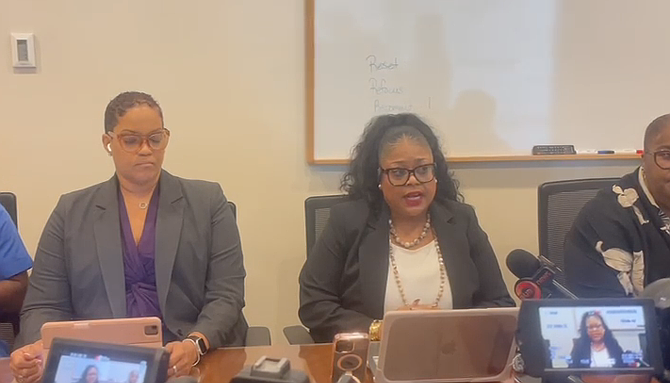
In the days following the ruling, PHA Managing Director Aubynette Rolle, herself an attorney, confirmed the authority would not challenge either the court’s finding of negligence or the eventual damage award. Rolle explained that the PHA had no interest in extending the legal process or forcing Guillaume’s family to relive the trauma of losing their child, a statement echoed by Health and Wellness Minister Dr Michael Darville, who extended formal condolences to the family on behalf of the government and public health system.
Both Rolle and Darville emphasized that the case will serve as a critical turning point to improve care standards across the nation’s public hospital system. Rolle said the PHA will use the ruling to review and strengthen adherence to existing clinical policies and procedures, identify gaps where standards need to be raised, and expand targeted training for medical staff to prevent similar tragedies. Darville noted that medical malpractice incidents occur in hospitals across every country, and each case offers a key opportunity for systemic learning. He added that the PHA had already begun implementing service delivery improvements across all antenatal care and hospital-wide services well before the case concluded, with a focus on full transparency when adverse events occur. “We need to make sure things like this do not happen at our hospitals,” Darville said, “And once they do happen, for us to be completely transparent in the process.”