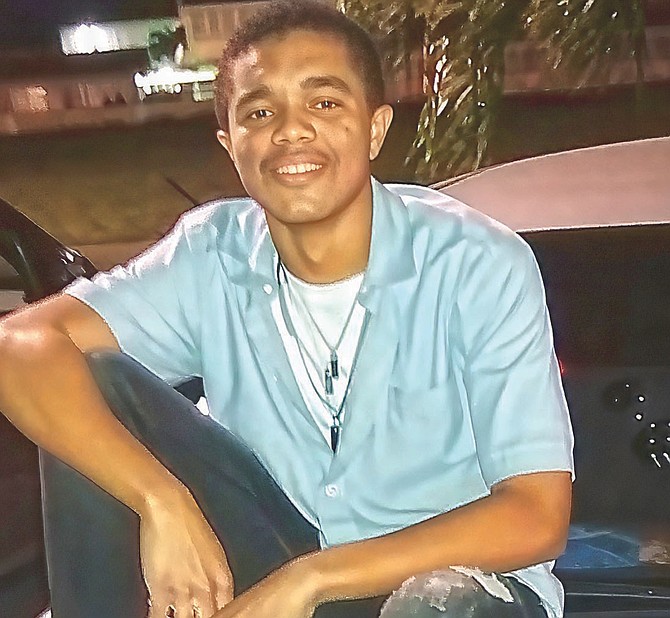
For Ingrid Francois, a rainy Sunday morning in July began like any other. When bad weather derailed her 27-year-old son Antonio Cartwright’s usual skateboard commute to his job, she offered him a ride, still with no idea that it would be the final time she would see him alive. Four days later, her worst fears were confirmed when Cartwright’s body was discovered hanging from a tree in dense brush near Hacio Point Close, in what authorities are investigating as a suspected suicide.
The tragedy has sparked sharp questions from Francois about both law enforcement’s handling of her missing person report and the quality of mental health care her son received in the months before his death. Cartwright, a hardworking and ambitious painter with a side business planning event decorations, had received a formal schizophrenia diagnosis earlier in 2024. Just two days before he vanished, he attended a routine psychiatric appointment that left Francois deeply unsettled about the direction of his treatment.
According to the official missing person filing, Cartwright was last spotted around 8:30 a.m. on July 19 at his workplace, CBS Bahamas, located in Southwest Plaza. His typical routine after work saw him clock out at 5:30 p.m. and make the 30-minute skateboard trip home. When he failed to arrive that evening and did not respond to repeated calls and texts, Francois knew something was wrong. She immediately filed a missing person report with local police, but walked away frustrated when officers told her the official search process would not begin for another 24 hours.
“I told them he’d already been missing for 25 hours,” Francois said in an interview. “Y’all have to move faster than that.” Beyond the initial delay, Francois claims that law enforcement failed to follow through on critical information she provided that could have led to an earlier discovery of her son’s body. She told officers that Cartwright often spoke about the brush-lined track road where his body was eventually found, and explicitly urged them to search the dense vegetation along the route. But according to Francois, officers only drove past the area on Monday and never actually entered the bushes to conduct a thorough search.
It was not until last Thursday that the search ended with the grim discovery: Cartwright’s nephew, part of a family search party that returned to the area after police called off their initial sweep, ventured into the brush and found the body. The young man remained on scene in a state of shock until other relatives called him out of the vegetation.
To his mother, Cartwright was far more than a statistics on a missing person list or a name in a tragedy report. He was a driven, creative young man constantly chasing new opportunities to build a better life. A skilled commercial painter, he regularly took on high-risk jobs scaling the exterior walls of tall buildings to complete work — once sending his mother a photo taken from such a great height that pedestrians on the ground looked no bigger than ants.
Never content to stick to one line of work, Cartwright was also building his own small business renting decorative lighting for parties and special events, choosing to carve out a niche separate from the more common balloon decoration ventures that dominate the local market. Just days before his disappearance, he asked his mother for a power drill to work on another new side project. But Francois said her son’s string of entrepreneurial ventures had hit a series of devastating setbacks in recent months, leaving him struggling to regain his financial footing.
“He started to do a lot of different jobs and everything crumbled,” Francois said. “To get back on his feet, I think it was a struggle, and he probably didn’t want to face all of that.” Even after his schizophrenia diagnosis earlier this year, Cartwright remained determined to keep working and pursue his goals, a resilience his mother remembers fondly. It was the Friday before his disappearance that the family attended the troubling medical appointment, where providers discussed adjusting the frequency of Cartwright’s medication. Francois left the appointment deeply unhappy with the interaction, and says she plans to launch a private review of what transpired during the visit.
“That session was not good and that’s something I’m going to look into because I didn’t like the session at all,” she said. She questioned why medical staff did not take more urgent action when Cartwright displayed signs of irrational speech during the appointment, noting that she left the meeting with a deep sense of unease that something bad would happen.
That Sunday rain that led Francois to drive her son to work ended up giving the pair one last unexpected moment together. She fixed him breakfast before the drive, and as she dropped him off, she reminded him not to fill up on snacks before she made dinner that evening. “I said, ‘Antonio, don’t eat anything heavy. Mommy’s going to cook today,’” she recalled. “But this time, he didn’t say anything back.”
Francois now sees that rainy morning as a final gift, giving her one last chance to care for her son before he died. She also views the way he left his skateboard, propped neatly against the family lawn, as a quiet farewell, a sign that he had found peace in his final moments. Even weeks after the tragedy, she says she still struggles to process what happened. “To this day, I still can’t believe it,” she said. “I feel like he could walk through the door, but I know he’s gone.”