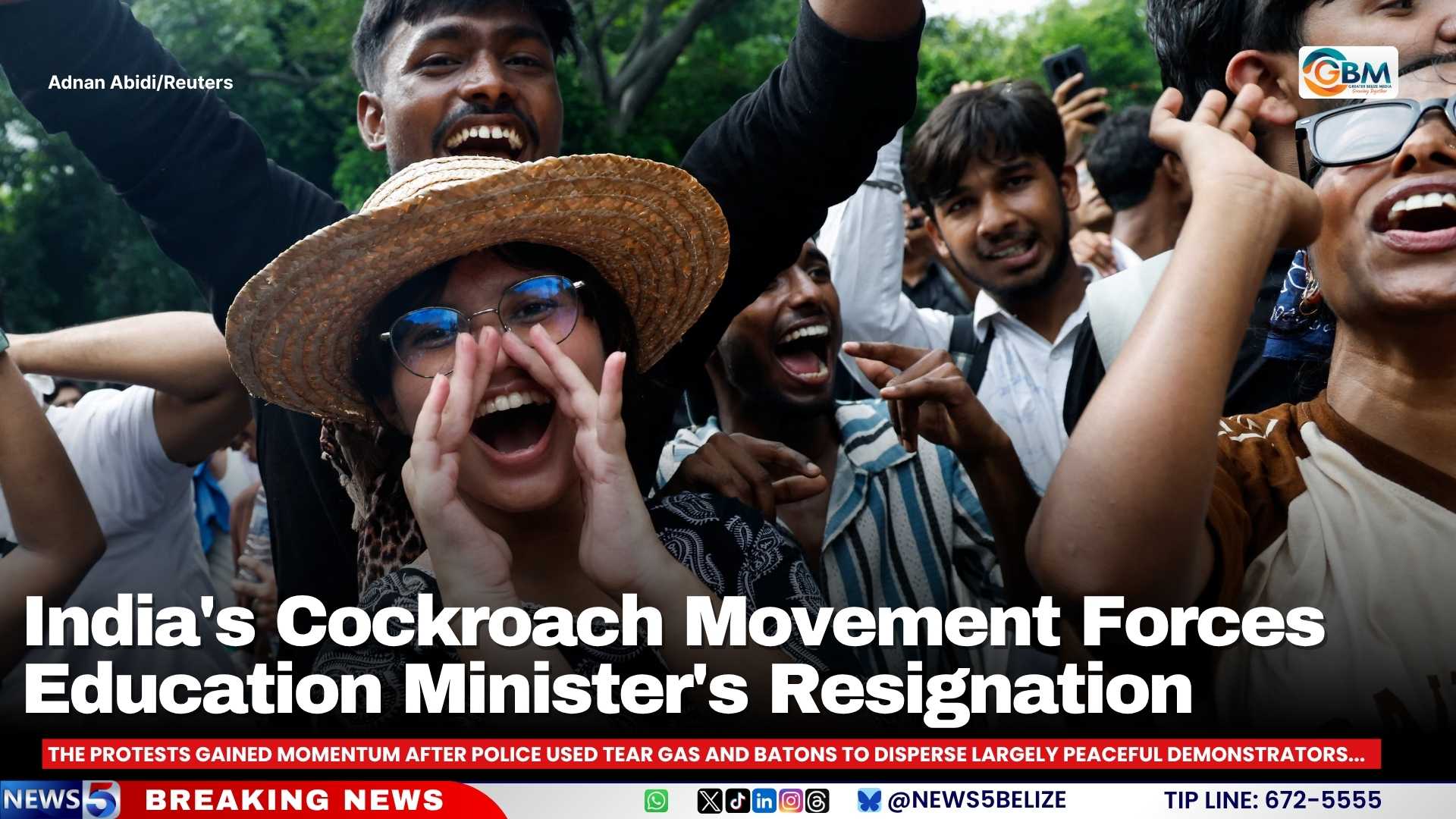
In a landmark political shift that underscores the growing power of youth activism in South Asia, India’s federal Education Minister Dharmendra Pradhan has stepped down from his post, capping off a week of mass nationwide protests triggered by a high-stakes examination leak scandal that roiled the country and galvanized millions of young people.
The controversy began when confidential documents for multiple competitive entrance exams and government job recruitment tests were circulated illegally online, forcing more than 3 million aspirant students and job seekers to reschedule and retake their assessments. The disruption and uncertainty sparked immediate public anger, which deepened when local Indian media confirmed links between the scandal and the suicides of at least 14 young people who said they could not bear the stress of the delayed testing process.
The widespread demonstrations were organized by the youth-led Cockroach Janta Party (CJP), a grassroots movement that adopted its unusual name from a controversial 2025 comment by a sitting judge, who infamously labeled unemployed Indian youth as “cockroaches” and “parasites” draining public resources. Rather than rejecting the derogatory label, movement organizers reclaimed it as a badge of identity, building a national campaign that united students across regional, caste, and class lines. The CJP laid out four core demands: Pradhan’s immediate resignation, sweeping structural reforms to India’s hyper-competitive education and recruitment system, financial compensation for the families of the students who died by suicide, and legal protections for peaceful demonstrators from police crackdowns.
Protests gained rapid traction after security forces in New Delhi deployed tear gas and baton charges to disperse a largely peaceful gathering of thousands of students in the capital. Images of the crackdown spread widely across social media, drawing hundreds of thousands more participants to rallies held in every major Indian city over the following days.
In his formal resignation letter submitted to Prime Minister Narendra Modi’s office, Pradhan said he was stepping down to prevent what he framed as “anti-national forces” from exploiting the public unrest to destabilize the national government. He also included a rare acknowledgment of the anger among India’s youth, writing that he respected their career aspirations and shared their frustration over the ongoing crisis.
Pradhan’s departure marks the first time in more than 11 years that a sitting federal minister in Modi’s ruling government has resigned in response to sustained public protest, a shift that political analysts say signals shifting pressure on established parties to respond to youth demands.
Following the announcement of Pradhan’s resignation, CJP leaders confirmed that the movement had agreed to suspend all nationwide demonstrations after entering into formal negotiation talks with senior government officials. In a public statement, the group called Pradhan’s resignation “a victory for Indian democracy” and a proof that collective grassroots action can force accountability from even the most powerful national institutions.