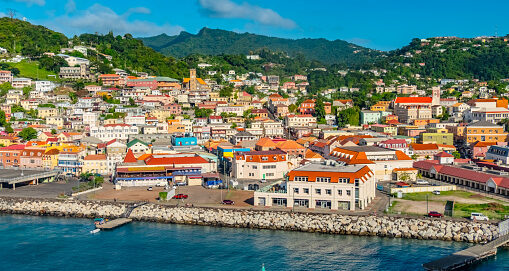
Against a backdrop of growing climate risk and stalled development projects, a groundbreaking regional partnership has launched to empower Caribbean nations to deliver critical climate-resilient infrastructure. The Caribbean Resilient Infrastructure Implementation and Skills Exchange (RIISE) Facility, a collaborative effort between Global Affairs Canada and the United Nations Office for Project Services (UNOPS), has already welcomed its first cohort of participating countries: Dominica, Grenada, Saint Lucia, and Saint Vincent and the Grenadines.
Funded entirely by the Government of Canada and hosted by UNOPS, RIISE was designed to address a persistent gap facing small island developing states across the Caribbean. While regional governments have prioritized climate-resilient infrastructure and earmarked major investments for these projects, systemic implementation barriers often delay or derail delivery, leaving communities vulnerable to the increasing frequency and intensity of climate disasters like hurricanes and coastal flooding.
To solve this challenge, RIISE will operate out of a regional secretariat based in Bridgetown, Barbados. The hub combines local Caribbean leadership with UNOPS’ decades of global operational expertise and project management experience. Its core mandate is to work directly with participating national governments to map unique implementation bottlenecks, coordinate cross-border support requests, and connect local project teams with specialized technical assistance that many small administrations cannot access independently.
Unlike one-size-fits-all development programs, RIISE tailors its support to each country’s specific needs. Available assistance ranges from short-term targeted technical advice to temporary placements of seasoned infrastructure specialists, as well as structured platforms for Caribbean nations to share on-the-ground knowledge and lessons learned with one another. This peer learning component is designed to build long-term local capacity, rather than relying on permanent external support.
Brenda Wills, Canada’s High Commissioner to Barbados and the Eastern Caribbean, emphasized the initiative’s alignment with Canada’s longstanding commitment to Caribbean climate action. “Canada is proud to support RIISE as part of our longstanding commitment to strengthening climate resilience across the Caribbean,” Wills said. “By helping governments deliver resilient infrastructure more effectively, build local capacity and promote specialized expertise across the region, RIISE will generate lasting benefits for Caribbean communities while deepening the strong ties between Canada and the region.”
Giuseppe Mancinelli, UNOPS Director for Barbados and Caribbean Coordinator, noted that Caribbean nations have already laid out clear, ambitious priorities for sustainable, climate-resilient development, but often lack the specialized support to turn plans into tangible community impact. “RIISE will provide timely access to the specialized expertise they need to overcome implementation challenges and turn those priorities into tangible results for communities,” Mancinelli explained. “At the same time, it will strengthen national capacities and foster greater regional collaboration.”
For the four initial participating countries, RIISE opens immediate access to additional resources and expertise to streamline project delivery, improve the quality of infrastructure outcomes, and advance long-term climate adaptation goals. The launch marks a new chapter in collaborative climate action, uniting a global multilateral body, a donor nation, and regional governments around a shared goal of building safer, more resilient communities across the Caribbean.