Updated: Wednesday, 22 July 2026, 8:46 AM by Denis Chabrol
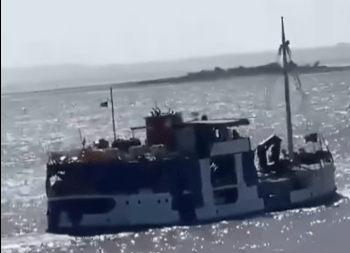
In the wake of the tragic sinking of the decades-old MV Barima off Guyana’s Essequibo Coast last weekend, top government officials have acknowledged critical failures in pre-departure protocols and confirmed that unaccounted government cargo was loaded onto the aging vessel before it went down.
Prime Minister Mark Phillips confirmed Tuesday during a press briefing that Guyana’s government had placed multiple heavy pieces of equipment and materials on the vessel before it departed Georgetown’s Kingston Goods Wharf Saturday afternoon, bound for Port Kaituma. The 87-year-old vessel sank roughly seven hours after departure, approximately 10 nautical miles from the Essequibo Coast.
“From what we have been able to establish so far, there was a clear breakdown in routine vessel inspections that should have been completed before the MV Barima left port,” Phillips told reporters.
When questioned about losses to the government beyond the vessel itself, Phillips confirmed the Public Works Ministry lost a range of assets onboard, including construction machinery, fuel reserves, and multiple all-terrain vehicles (ATVs). “Every lost item will be cataloged and assessed as a core part of the official investigation that is now getting underway,” he added.
Phillips declined to confirm or deny widespread claims that senior government officials or ministers overruled weight limit restrictions to force the extra cargo onto the vessel. “I have not received any formal reporting on that allegation at this stage. Once the investigation opens, anyone with evidence of improper pressure to load excess cargo can come forward and submit official statements for the probe to review,” he said.
Public Works Minister Juan Edghill, whose department oversaw the cargo shipment, clarified that the equipment was bound for ongoing infrastructure projects in the Port Kaituma region. He told reporters the MV Barima was rated to carry four vehicles, and the official cargo listed only a pickup truck and one passenger car. Edghill also noted that the government maintains a mandatory pre-departure inspection system for all commercial vessels operating from Georgetown ports.
When pressed on why inspectors failed to catch that the vessel was carrying far more passengers than were listed on the official manifest, Phillips interjected to confirm that the gap in oversight is itself a key focus of the coming inquiry. “It is clear that existing systems failed here, and that failure will be fully examined as part of the investigation,” the prime minister said.
Initial official counts put the total number of people onboard at 133, consisting of 116 passengers and 17 crew members. However, when cross-checking against rescued passengers revealed multiple people unaccounted for on the original list, authorities reviewed port security footage to revise the count. Officials now estimate a total of 179 passengers and crew were onboard when the vessel sank Saturday night around 11 PM.
The country’s political opposition has repeatedly called for Edghill to step down over the incident. When asked about the resignation demands Tuesday, the minister responded that he would address all questions “at the appropriate time, not tonight.”