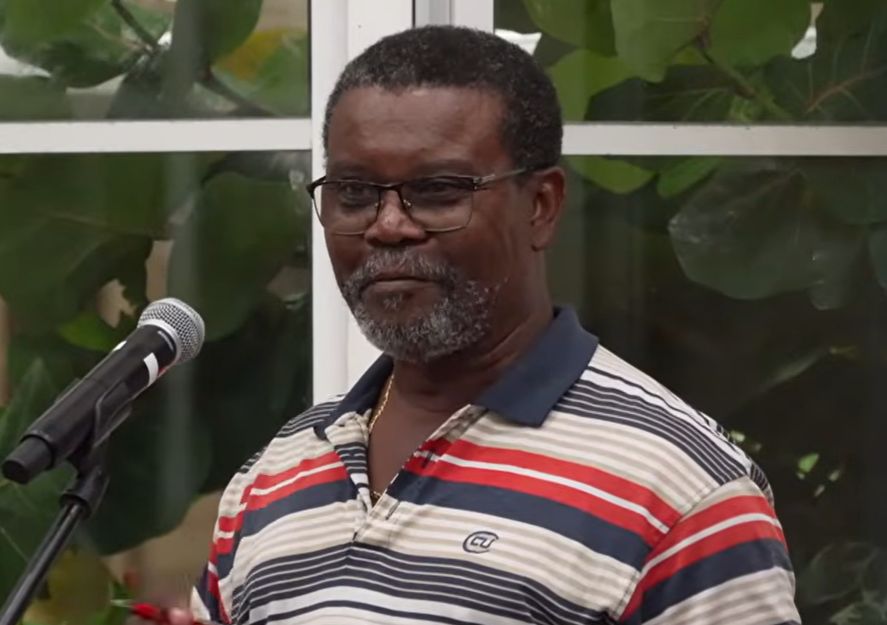
Farmers in the eastern parish of St. Philip, Barbados, are facing a persistent and crippling crisis: a total lack of reliable irrigation water that has brought commercial agricultural operations to a near-standstill for months. Leading the call for urgent government intervention is local farmer Francis Ifill, who laid out the severity of the situation and proposed a actionable short-term solution during Monday night’s St. Philip Ideas Forum, hosted at Princess Margaret Secondary School. Ifill’s appeal has earned the open backing of his local Member of Parliament, Indar Weir, a former Minister of Agriculture who has thrown his weight behind the proposal.
Ifill emphasized that water access remains the single most devastating barrier to productivity for small-scale and commercial farmers across the St. Philip region. The long-standing Sanford irrigation network, he argued, has long failed to meet the needs of local producers, a issue he has raised repeatedly with authorities in past years. While the government has announced plans for a long-term fix — constructing a new tertiary water treatment plant and laying new pipeline infrastructure to deliver irrigation water to the parish — Ifill stressed that these projects offer no immediate relief to farmers whose livelihoods hang in the balance. To date, no official timeline for the completion of these infrastructure works has been released, and no local farmer knows when the long-promised solution will materialize. “We have to act right now, because lives and livelihoods are on the line,” Ifill stated, noting that he personally has not been able to plant any commercially viable crops since March.
For farmers who rely entirely on agriculture to cover essential costs including mortgages, land taxes and household expenses, consistent irrigation is not a luxury — it is a basic requirement to stay in business. To address the urgent gap before long-term infrastructure is completed, Ifill is calling on the government to revise the existing rebate program administered by the Barbados Agricultural Development and Marketing Corporation (BADMC), switching from a post-purchase reimbursement model to front-loaded rebates for water storage equipment.
The core of Ifill’s proposal centers on empowering farmers to harvest rainwater on their own properties as an interim solution. Even with the limited rainfall Barbados has received in recent months, capturing and storing whatever rain falls would provide a critical buffer for irrigation, he argued. The current BADMC rebate system requires farmers to pay the full cost of storage tanks, guttering, pumps and other rainwater harvesting equipment upfront, then wait months to receive their rebate. For many cash-strapped farmers, this up-front expense is simply unmanageable. Ifill says switching to a front-loaded model would remove this barrier: “It is far easier for a farmer to cover half the cost upfront than to pay the full amount and wait months to recoup half of it.” If the government provides these rebates in advance, farmers can quickly install the infrastructure they need to harvest rainwater, ramp up production, and continue contributing to Barbados’ national economy, he added.
Weir, the MP for St. Philip South and a former agriculture minister, quickly endorsed Ifill’s proposal, calling it a common-sense, reasonable solution that the government should adopt immediately. Rather than waiting for large-scale public dam construction to address water shortages, Weir noted that local farmers can deploy distributed rainwater harvesting right away by capturing runoff from farm building roofs — and the request for up-front rebates is far from unreasonable. Weir explained that rebate funding is already allocated to the Ministry of Agriculture each financial year, so the only barrier to adopting the policy is a small adjustment to existing government policy, not a need for new funding. Weir also highlighted other existing support programs farmers can leverage to boost productivity, including BADMC’s contract growing initiative, which was designed to fix the longstanding industry issue of overplanting the same crops during overlapping seasons by coordinating planting schedules across producers.
Under the contract growing program, BADMC works with farmers to grow a strategically balanced mix of priority crops, and provides subsidized input supplies. After harvest, the cost of inputs is deducted from farmers’ payout for crops supplied to BADMC’s packing facility. Weir added that new digital tools, including online reporting systems and farmer WhatsApp groups, have made it far easier to coordinate planting schedules, share data on what is planted when harvest is expected, and keep government and BADMC officials updated on sector needs. He also committed to addressing gaps in agricultural extension services, noting that any farmer who does not know their assigned extension officer will be connected promptly for on-farm support. At its core, Weir reiterated, the only major policy change required to deliver immediate relief to St. Philip’s farmers is a decision to approve up-front rebates for on-farm water storage infrastructure.