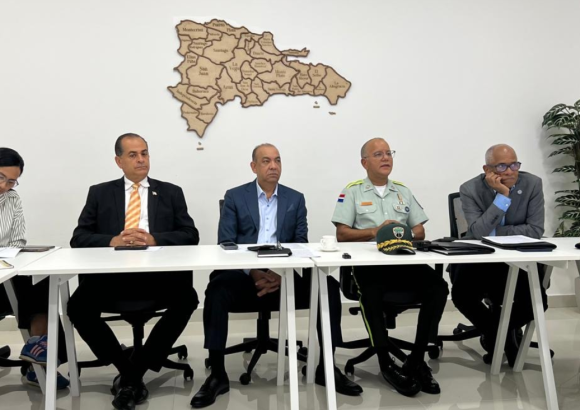
Preparations for the 2026 XXV Central American and Caribbean Games are accelerating in the Dominican Republic’s capital, as the national Transportation Cabinet has formally introduced a far-reaching mobility strategy designed to keep travel smooth and secure for all participants and attendees during the 16-day event, running from July 24 to August 9 2026.
The multi-pronged plan covers a range of coordinated measures tailored to accommodate the increased travel demand that comes with hosting a major regional multi-sport competition. Key components include upgraded traffic regulation protocols, expanded public transit access, real-time mobility monitoring across the city, dedicated logistics corridors for official sports delegations, and targeted temporary adjustments to existing road infrastructure.
Leading the on-the-ground execution of the strategy is the National Institute of Transit and Land Transportation (Intrant), which will operate out of its central Traffic Control Center. From this hub, Intrant will manage all adaptive traffic signal adjustments and continuously track flow on the capital’s busiest travel corridors, identifying and resolving congestion issues before they escalate.
To guarantee that athletes and official delegations can travel between their accommodations and competition venues without delays, the Dominican Specialized Traffic Security Directorate (Digesett) will provide dedicated police escorts for all official delegation travel. These convoys will also be granted priority access to selected tunnels and overpasses to cut down on travel time between sites.
Beyond delegation logistics, Digesett will ramp up traffic enforcement operations in the immediate vicinity of the Juan Pablo Duarte Olympic Center – the Games’ primary venue – and all secondary competition locations. Tow trucks will be strategically stationed across these zones to strictly enforce no-parking restrictions, and all passenger pick-up and drop-off activity will be restricted to clearly marked, designated access points to prevent bottlenecks around venue entrances.
To incentivize public transit use and reduce private car congestion during the event, two major public transit agencies have announced complimentary service for key groups. The Office for the Reorganization of Transportation (OPRET), which operates the Santo Domingo Metro, confirmed that free access will be extended to all accredited athletes, event volunteers, and on-site Games staff throughout the duration of the competition. Meanwhile, the Metropolitan Transport Services Office (OMSA) will offer free service on all of its existing regular bus routes from July 24 through August 8, and will add temporary special routes that directly connect high-density residential and hospitality zones to the major Games venues.
The mobility plan also puts in place temporary restrictions on non-essential activity near competition sites to reduce disruption: all ongoing road construction projects will be paused, and limits will be imposed on cargo vehicle movement and commercial loading operations within venue proximity zones. Event organizers have confirmed that all information on planned road closures and detour routes will be released in advance through official government channels and popular third-party navigation applications. Authorities are encouraging local Santo Domingo residents to plan their trips well ahead of the Games period and prioritize the use of public transit whenever possible over the 16-day event.