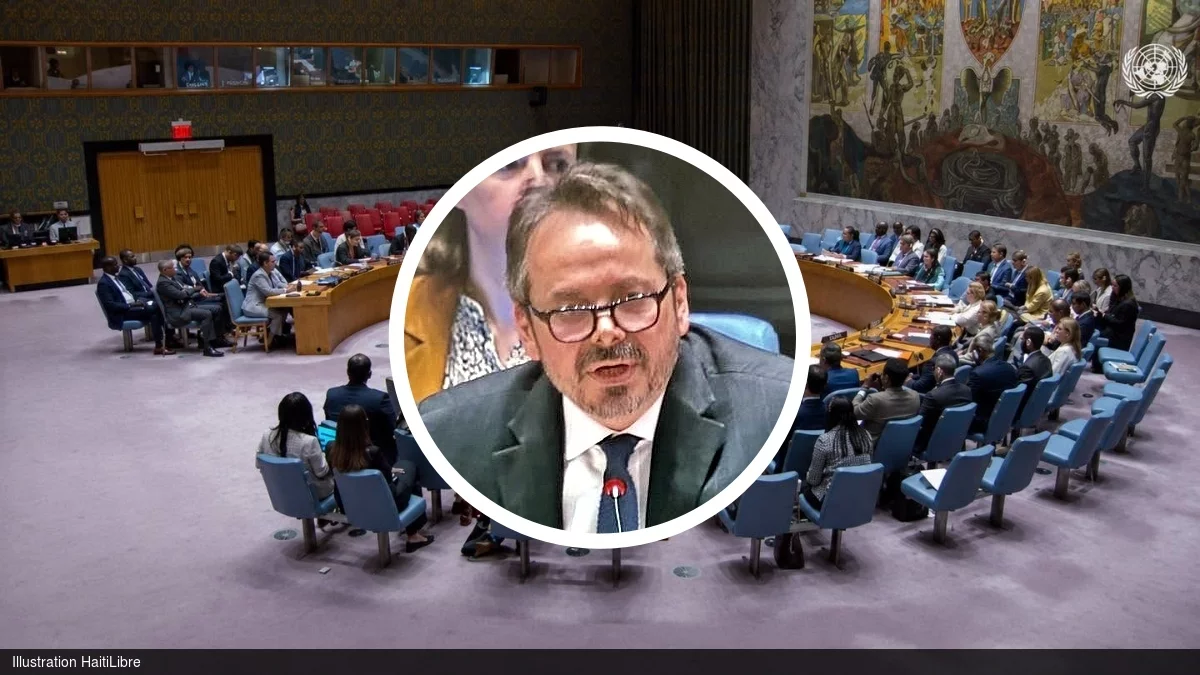
On July 20, 2026, the Head of the United Nations Integrated Office in Haiti (BINUH), Ruiz Massieu, addressed the UN Security Council to lay out the current state of Haiti, highlighting both fragile progress toward democratic transition and the dire, ongoing challenges that threaten the Caribbean nation’s future.
Massieu opened his address by acknowledging the harsh reality facing Haitian citizens: persistent widespread insecurity, unmet acute humanitarian needs, and deeply rooted institutional dysfunction that have left millions grappling with daily hardship. Even amid this crisis, he stressed that recent political breakthroughs have opened a rare, actionable path forward to advance the country’s political transition, roll back gang violence, and reestablish legitimate democratic governance. The core task at hand, he argued, is to preserve the growing momentum and turn incremental progress into tangible, visible improvements for everyday Haitians.
Haiti’s transition process currently stands at a defining crossroads, Massieu noted. Earlier this month, two key milestones laid a foundation for renewed progress: the adoption of a revised electoral decree and a cross-stakeholder consensus on an electoral budget. The formal launch of voter registration on the same day of Massieu’s address marked another critical step forward. The most urgent priority that follows, he emphasized, is the adoption of a credible, practical electoral timeline. Delivering on this goal will require ongoing unity across Haitian state institutions, sustained dialogue across all factions of the political divide, and a collective commitment to prioritize the needs of the Haitian people over narrow partisan interests. Massieu said he remains confident that Haitian stakeholders can collaborate to move the transition forward, create the conditions for free, fair elections, and restore full function to the country’s democratic institutions.
A consistent message emerged from Massieu’s ongoing consultations with political parties, civil society groups, youth organizations, and women’s associations: robust security is a non-negotiable prerequisite for legitimate, credible elections. But Massieu cautioned that security gaps cannot be used as an excuse to delay the political process indefinitely. Instead, he argued, electoral preparation and security enhancement must proceed in tandem to keep progress on track. In this framework, the full deployment of the multinational-backed Gang Suppression Force (GSF), which operates in support of Haitian national authorities, remains essential to building a secure environment that allows the electoral process to move forward. The United Nations, Massieu reaffirmed, remains fully committed to accompanying this Haitian-led effort, and called on local stakeholders to accelerate progress and improve coordination to ensure institutional advances translate into real benefits for the population.
Security remains the most urgent challenge facing Haiti today. Gang violence continues to inflict devastating harm on a population already battered by years of crisis, with millions displaced or facing food insecurity, and women and children bearing the worst brunt of ongoing attacks. Recent gang offensives in Cité Soleil, Kenscoff, the South-east department, and the Artibonite department underscore the persistent reach of criminal groups, and the urgent need to ramp up efforts to dismantle their influence and improve protection for civilian populations. Against this backdrop, the launch of GSF operations marks an important turning point, shifting the international effort from planning to active implementation, alongside ongoing capacity building for the Haitian National Police and Haitian Armed Forces.
The gradual deployment and expansion of the GSF, supported by the UN Support Office in Haiti (UNSOH), paired with targeted, successful anti-gang operations, will be critical to strengthening national efforts to curb insecurity and rebuild public trust. Sustaining these operations in the coming months is non-negotiable, Massieu said, while also emphasizing that full compliance with international human rights law and global humanitarian standards is essential to maintaining the legitimacy of security operations, strengthening public trust, and securing lasting security gains. He commended the work of UNSOH, contributing UN member states, and regional and international partners for building the operational, legal, and logistical frameworks that made the GSF’s deployment possible, and highlighted the close coordination now in place between BINUH, UNSOH, the GSF, Haitian national institutions, and global partners. Long-term success, Massieu noted, depends on security action, political engagement, and humanitarian support reinforcing one another, rather than working in isolation.
Massieu stressed that security operations alone cannot deliver lasting peace for Haiti. Sustainable stability requires a broader, holistic strategy that reduces the power and appeal of armed gangs, while strengthening judicial institutions, expanding the capacity of the state, and creating economic and social opportunities for communities devastated by violence — particularly for women and children.
One of the most alarming crises facing Haiti today is the exploitation of children by gangs: Massieu warned that roughly half of all active gang members in the country are minors, who are coerced into violence, exploited by criminal leaders, and robbed of any chance to build a stable future. Preventing a lost generation must therefore be a central priority of all national and international stabilization and recovery efforts, he argued. Massieu welcomed the ongoing leadership of Haiti’s National Commission on Disarmament, Dismantlement and Reintegration in advancing a Haitian-led vision to reduce armed violence and create viable alternatives to gang membership, especially for at-risk children and young people. This vision now needs to be translated into a comprehensive national program, backed by full support from the international community. As outlined in a recent letter from the UN Secretary-General to the Security Council, the United Nations has already developed practical, phased support options for this program, alongside initiatives to strengthen judicial capacity, accountability, and oversight.
Massieu also highlighted the recent establishment of two specialized judicial units to improve accountability for serious human rights and criminal abuses as an important step toward delivering justice to victims and breaking the long-standing cycle of violence and impunity in Haiti. He encouraged UN member states seeking to support Haiti’s stabilization efforts, including those exploring complementary initiatives, to channel their support through the proposed Multi-Partner Trust Fund, a mechanism designed to help Haiti translate short-term security gains into long-term, durable stability.
In closing, Massieu emphasized that the current window of opportunity for Haiti must not be wasted. Continued support from the Security Council for the unique partnership between the GSF — backed by UN logistical support — and BINUH’s political mediation and good offices work will be critical to sustaining current momentum. As the UN Secretary-General stressed during his recent visit to Port-au-Prince, lasting progress will require sustained political engagement from Haitian stakeholders and continued solidarity from the international community. Above all, there must be a shared sense of urgency to deliver tangible improvements that Haitian citizens can see and feel in their daily lives.
Massieu called on the Haitian government and all domestic stakeholders to demonstrate sustained commitment, political responsibility, and a collaborative spirit to protect the progress that has already been achieved. He also urged UN member states to provide the necessary funding and resources to support Haiti’s national priorities, consolidate security gains, and create the conditions required to hold inclusive, credible elections and fully restore democratic governance. The United Nations, he reaffirmed, remains fully committed to standing with Haiti in this effort. The Haitian people have waited far too long for meaningful change, Massieu said, and they deserve to see hard-won progress translated into improved living conditions and new, hopeful prospects for the future.