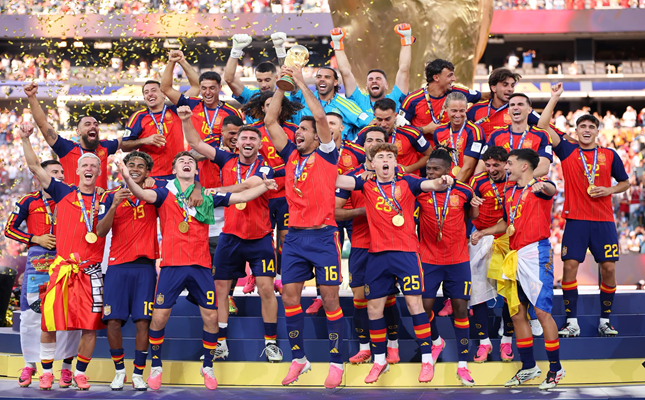
The 2026 FIFA World Cup, a historic edition marking the first tournament with an expanded 48-team field and co-hosted across the United States, Canada and Mexico, wrapped up in dramatic fashion on Sunday, as Spain secured its second ever World Cup title with a tense 1-0 extra-time victory over defending champions Argentina.
After five weeks of high-stakes football, packed stadiums, sizzling summer heat and scattered on-field controversies, the tournament’s showpiece final delivered all the tension and drama fans expected. Played out in front of a sell-out crowd at New Jersey’s MetLife Stadium, the match stayed deadlocked through 90 minutes of regular play, with Spain controlling most of the possession and creating repeated scoring chances only to be turned away again and again by Argentina’s star goalkeeper Emiliano Martínez, who turned in a man-of-the-match performance despite his side’s eventual loss.
The game’s turning point came late in regulation, when Argentina’s star midfielder Enzo Fernández received a second yellow card for a hard tackle, reducing the defending champions to 10 men heading into extra time. Still, Argentina held on until the 106th minute, when a well-crafted Spanish attack broke the deadlock: Nico Williams redirected Pedro Porro’s cross into the high-risk area just 12 yards from goal, setting up Ferran Torres for a clinical first-time finish that slammed into the top corner of the net, beyond the reach of Martínez.
Despite being a man down, Lionel Scaloni’s Argentina side fought valiantly for the remainder of extra time, pushing for an equalizer that would force penalties, but could not find the breakthrough. When the final whistle blew, Spain’s players and fans erupted in celebration, capping off a nearly flawless tournament run that saw the side concede just one single goal across all their matches, an achievement unmatched by any competitor in the 2026 event.
The New Jersey stadium played host to more than just fans on Sunday: the capacity crowd included A-list celebrities, legendary former football players, and sitting U.S. President Donald Trump, all in attendance to witness the historic final. Millions more fans watched from hundreds of public watch parties across the three host nations and in football-crazed countries across the globe, bringing the dramatic conclusion to a global audience.
Spain’s first World Cup title came in South Africa in 2010, and Sunday’s win adds a second crown to the nation’s storied football history. The squad is expected to receive a jubilant hero’s welcome upon their return to Madrid this week, as the country celebrates one of the greatest campaigns in its modern football legacy. For Argentina, the defeat brings a disappointing end to what had been a strong title defense, but the side will quickly shift focus to upcoming international qualifiers and begin preparation for the next cycle of global tournaments, set to culminate in the 2030 FIFA World Cup.