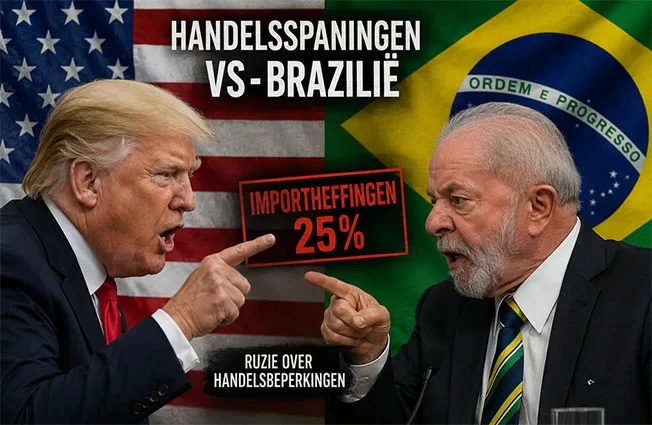
On July 19, the United States announced a new round of 25 percent import tariffs targeting a broad range of products exported from Brazil, a trade measure set to enter into force on July 22. This new tariff policy forms the latest escalation of an ongoing trade dispute between the two nations, with Washington justifying the action by claiming Brazil engages in unfair trade practices that disadvantage American businesses. In response, Brazil has issued a sharp rebuke and threatened to enact retaliatory countermeasures against the United States.
The new tariffs cover a wide swathe of Brazil’s key export categories to the US, including furniture, ethanol, industrial machinery, footwear, and dozens of other manufactured and industrial goods. However, the Office of the U.S. Trade Representative carved out a series of exemptions for goods deemed critical to domestic U.S. economic operations or for which the country lacks sufficient domestic production capacity. Key Brazilian exports excluded from the new levies include coffee, beef, oranges, orange juice, select energy products, and aerospace components.
According to U.S. trade officials, the tariffs are the outcome of a 12-month-long investigation into alleged unfair trade barriers maintained by Brazil. Washington specifically highlights the regulatory treatment of U.S. technology and payment firms operating in Brazil, as well as other systemic trade practices that it argues put American companies at a competitive disadvantage in the Brazilian market.
The Brazilian administration has condemned the move in strong terms. President Luiz Inácio Lula da Silva has labeled the new U.S. import tariffs unacceptable, and confirmed that Brazil reserves the full right to implement proportional countermeasures to protect its domestic economy. Brazilian officials note that countermeasures will not be limited to reciprocal import tariffs, and will include a range of additional economic policy tools designed to minimize the negative impact of U.S. tariffs on Brazil’s own economic growth.
Trade analysts warn that the new round of trade tensions between the two largest economies in the Western Hemisphere is likely to have spillover effects on economic growth across South America. As the region’s largest economy and a leading global exporter of agricultural goods, industrial products, and raw materials, a contraction in Brazilian exports to the U.S. will not only put added pressure on Brazil’s domestic industrial sector, but could also ripple through regional trade networks.
For neighboring Suriname, the impacts are expected to be mostly indirect, but still meaningful. Brazil is Suriname’s largest regional trading partner and a core economic engine for South America as a whole. A slowdown in Brazilian economic activity driven by reduced exports could dampen regional investment flows, shift cross-border trade patterns, and lower demand for Suriname’s raw material exports. At the same time, Brazil may redirect export volumes originally bound for the U.S. to other regional markets, increasing competitive pressure on domestic producers in Suriname and other smaller South American economies.
In the coming weeks, global trade observers will closely monitor whether diplomatic channels can lead to a negotiated compromise between Washington and Brasília before the tariffs take effect. If negotiations fail, there is significant risk that trade tensions will escalate further, leading to a tit-for-tat cycle of additional reciprocal trade measures that could disrupt commerce across the entire hemisphere.