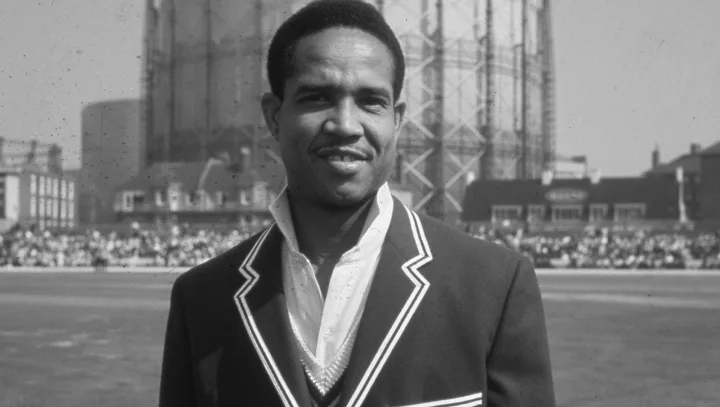
The global cricketing community is in mourning after the passing of Sir Garfield St Aubrun Sobers, the man widely celebrated as the greatest cricketer to ever play the game, regardless of which planet he graced with his talent. He died on Friday at the age of 89, leaving behind a decades-long legacy that reshaped international cricket and lifted the spirit of the Caribbean region. Among the first leaders to offer public condolences was Saint Lucia Prime Minister Philip J Pierre, who joined thousands of tributes flowing from across the Caribbean and around the world.
Speaking on behalf of the government and people of Saint Lucia, Pierre honored Sobers, a Barbados national hero and legendary former captain of the West Indies cricket team. He emphasized that Sobers’ death marks “a profound loss to Barbados, West Indies cricket and the entire Caribbean.”
Pierre walked through the landmark achievements that turned the native of Bay Land, St Michael, into one of the most enduring icons in the history of international sport. One of his most famous feats came in 1958, when he scored an unbeaten 365 runs in a Test match against Pakistan. That spectacular individual innings set a new world record for the highest score in Test cricket, a mark that stood unbroken for 36 years. A decade later, in 1968, Sobers made history again while representing Nottinghamshire in first-class cricket, when he became the first player ever to hit six sixes from six consecutive balls in a single over – a feat that remains one of the most celebrated in the sport.
Beyond his record-breaking numbers, Sobers broke new ground as the first truly all-round international cricketer. He was equally exceptional in three core aspects of the game: fielding, batting, and bowling, with the rare ability to deliver both fast pace and effective spin bowling. But Pierre stressed that Sobers’ impact extended far beyond the boundary of any cricket pitch.
“Sir Garfield belonged to a generation of West Indian cricketers whose success gave confidence to Caribbean people during an important period in the region’s development,” Pierre explained, noting that the team’s global victories became a source of collective pride and empowerment for Caribbean communities at a pivotal time of social and political change.
Pierre extended formal heartfelt condolences to Sobers’ family and loved ones, as well as to Barbados Prime Minister Mia Amor Mottley, the government and people of Barbados, Cricket West Indies, and the global cricketing fraternity. As chairman of the Caribbean Community (CARICOM), Pierre also joined the regional bloc in honoring “a son of the Caribbean.” Sobers was awarded CARICOM’s highest regional honor, the Order of the Caribbean Community, back in 1998 in recognition of his contributions to cricket and Caribbean identity.