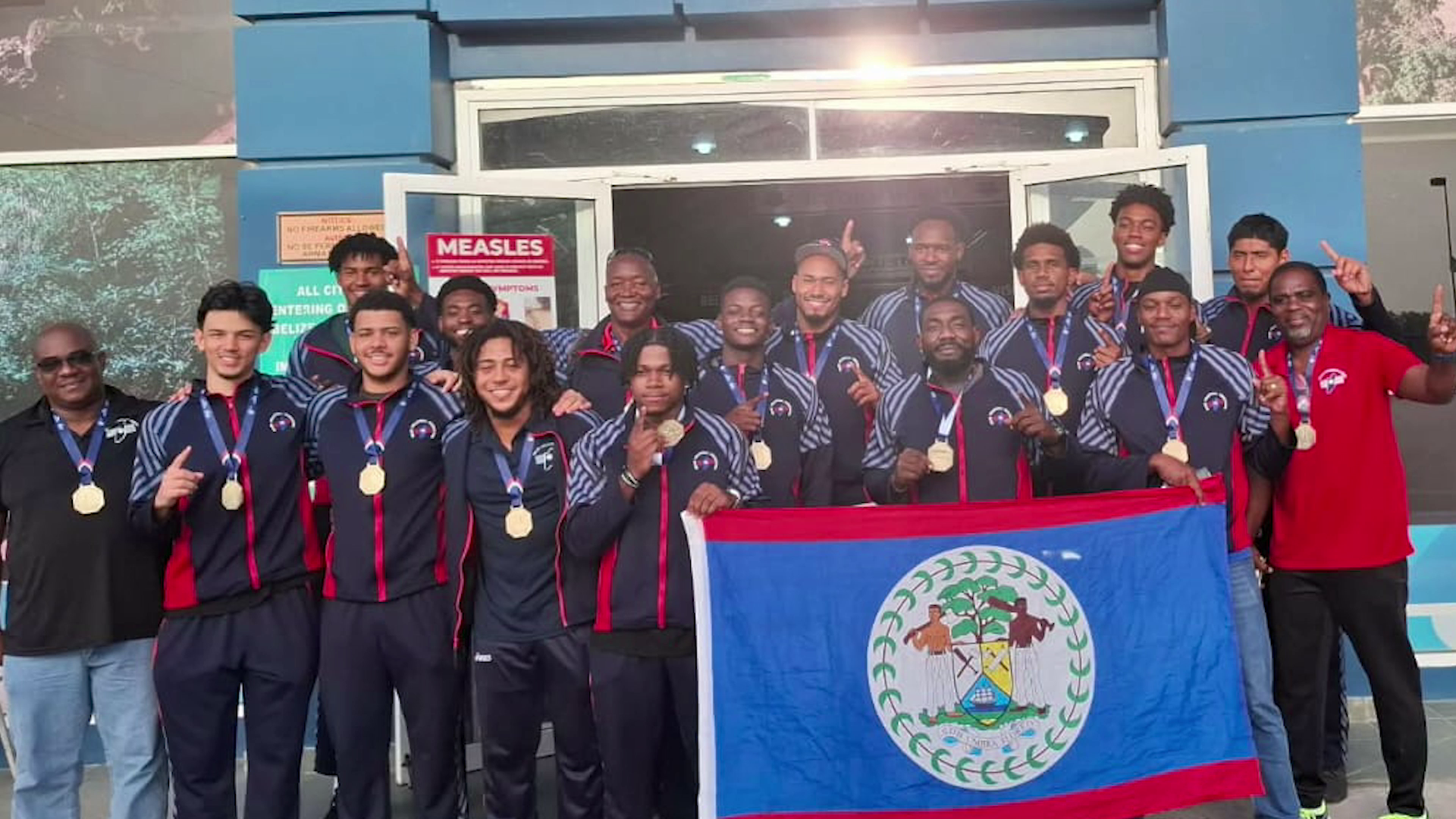
July 16, 2026 — For decades, Belize’s men’s national volleyball program knocked repeatedly on the door of regional elite competition, never quite breaking through to claim the sport’s top regional honor. That drought ended in dramatic fashion earlier this week, when the underdog Belize squad upset regional powerhouse Costa Rica in four sets to secure its first-ever Central American senior championship at the AFECAVOL Men’s Final Four — a win already being hailed as a defining turning point for volleyball and amateur sport across the small Central American nation.
Allan Sharp, president of the Belize Volleyball Association and a former national team player himself, has borne witness to every high and crushing heartbreak the program has endured over the past decades. For him, the historic gold medal is far more than a piece of hardware: it is the long-awaited payoff for 30-plus years of quiet sacrifice, unwavering persistence, and collective belief that a small nation could compete with far larger regional rivals.
In an emotional post-victory interview, Sharp recalled watching the decisive match alone in a closed room, overwhelmed by years of built-up anticipation. “I gotta tell you, I watched the game locked up in a room with nobody around me, lots of anxiety, lots of emotions. Years and years of emotions coming out. I mean tears — me myself in my room jumping up and down screaming whilst they ran around in the court. It brings out a lot of emotions to think about the gold medal,” Sharp said.
He praised the unshakable mindset that carried the team to victory, noting that at no point did the squad doubt they belonged on the same court as Costa Rica or that they would leave as champions. “I must say the complete mental attitude, the approach for this team was hunger, belief, if nothing else, belief, a lot of confidence. I don’t think they in one moment thought that they would not win, that they did not deserve to win, that they would not be the champions. They had the hunger to be champion. They put in the work to be champion. They thought they would be champion. They played to be champion. And now they are champions.”
Plans are already underway to welcome the champion team back to Belize ahead of public celebrations. The squad is scheduled to cross back into Belize via the northern border around 4 p.m. local time on the day of the announcement, with an official welcome by members of Belize’s volleyball community set for 6:30 p.m. that same evening at Belize Elementary School. Sharp added that organizers are working with local community groups to arrange larger celebratory events as soon as possible.
Beyond the celebrations and the gold medal, Sharp argues that Belize volleyball’s historic rise offers a replicable blueprint for success across all sports in the country. As president of both the Belize Volleyball Association and the Belize Olympic and Commonwealth Games Association, Sharp has spent decades advocating for targeted investment and structured development to nurture local athletic talent across Belize.
With a total population less than one-tenth the size of most of its Central American neighbors, Belize has long been written off as a small-fry competitor in regional sport. But Sharp notes that this championship is far from a one-off fluke: the men’s squad took second place at last year’s AFECAVOL competition, and the program has built consistent, sustainable success across both men’s and women’s divisions. The championship lifts Belize to the top of the Central American men’s volleyball rankings and earns the squad a spot in the 2027 Men’s Pan American Cup, marking a new era for the program.
“This is something very big for them and for volleyball and for sport in Belize. You know it shows that things can happen in sport if we have the programs first of all and there’s investment and support behind the programs. Facilities is must. Lots of things at play, right? The coaches. I mean, we cannot forget the coaches who have put in tremendous time and effort over this long haul,” Sharp explained. “So you mean our guys have shown that they have the talent but talent is not everything. These guys have put in the work because talent doesn’t – is not what’s going to make you win. It’s putting in the work and having a program and then you work. You work on your craft. You work on what you’re going to do. And so this is years and years in the making.”
This report is a transcript of an evening television newscast, with all Kriol-language statements transcribed using a standard spelling system.