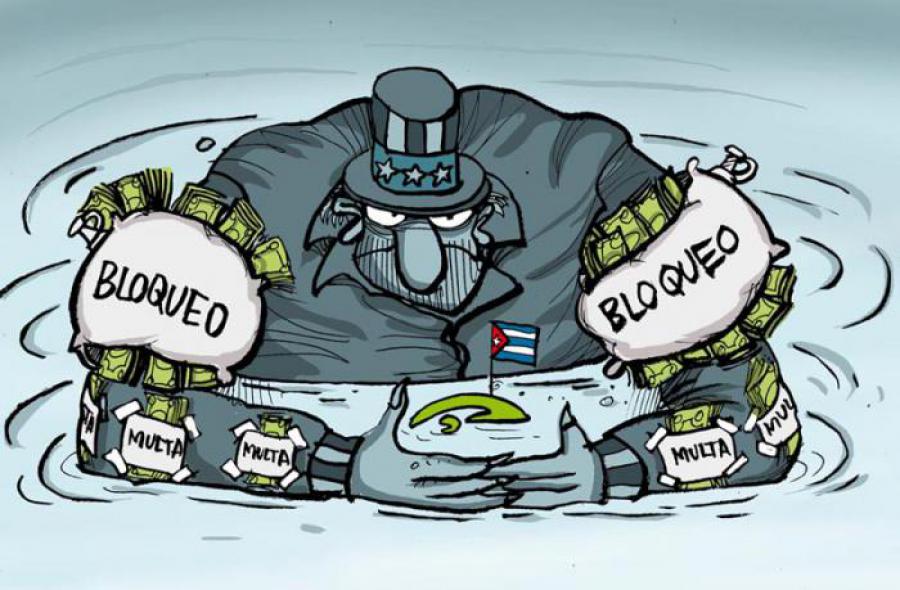
When analyzing modern geopolitical confrontation, few tactics are as pervasive yet underdiscussed as economic warfare — a non-military strategy where one power leverages trade, finance, and regulatory pressure to force policy concessions from a targeted nation. As French scholar Christian Harbulot famously framed it, economic warfare stands as the most powerful expression of non-military power dynamics, designed to cripple an adversary by cutting it off from global commercial, financial, and technological exchange. For Cuba, this is not an abstract concept: it has been the daily reality of its relationship with the United States for more than six decades, in the form of the sweeping economic, commercial, and financial blockade that has shaped every layer of Cuban life.
The origins of this prolonged economic campaign stretch back to the immediate aftermath of the 1959 Cuban Revolution, which ousted the U.S.-backed dictatorship of Fulgencio Batista. In response to the new revolutionary government’s nationalist policy reforms, then-U.S. President Dwight Eisenhower moved quickly to cut off most bilateral trade, only exempting medicines and a small set of food products. Just three years later, in February 1962, President John F. Kennedy formalized the full blockade using powers granted by the newly enacted Foreign Assistance Act, a framework that remains the legal foundation of the embargo to this day.
Under the still-valid legislation, the U.S. executive branch is authorized to maintain a complete trade embargo with Cuba, ban all direct U.S. aid to the Cuban government, bar the use of American international aid funds allocated to global organizations for any Cuba-focused programs, and withhold all U.S. government benefits from Cuba until the island compensates U.S. citizens and companies for properties nationalized after the revolution. Critically, the law also grants the U.S. president broad discretionary power to adjust the scope and intensity of sanctions, a authority that successive U.S. administrations have repeatedly used to ratchet up political and economic pressure on Havana. For decades, proponents of the blockade justified the measures by claiming Cuba posed a critical threat to U.S. national security, a narrative that grew increasingly threadbare after the collapse of the Soviet bloc and the end of the Cold War in the early 1990s, which plunged Cuba into a deep economic crisis.
With the Cold War pretext no longer credible, the U.S. shifted its justifications to claims of human rights abuses, codifying this new framing in the 1992 Cuban Democracy Act — more commonly known as the Torricelli Law. This legislation marked a key turning point, expanding the economic war beyond U.S. borders to internationalize pressure on Cuba. It prohibited Cuba from accessing financing from major international financial institutions, imposed sanctions on foreign governments that forgive Cuban debt, banned U.S. subsidiaries operating in third countries from trading with the island, and imposes an 180-day ban on any ship carrying goods or passengers to or from Cuba docking at U.S. ports. A core outcome of this provision has been to push global financial institutions to avoid any engagement with Cuba, severely constraining the island’s access to foreign currency and complicating its commercial transactions with global partners.
Four years later, the 1996 Helms-Burton Act deepened the extraterritorial reach of the blockade even further. Most notably, its Title III provision allows U.S. courts to hear lawsuits against foreign companies that operate in properties confiscated from U.S. owners after the revolution. This provision turned the economic war into a globally reaching measure, designed to deter third countries and foreign firms from doing business with Cuba through the threat of costly litigation. In recent decades, this provision has significantly shrunk the pool of foreign investment opportunities available to the island.
Successive updates and expansions of the blockade over 60-plus years have turned it into a permanent, structural pillar of U.S.-Cuba confrontation, outlasting shifts in domestic political leadership in the United States and maintaining consistent pressure regardless of broader geopolitical changes. Even as some administrations have taken small steps to ease certain restrictions, former President Donald Trump intensified the campaign again with new executive orders, including a targeted energy siege that worsened the impact on Cuban communities. For Cuba, the cumulative impact of this decades-long economic warfare has been deep and multifaceted, touching every aspect of daily life, slowing long-term economic development, and reshaping the country’s engagement with the global economy.
This op-ed is contributed by Ariel Pazos Ortiz, Consul of the Embassy of Cuba in Grenada. NOW Grenada does not take responsibility for the opinions and statements shared by contributors. Readers may report content that violates platform policies through official reporting channels.