A newly released national survey has shed sharp new light on how substandard local environmental conditions are eroding daily life and public well-being across the Dominican Republic, documenting that nearly half of all households across the country contend with at least one form of pollution or disruptive environmental nuisance near their homes.
The key findings are laid out in the ENHOGAR-MICS 2025 Basic Report, a comprehensive assessment of living conditions that links local environmental quality directly to population mental health and overall quality of life.
Geographic breakdowns from the report show that environmental burdens fall disproportionately on large urban centers, where dense development and concentrated activity amplify pollution and nuisance issues. Nowhere is this gap more pronounced than in the Ozama region, which encompasses the National District and the province of Santo Domingo—this country’s most populated urban hub. In this area, more than 57% of households report being negatively impacted by local environmental problems, a rate well above the national average.
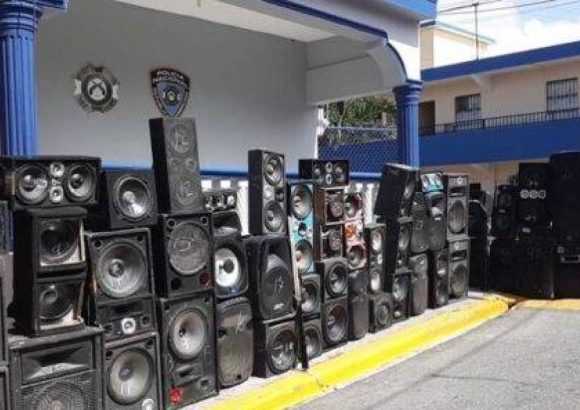
Among all documented environmental issues, noise pollution stands out as the most pervasive complaint across the nation. The most common source of disruptive noise is loud music originating from neighborhood commercial outlets including grocery stores and bars, as well as from adjacent residential properties. This source disturbs roughly 40.4% of Dominican households, edging out other major urban noise contributors such as vehicle traffic, motorcycle activity, and power plant operations, which affect 38% of homes nationwide.
Right alongside noise pollution, the survey identifies inadequate solid waste management as a second critical threat to community environmental health. Nationwide, nearly 40% of surveyed families named accumulated garbage piled on public streets, sidewalks, and unused vacant lots as a pressing problem in their immediate neighborhood.
The report also catalogs a range of additional environmental hazards that degrade residential living conditions across the country. Stagnant standing water and unmaintained open ravines, which can breed disease-carrying pests and create sanitation hazards, impact roughly 26.3% of households. Meanwhile, emissions of harmful smoke, dust, and industrial or vehicular gases were cited as a direct negative impact on living conditions by 21.8% of survey respondents.