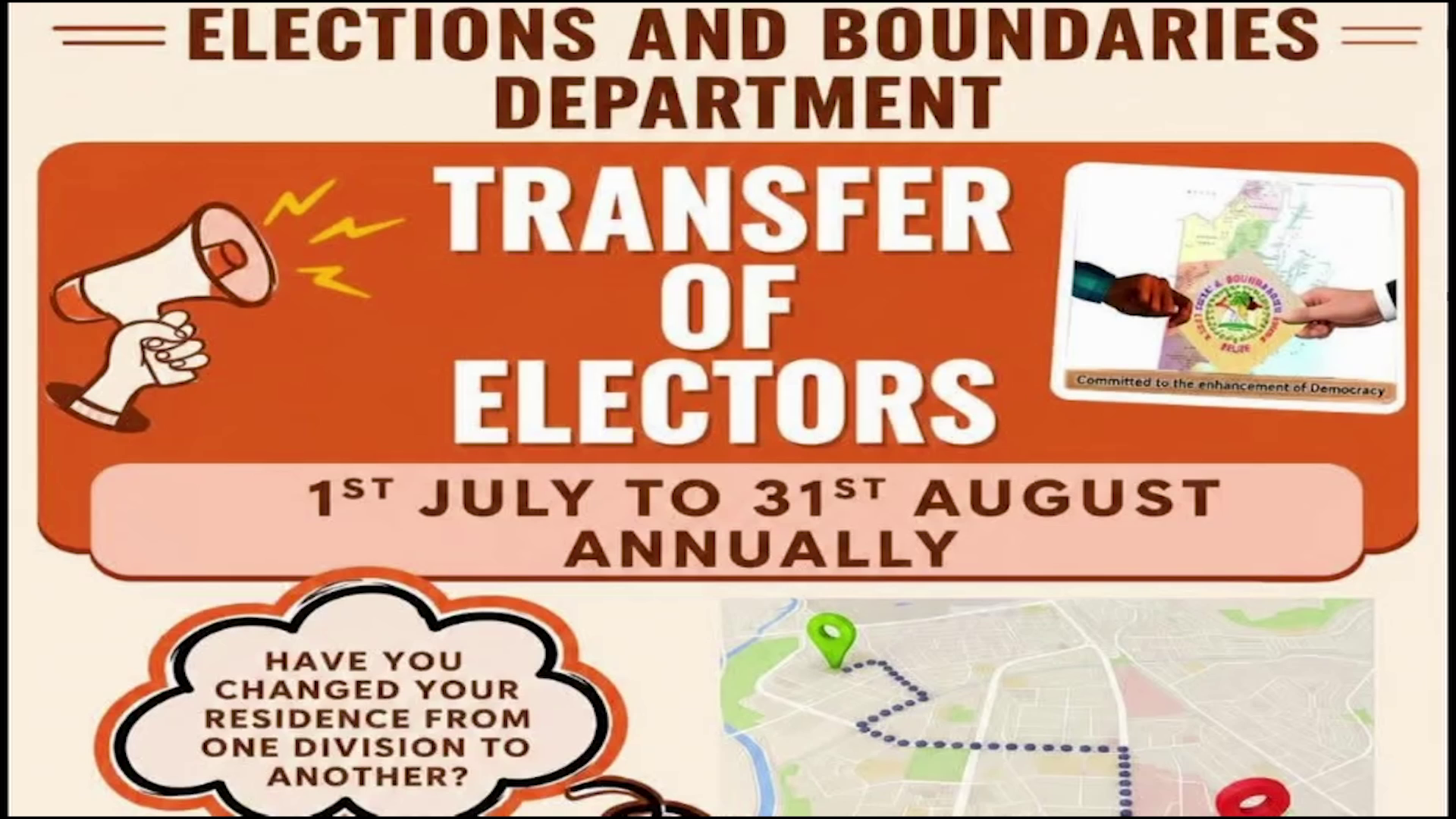
As Belize prepares for its 2027 municipal elections, scheduled for March next year, a key electoral process is already underway that could reshape the outcome of races across the country’s cities and towns. From July through August 2026, the Elections and Boundaries Department (EBD) is managing the only two-month window each electoral cycle where registered voters are permitted to transfer their voting registration from one constituency to another, a process designed to accommodate voters who have changed their permanent residence. With eight months still remaining before ballots are cast, political candidates and party operatives have already begun aggressive outreach in competitive districts, and the EBD has seen its operational workload surge dramatically in response to the opening of the transfer period.
For eligible voters who have relocated since the last election, this two-month window represents their final chance to update their registration to vote in the municipality where they currently reside. Briony Neal, a registering officer with the EBD, explained that the process exists to ensure voters can exercise their voice in the local elections that impact their daily lives. “If someone moved from Camalote to Belize City and no longer lives in their original constituency, they would not be able to travel back to vote in their old district, and they would not have a say in the Belize City municipal government that serves them now,” Neal outlined. “This transfer period is the only opportunity to adjust that registration ahead of March’s vote.”
While the formal purpose of the transfer process is rooted in accommodating residential relocation, electoral officials and observers warn that the window is frequently exploited for partisan advantage through tactics that skirt ethical and legal boundaries. Political operatives across major parties are widely expected to drive a sharp spike in voter transfers from rural villages to competitive municipal constituencies over the next two months, with operatives offering financial and material incentives to voters from other districts to transfer their registration, padding party voting numbers in tightly contested races. This practice places the EBD in the position of vetting thousands of transfer applications to separate legitimate residential changes from fraudulent, politically motivated re-registrations.
Dennis Leslie, Acting Registering Officer for the EBD, explained the department’s current verification process: electoral officers conduct up to three home visits at the address listed on a transfer application to confirm the voter actually resides at that location. If no one at the address can confirm the applicant’s residence after three checks, registering officers have the authority to reject the fraudulent application.
However, critical gaps in both enforcement power and existing legislation leave the system vulnerable to widespread abuse. Leslie noted that verification efforts are extremely limited in scope, and rejected applications remain very rare. While it is a criminal offense for a voter to provide false information to register at an ineligible address — carrying a penalty of up to a $1,000 BZD fine or two years of imprisonment — and the law already penalizes registering officers who intentionally block the registration of eligible voters, there is no existing legal provision to penalize officers who approve applications from unqualified, ineligible voters. This loophole means most verification checks remain little more than formal procedural requirements, with little deterrent for partisan actors seeking to pad vote tallies.
The EBD is set to release its first public list of approved July transfer applications on July 15, 2026, which will give political observers and opposition groups a first look at the scale of transfers into competitive municipalities this cycle.