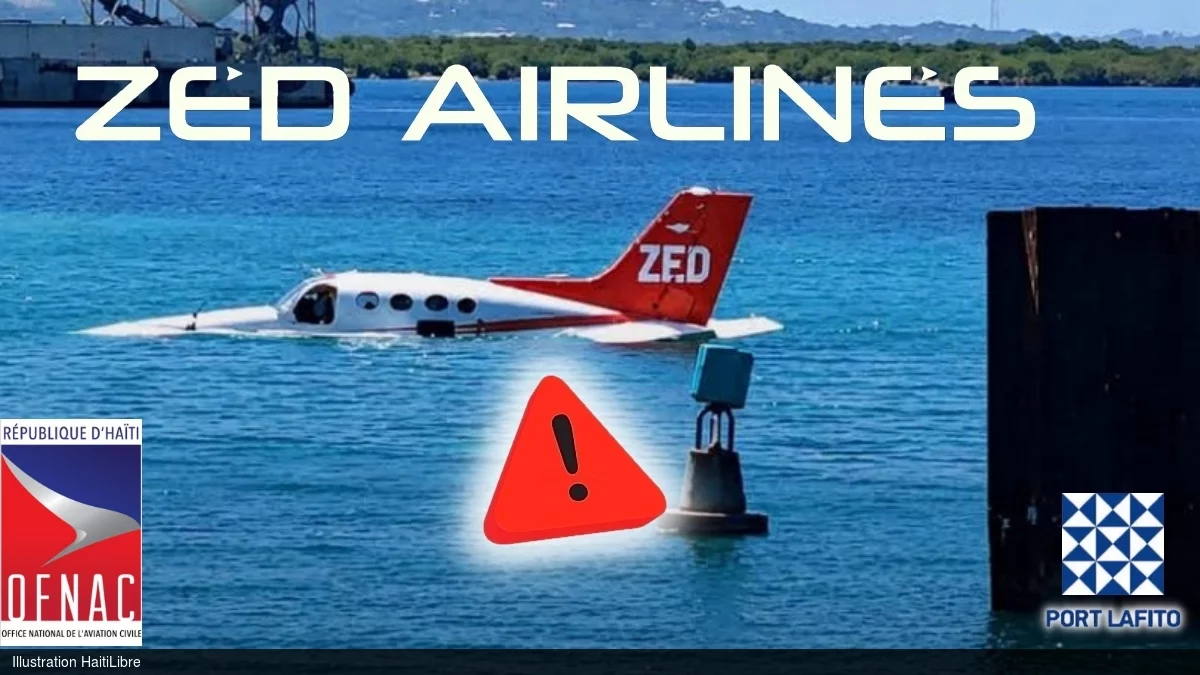
On July 8, 2026, a routine regional passenger flight between two Haitian cities took an unexpected turn when a ZED Airlines Cessna 402B, operating as Flight 6502 and registered HI-1056 in the neighboring Dominican Republic, was forced to execute an emergency water landing off the coast of Port Lafito shortly before 11 a.m. The flight, which had departed Cap-Haïtien bound for Port-au-Prince, suffered an in-flight emergency that left the pilot with no safe alternative but to ditch the aircraft in coastal waters.
Within moments of receiving the distress alert, Haiti’s National Civil Aviation Office (OFNAC) triggered its pre-planned national emergency response protocol, activating a full search and rescue (SAR) operation under the direction of the agency’s SAR Directorate. The coordination framework allowed a dedicated task force to mobilize immediately, cutting through bureaucratic delays to deploy critical assets to the incident zone. As part of this rapid rollout, two rescue helicopters were dispatched straight to the Port Lafito area to locate the downed aircraft and extract the three people onboard: one pilot and two passengers.
In a public statement released shortly after the rescue, ZED Airlines confirmed the positive outcome of the operation: all three occupants survived the emergency landing without fatalities. While all three were pulled from the water safely, the airline confirmed they have been transferred to local medical providers for routine evaluations and any required care, and are already receiving all necessary support from both the carrier and local authorities.
Moving forward, a joint investigation team composed of ZED Airlines’ in-house technical experts and Haitian civil aviation regulatory officials will conduct a full, comprehensive review of the incident to pinpoint the root cause of the emergency that forced the water landing. OFNAC’s Aviation Safety Directorate has already begun the first regulatory steps required under both national and international aviation safety rules. In the coming days, agency inspectors will conduct a formal interview with the flight’s pilot to gather first-hand accounts of the emergency, which will form the foundation of a preliminary incident report ahead of the full, final investigation.
The civil aviation agency also highlighted the critical role of cross-stakeholder collaboration in the operation’s success, issuing formal praise for the Port of Lafito’s leadership and on-ground teams. The port provided immediate logistical support and local coordination that significantly accelerated the deployment of rescue resources and streamlined on-site operations. OFNAC officials noted that this seamless synergy between regulatory agencies, local port authorities, and rescue teams was directly responsible for the speed and effectiveness of the entire mission.
In closing, OFNAC extended formal gratitude to every institution, organization, and frontline personnel that participated in the rescue operation, emphasizing that the combination of professional training and rapid responsiveness across all groups was the key factor that delivered a positive outcome to what could have been a fatal incident.