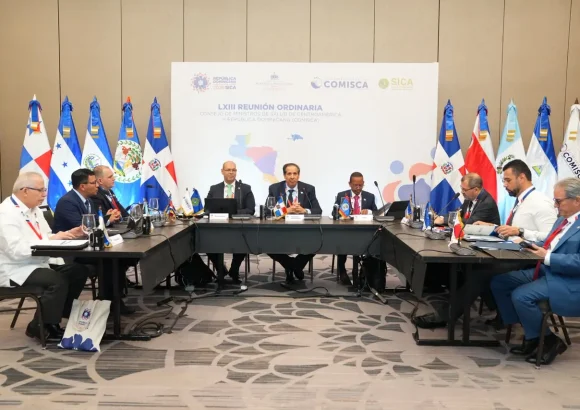
After six months at the helm of one of Central America and the Caribbean’s most critical regional health bodies, the Dominican Republic has officially concluded its tenure as Pro Tempore President of the Council of Ministers of Health of Central America and the Dominican Republic (COMISCA), capping a term marked by substantial advances in cross-border public health cooperation and institutional governance.
The handover milestone was marked by Dominican Republic Health Minister Dr. Víctor Atallah, who launched the 63rd Ordinary Meeting of COMISCA as his final official act in the leadership role. The gathering brought together sitting health ministers and top-ranking public health officials from all member states of the Central American Integration System (SICA), providing a collaborative platform to reflect on the tangible achievements delivered over the past six months and map out forward-looking strategies to deepen regional coordination on shared health challenges.
Over the course of its presidency, the Dominican Republic prioritized and advanced a targeted portfolio of initiatives spanning key priority areas. These included strengthening regional health governance frameworks, expanding cross-border technical assistance partnerships, accelerating digital transformation across national health systems, boosting collaborative scientific research efforts, investing in professional development for the regional health workforce, and upgrading collective preparedness to respond to fast-moving public health emergencies.
Addressing delegates at the opening of the 63rd Ordinary Meeting, Dr. Atallah underscored that the interconnected health challenges facing the region cannot be addressed through isolated national action. He emphasized that coordinated, evidence and science-driven responses are the only effective path forward, and reiterated that deeper regional integration remains essential to building healthcare systems across the bloc that are both more resilient to shocks and more equitable in access to care for all populations.