One month after two powerful earthquakes struck Venezuela, the South American nation continues to struggle with the devastating aftermath of the disaster, with rising casualty figures and a growing looming public health emergency that has compounded existing suffering.
As of the latest official update, the confirmed death toll from the June 24 quakes has climbed to 3,535. More than 16,700 people have been injured, and nearly 18,000 residents have lost their homes. Currently, over 12,800 displaced people are sheltering across 80 emergency evacuation centers distributed across the hardest-hit regions of Caracas and La Guaira. Preliminary assessments estimate more than 60,000 buildings across the affected areas have sustained damage or been completely destroyed.
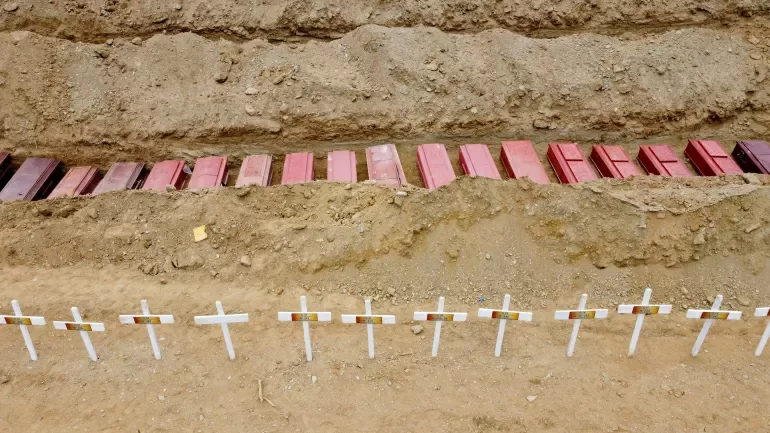
On Monday, at La Esperanza Cemetery in the hard-hit coastal state of La Guaira, forensic teams and transport trucks were seen moving remains of earthquake victims, while excavators dug graves on a plot marked with white crosses ahead of mass burials.
The situation remains deeply alarming, beyond the staggering loss of life and widespread physical destruction. A secondary public health crisis is now rapidly emerging, driven by dangerous living conditions for displaced survivors. Thousands of people are forced to sleep in overcrowded temporary shelters or even in open outdoor spaces, with limited to no access to clean drinking water, basic sanitation, or emergency medical care. These conditions have accelerated the spread of infectious diseases and left many traumatic injuries untreated.
Eugenio Cova, head of trauma care at Caracas’ Hospital Jose Gregorio Hernandez, warned that infection is now the leading health risk for survivors who have been exposed to unsanitary conditions in the weeks since the disaster. “We are now in a phase where infections are complicating existing traumatic injuries,” Cova stated recently.
On-ground reports confirm the rapid escalation of health concerns. Journalists covering the response have recorded a sharp increase in cases of diarrhea and other communicable diseases among people staying in emergency shelters. Local responders have issued urgent calls for additional sanitation infrastructure, including portable toilets, and better coordination to reduce overcrowding that fuels disease transmission.
Public frustration has grown steadily over what many describe as a slow and inadequate response from the Venezuelan national government. Local volunteers and independent aid organizations have stepped into the gap to lead search operations for missing survivors and distribute critical relief supplies to affected communities.
Carolina Jimenez, a researcher with the Washington Office on Latin America (WOLA), noted that the Venezuelan government has acted as a last-resort responder rather than a leader in the emergency effort. In hard-hit areas like Catia la Mar, located just north of Caracas, government presence remains almost non-existent, leaving local residents and independent humanitarian workers to manage the crisis on their own. Even amid overwhelming logistical and resource challenges, these volunteer teams have continued working tirelessly to search for survivors and deliver aid to vulnerable communities.
The international community and global humanitarian organizations have issued renewed calls for increased support and urgent intervention to stop the worsening health crisis and address the sprawling unmet humanitarian need in Venezuela. For the nation’s affected population, the long, difficult road to recovery from one of the deadliest natural disasters in recent South American history is only just beginning.