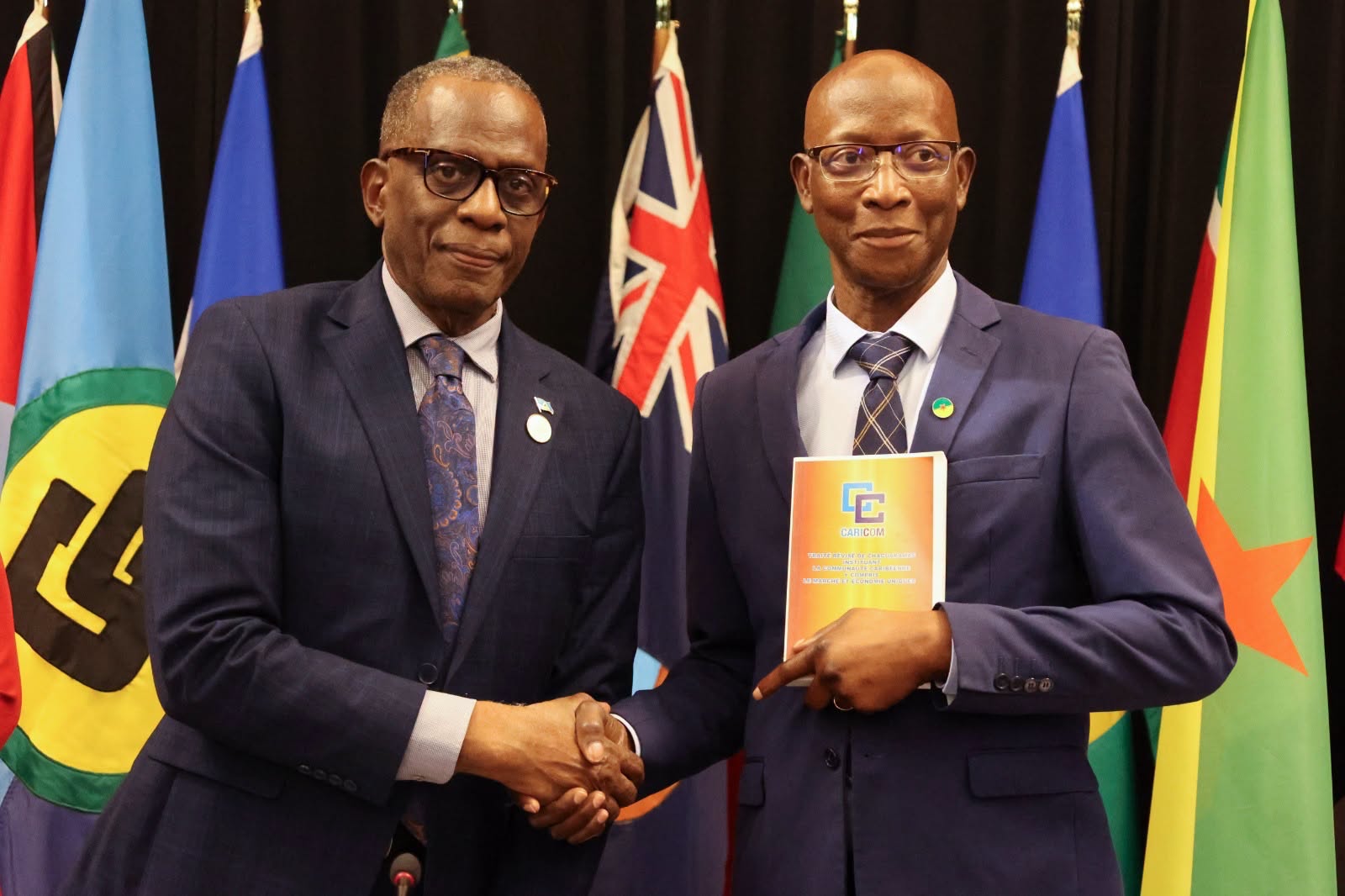
In a landmark move that expands regional cooperation across the Caribbean, French Guiana formally entered the Caribbean Community (CARICOM) as its eighth Associate Member this Tuesday. The historic accession was sealed during the opening session of CARICOM’s 51st Regular Meeting of the Conference of Heads of Government, hosted this year in Saint Lucia. The official membership agreement was signed by two key figures: Philip J. Pierre, who currently serves as both CARICOM Chairman and Prime Minister of Saint Lucia, and Gabriel Serville, President of the Territorial Collectivity of French Guiana. The signed document clearly lays out the operational terms and conditions that will govern French Guiana’s participation and engagement in all activities of the regional bloc. Immediately after the signing ceremony concluded, French Guiana’s representative joined fellow regional leaders for the ongoing plenary sessions of the heads of government conference, marking its first official participation in a major CARICOM governing gathering as an Associate Member. With this addition, CARICOM has extended its network of affiliated territories across the Caribbean region, growing its influence and collaborative reach. Established on July 4, 1973, through the signing of the foundational Treaty of Chaguaramas, CARICOM underwent a critical institutional revision of its founding document in 2001, which paved the way for the creation of a unified single market and economy to deepen economic integration across member states. Today, the bloc counts 15 full Member States and 6 Associate Members, representing a combined population of roughly 16 million people—nearly 60 percent of whom are under the age of 30, making the community a distinctly young and dynamic regional entity. CARICOM organizes its work around four core strategic pillars: coordinated economic integration across member territories, collective foreign policy coordination, targeted human and social development, and cross-border security cooperation. The organization’s shared vision is to build a regionally integrated, inclusive, and resilient community, driven by knowledge sharing, a commitment to excellence, innovative problem-solving, and enhanced productivity. Its goal is to emerge as a unified, competitive force in the global economy, where every resident enjoys security, equal opportunity to reach their full potential, guaranteed human rights and social justice, and broad access to the community’s growing economic, social, and cultural prosperity. Widely recognized as one of the most successful examples of regional integration among developing nations, CARICOM maintains its central administrative body, the CARICOM Secretariat, headquartered in Georgetown, Guyana.