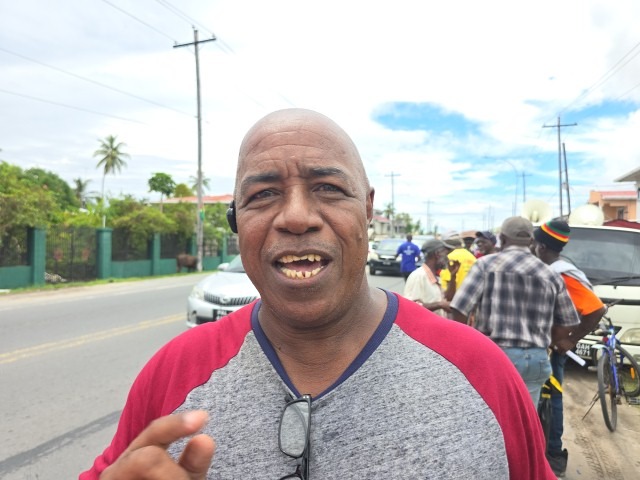
On a sunny Sunday along Guyana’s Buxton Public Road, a small but vocal group of demonstrators gathered to push back against a highly controversial proposed bill that would grant former heads of state uncapped lifetime benefits and full tax exemptions. The demonstration has brought long-simmering public frustration over unequal public resource allocation to the forefront of national political debate.
Walston Martins, Chairman of the Buxton-Foulis Neighbourhood Council and one of the protest leaders, laid out a conditional compromise for the government: he will not oppose the bill only if lawmakers first approve sweeping, substantial increases to public benefits for ordinary Guyanese. Martins’ demands include a $400,000 Guyanese dollar (GYD) after-tax minimum salary for public servants, a GYD$120,000 cash grant for school-aged children, a GYD$100,000 monthly old-age pension, free land plots for all adult citizens, and high-quality upgrades to the nation’s deteriorating road and bridge infrastructure.
“If you want this legislation to pass, I have no personal objection – but you must deliver every benefit I have outlined to the Guyanese people before you move forward with the bill,” Martins told reporters from Demerara Waves Online News. “Outside of that, we will never back this bill, because it is entirely unreasonable and unfair to everyday citizens.” Despite pushback from economic observers who warn such large increases could stoke inflation and exacerbate the country’s already high cost of living, Martins – who stressed he is not a professional economist – said he does not share those concerns.
The 2026 Former Presidents Benefits Bill, if approved, will replace the 2015 legislation enacted by the previous APNU+AFC coalition government. The current 2015 law places strict caps on benefits for former presidents: it limits combined monthly utility allowances for water, electricity and telephone services to GYD$25,000 per service, restricts the number of assigned vehicles, security personnel and support staff, caps annual medical expense coverage, and bars former presidents from receiving these benefits if they engage in profitable private business or trade.
The new proposal effectively reinstates the 2009 law passed during former President Bharrat Jagdeo’s administration, which was repealed when the 2015 legislation went into effect. Unlike the current law, the 2026 bill sets no upper limits on any benefits for former presidents, and removes the ban on benefits for former leaders engaged in gainful private employment. These uncapped benefits come on top of the already generous monthly pension of more than GYD$2 million that all former presidents currently receive. Four living former presidents – Jagdeo, Samuel Hinds, Donald Ramotar and David Granger – would immediately qualify for these expanded benefits if the bill passes.
While Martins offered a conditional compromise, other opposition figures are calling for the bill to be scrapped entirely. Kidackie Amsterdam, an executive member of the Working People’s Alliance, estimates the uncapped benefits could drain between GYD$100 million and GYD$200 million from the national treasury every year – money he says would be far better directed to easing the cost-of-living crisis for current low-income pensioners, who receive just GYD$46,000 per month in old-age benefits.
Amsterdam announced that Sunday’s protest is just the first step in a broader public mobilization campaign. He is set to organize a public panel discussion in the coming weeks to build widespread public opposition, with the goal of staging large-scale national protests to force the government to abandon the legislation. “Today’s small turnout doesn’t reflect the level of public anger – we’re just starting the conversation to raise awareness,” Amsterdam explained. “Someone has to get this movement off the ground, and that’s exactly what we’ve done today.”
Amsterdam also raised alarms over potential personal benefits for incumbent President Irfaan Ali, arguing Ali could exploit the bill’s tax exemption provisions to avoid paying taxes on his private 150-acre farm located off the Linden-Soesdyke Highway. “This farm is projected to generate multi-million-dollar profits, but not a single cent in taxes would go to the Guyanese people, while billions in public funds are drained from our treasury to pay for former and sitting presidents’ benefits,” he said.
Annette Ferguson, a senior member of the People’s National Congress Reform, echoed Amsterdam’s opposition, saying the government’s ability to pass the bill with its simple parliamentary majority ultimately depends on how aware ordinary Guyanese are of the legislation’s fiscal impact. “Once more Guyanese understand how much this will cost our country at the expense of working people and retirees, they will push back,” Ferguson said. “When that public pressure builds, I don’t see the government being able to move forward with this unfair proposal.” She added that revelations about the incumbent president’s private tax-exempt farm have already galvanized additional public anger against the legislation.