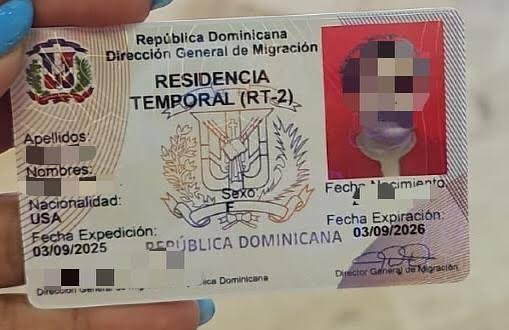
Newly released government open data from the Dominican Republic reveals a striking dual approach to Haitian migration, as the Caribbean nation has approved more than 60,000 legal residency permits for Haitian citizens between 2018 and 2026 while carrying out large-scale deportation campaigns for undocumented migrants.
According to figures from the Dominican central government’s Open Data portal, Haiti outranks every other country for the number of residency approvals granted to its nationals over the eight-year period. In total, 60,306 Haitian applicants received authorization to reside legally in the Dominican Republic, averaging 6,701 permits per year – or roughly 558 approved applications each month. The public database does not currently break down this total by residency type, leaving it unclear how many of the approvals were for temporary, permanent, or definitive legal status.
These official residency numbers stand in sharp contrast to the Dominican government’s widely reported intensified immigration enforcement actions. Since 2024 alone, Dominican authorities have repatriated roughly 670,500 undocumented Haitian nationals, with the first six months of 2026 accounting for more than a quarter of that total at 196,321 deportations.
The seemingly contradictory policies stem from the ongoing crisis gripping Haiti, which has been gripped by worsening political instability, prolonged economic collapse, and a deepening humanitarian emergency for years. These overlapping crises have pushed hundreds of thousands of Haitians to cross the border into the Dominican Republic in search of safety, work, and better living conditions. In response, the Dominican government has simultaneously pursued two separate paths: expanding targeted deportation operations to remove migrants without legal status, while continuing to operate established legal residency programs that grant approval to qualifying Haitian applicants.