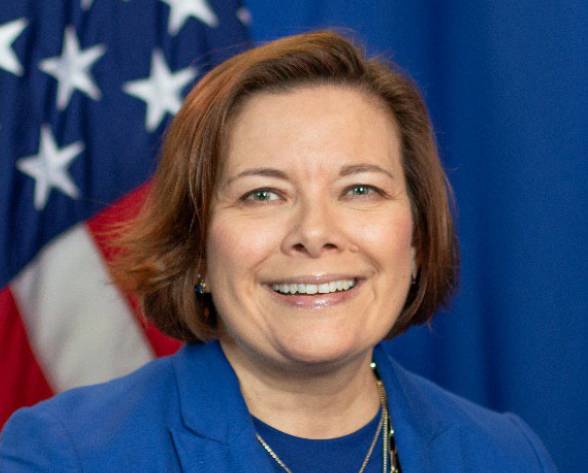
As the United States prepares to mark the 250th anniversary of its founding under the national commemoration banner “Freedom 250”, a senior U.S. diplomatic representative to the region has outlined the country’s vision for continued collaboration with Eastern Caribbean and Organization of Eastern Caribbean States (OECS) nations. Writing in an op-ed, Chargé d’Affaires Karin Sullivan of the U.S. Embassy to Barbados, the Eastern Caribbean, and the OECS emphasized that this milestone is far more than a retrospective of American history: it is a moment to reaffirm the shared global ideal of freedom that connects communities across national boundaries and generations.
Citing a statement from former President Donald Trump that “The story of America makes everyone free,” Sullivan noted that the U.S. legacy of independence is not merely a historical artifact. Instead, it serves as a global call to action to work alongside international partners — including the small island nations of the Eastern Caribbean — to build a shared future defined by widespread opportunity, collective security, and mutual prosperity. In framing the commemoration, Sullivan stressed that Freedom 250 is not just a centennial celebration of the past, but a strategic launchpad for a new era of international collaboration aligned with the Trump administration’s diplomatic vision. This vision prioritizes forging new collaborative partnerships, championing cross-border innovation, and redefining U.S. diplomacy to guide global engagement for the next 250 years.
At the core of current U.S. engagement in the Eastern Caribbean is a straightforward guiding principle: collective success between nations translates to safer populations, more resilient national economies, and stronger, more adaptable local communities. Across the region, this collaborative approach has already delivered tangible, measurable benefits to local populations. In Barbados, where the country is rapidly emerging as a leading regional technology hub, U.S. investment in advanced digital connectivity is laying the foundational infrastructure for a growing digital economy. This investment is unlocking new opportunities across high-impact sectors including telemedicine, distance education, artificial intelligence innovation, financial technology, and climate-smart agricultural practices, building a modern bilateral partnership rooted in shared democratic values, transparent commercial exchange, and mutual economic growth.
Bilateral collaboration extends across every Eastern Caribbean nation, each tailored to address local priorities. In Antigua and Barbuda, joint work on new energy infrastructure is boosting national climate resilience, creating new economic opportunities, and driving long-term sustainable growth. In Dominica, U.S. support for geothermal energy development is expanding access to reliable, affordable power while strengthening the country’s long-term energy independence and security. For Grenada, technical cooperation and local capacity-building programs are helping strengthen national water security, advance sustainable natural resource management, and build greater resilience to climate and resource-related shocks.
In St. Kitts and Nevis, bilateral cooperation has deepened across multiple sectors, including citizen security, economic development, education, and cultural heritage preservation. A flagship project is U.S. support for the restoration of the historic Bath Hotel on Nevis, a landmark closely tied to Alexander Hamilton, one of the United States’ founding fathers, that reflects centuries of shared social and cultural ties between the two nations. In St. Lucia, expanded collaboration with the U.S. Drug Enforcement Administration is boosting local capacity to detect fentanyl trafficking, strengthen cross-border criminal prosecutions, and make communities safer across the entire region. In St. Vincent and the Grenadines, U.S. Peace Corps volunteers continue to work alongside local educators to strengthen primary and secondary education, improve English literacy outcomes, empower local teaching staff, and drive inclusive community development, forging lasting people-to-people bonds between the two nations.
Beyond individual country projects, the United States and Eastern Caribbean nations are collaborating to address transnational regional challenges that cannot be solved by single nations acting alone. To combat cross-border crime and drug trafficking, the United States has committed more than $8 million in funding to upgrade Caribbean forensic science laboratories, improve regional drug detection capabilities, expand coordinated law enforcement cooperation, and counter the threat of transnational organized crime. The U.S. also continues to invest in the next generation of regional and American leaders through longstanding professional and educational exchange programs, including the Fulbright Programme, the Young Leaders of the Americas Initiative, and the International Visitor Leadership Programme.
As the United States marks this historic 250-year milestone, Sullivan emphasized that the celebration centers not just on American history, but on the enduring international partnerships that will shape both the United States’ and the region’s shared future. Freedom 250, she noted, is a global commemoration of the United States’ founding ideals of liberty, democratic governance, and individual freedom. Closing the op-ed, Sullivan reaffirmed the United States’ commitment to the region: “The United States is proud to stand alongside the people of the Eastern Caribbean as a trusted neighbour, partner, and friend. As it has since its founding in 1776, the United States remains a trusted, dynamic partner ready to lead in the next 250 years. Together, we look forward to the next 250 years of freedom, opportunity, innovation, and shared prosperity.”