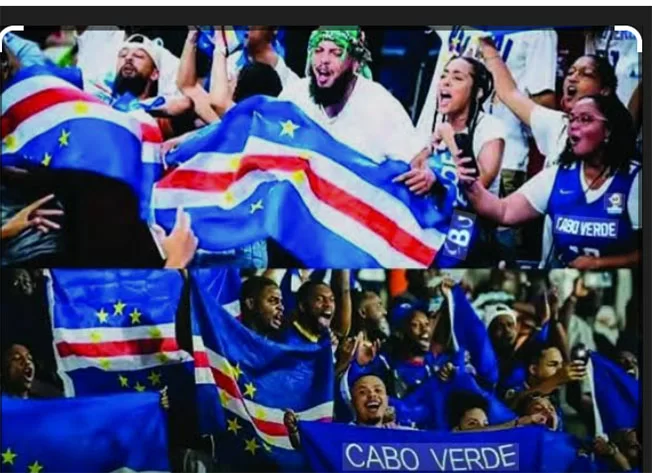
Against all odds, a tiny African island nation of just over 590,000 people achieved a feat this World Cup that many global football powerhouses can only dream of: capturing the affection and admiration of millions of fans around the world. This is not a story of lifting the biggest trophy in world sport, but of how first-time World Cup qualifier Cape Verde turned a knockout-stage clash against defending champions Argentina into a global moment that stretched far beyond the 90 minutes on the pitch.
Cape Verde’s 2026 World Cup run was historic from the start. For the first time in the nation’s history, the tiny archipelago off the coast of West Africa qualified for football’s biggest tournament. In a stunning debut, they advanced straight through the group stage to the knockout round, setting up a blockbuster round of 16 match-up against Lionel Messi’s Argentina, the defending World Cup champions.
Few gave the untested Cape Verde side a chance against the tournament favorites, but they defied every expectation. The underdogs pushed Argentina to the absolute brink, forcing the reigning champions to dig deep to secure a narrow 3-2 victory. After the final whistle, Argentina head coach Lionel Scaloni openly acknowledged that his side had fought an incredibly tough battle to earn the win. Messi himself, a global icon of the sport, sought out Cape Verde goalkeeper Vozinha to personally praise his performance, telling the keeper the entire nation should be proud of what their team had accomplished.
Praise for Cape Verde poured in from across the global football community. Former stars Thierry Henry and Zlatan Ibrahimović called the side heroes, hailing them for putting on such an impressive display for their country. International media outlets immediately ranked Cape Verde as one of the most beloved surprise stories of the entire tournament.
Beyond the pitch, the run carries deep meaning for Cape Verdean diaspora communities thousands of kilometers from the island nation. In Rotterdam, Netherlands, often called the “tenth island” of Cape Verde due to its large, generations-old Cape Verdean community, the connection to the national side ran especially deep. The first Cape Verdean migrants arrived in the port city as sailors in the 20th century, many settling permanently to build new lives; today, tens of thousands of people of Cape Verdean descent call Rotterdam home. That diaspora history was directly represented on the pitch: five of Cape Verde’s World Cup squad were born in Rotterdam, and another six were born elsewhere in the Netherlands. For local residents, that meant cheering for Cape Verde felt like cheering for a second home team. Local cafes and event spaces were packed to capacity during the Argentina match, with fans of all ages cheering nonstop through the full 90 minutes and extra time. When the final whistle ended their run, disappointment was nowhere to be found – only overwhelming pride. This squad was about more than football: it represented a shared history of migration, perseverance and cross-continental connection.
One player who emerged as a global fan favorite was 40-year-old goalkeeper Josimar Dias, better known by his nickname Vozinha. The veteran keeper turned in a string of spectacular saves throughout the group stage and the tense knockout clash with Argentina. Despite Cape Verde’s elimination, international media hailed Vozinha as one of the tournament’s biggest breakout stars, with many analysts ranking him as the best goalkeeper of the entire knockout round.
When the squad returned home to Praia, Cape Verde’s capital, they were greeted with a celebration fit for world champions. Thousands of fans lined the roads from the airport and packed the terminal, singing, dancing, waving national flags and cheering as if the team had lifted the World Cup trophy. To many observers, this reaction might seem unexpected for a team eliminated in the first knockout round. But the moment underscores a core truth of sport: success is not always measured by trophies.
For a small nation that long flew under the radar on the global football stage, this World Cup run meant far more than a handful of matches. Millions of people around the world learned of Cape Verde not for its tropical beaches and tourism, but for the courage, skill and resilience of its national team. The story of Cape Verde’s 2026 World Cup run also highlights the deeper stories football can tell: stories of migration and identity, of communities separated by thousands of kilometers that still feel connected as one, of young people born in Rotterdam, Lisbon or Boston who proudly wear the shirt of their parents’ homeland. It also reminds the world that winning is not always measured in goals or trophies.
Argentina left the pitch with the win, but Cape Verde left with something far more precious: global respect, widespread admiration, and a permanent place in the hearts of millions of football fans across the world.