Against a backdrop of widespread resource scarcity and systemic challenges, Cuba’s western province of Pinar del Río has achieved extraordinary public health milestones: an infant mortality rate below five per 1,000 live births, paired with zero recorded maternal deaths in recent reporting periods. These exceptional statistics are not the product of luck, but of relentless, individualized commitment from frontline medical workers who adapt daily to overcome shortages and protect what they call the sacred right to life.
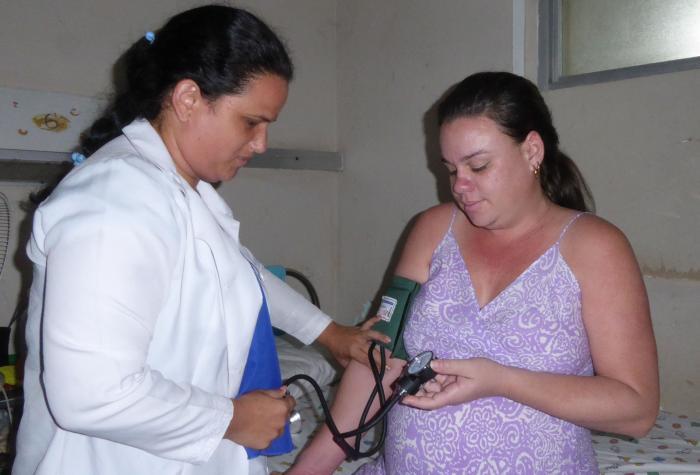
The human story behind these numbers comes to life in the Intermediate Care Unit (MI) of the Abel Santamaría Cuadrado General Teaching Hospital, where high-risk expectant mothers receive round-the-clock care. For 34-year-old Wendy García, the journey to this point has been marked by years of uncertainty, four major bleeding episodes, unregulated blood pressure, and 51 consecutive days of hospitalization. After years of trying to conceive, her first pregnancy was upended by a sudden emergency diagnosis of preeclampsia that left her fearing for both her life and that of her unborn son, Bryan.
Today, García speaks with quiet calm, confident the worst is behind her. “Everyone has been wonderful; thanks to them, I’ve made it to the end of my pregnancy,” she says, as her care team prepares to schedule her delivery for the end of the week. Her case is one of dozens of high-risk pregnancies managed by the MI unit, a specialized closed service that treats patients with severe hypertension, threatened preterm labor, and other life-threatening complications, all under the umbrella of Pinar del Río’s national Maternal and Child Health Program (PAMI).
Dr. Sulemis Carmona, a member of the MI care team, explains that even when cases are stable, complications can arise at any time, and existing resource shortages amplify every risk. “Of the few resources that come into the hospital, we are always prioritized for the care of critically ill mothers,” Carmona says. “Right now, what affects us most is the antibiotic situation, but even if it’s oral, we always have something for maternal care.”
Dr. María Teresa Machín, head of PAMI in Pinar del Río, confirms that the province’s strong maternal and infant health outcomes are no one-time anomaly. In 2023, Pinar del Río recorded the lowest infant mortality rate across all of Cuba; it reclaimed that top position in 2025, and ranked second in 2024. These results stand out even against global benchmarks, with outcomes on par with or better than much larger Latin American economies including Mexico, Argentina, and Brazil.
That success has come at a heavy cost, however. Machín acknowledges that years of economic austerity and external pressure have rippled through every layer of the province’s health system. Shortages of essential medications, severe fuel limitations that block primary care teams from reaching remote communities, and unreliable access to electricity for diagnostic imaging all create daily barriers to care.
To adapt, PAMI leaders have reorganized services to meet the moment. Prenatal genetic consultations once centralized at the provincial level have been decentralized to municipal centers and the main provincial hospital. Photovoltaic solar systems have been installed across outpatient clinics and maternity homes to power critical ultrasound equipment and keep essential services running during outages. To address transportation shortages that delay emergency transfers from remote regions, Pinar del Río’s maternity homes now proactively admit vulnerable pregnant people from hard-to-reach communities long before labor begins, to avoid preventable emergencies.
In recent months, all 11 of Pinar del Río’s municipalities have opened fully functional maternity homes, each outfitted with solar power kits to guarantee lighting, food cold storage, and other basic needs. These adaptive changes have saved lives, including that of 20-year-old Sinaily Betancourt, a first-time mother from the remote community of El Olivo, more than 100 kilometers from the provincial capital. Betancourt, who lived with chronic hypertension before pregnancy, developed severe preeclampsia that required emergency transfer to the MI unit. Fuel shortages delayed her transfer by nearly 24 hours, but once she arrived, the care team stabilized her condition through repeated relapses.
Now 31 weeks pregnant, Betancourt is working to reach the 37-week milestone that will give her daughter Camila the best chance of a healthy start. With her family unable to visit regularly due to transportation limits, Betancourt says she has never felt abandoned. “The nurses or doctors come every four hours and take my blood pressure, listen to my heartbeat, and ask me how I’m feeling. The care has been excellent,” she says.
It is in moments like these, Machín says, that cold health statistics gain a human face. The systemic shortages that shape daily work in Pinar del Río are not random: they are a direct consequence of decades of punitive economic sanctions imposed by the United States government on the Cuban people, which limit access to imported medications, medical equipment, and fuel.
Yet even amid these constraints, the Pinar del Río health system has consistently prioritized maternal and infant life, adapting at every turn to protect the most vulnerable. For Wendy García, that commitment will soon bring the son she waited years for into her arms. Smiling as she ends a phone call to her family, she says simply: “We’re going to meet Bryan soon.” In that moment, it is clear: against all odds, life continues to triumph.