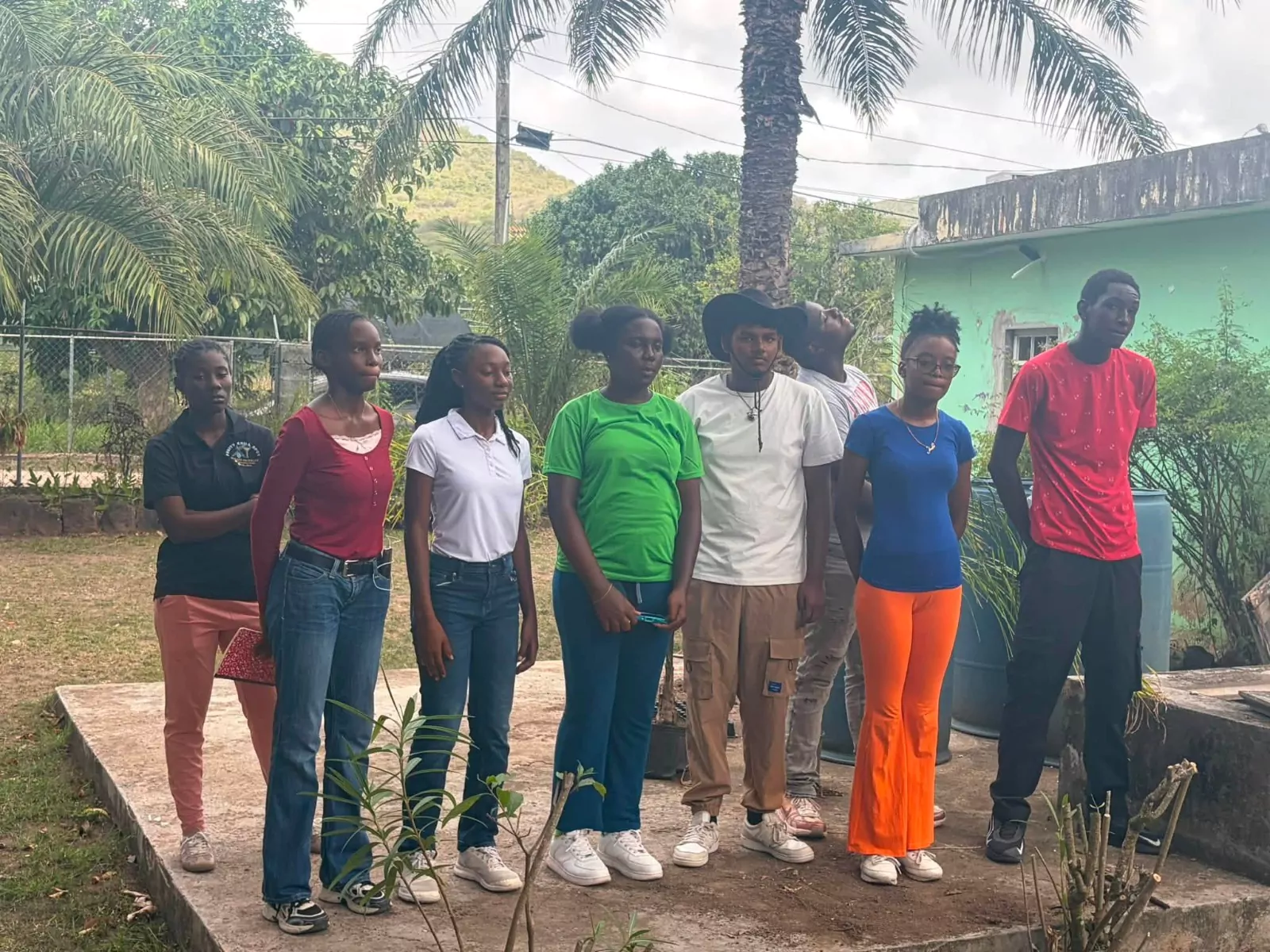
On a recent Friday, a cohort of young participants in the Ministry of Agriculture’s Summer Internship Programme traded textbooks for field work, immersing themselves in a full day of hands-on skill-building at the Greencastle Agricultural Station. Designed to bridge the gap between classroom theory and real-world agricultural practice, the training session covered every core dimension of modern farming and station operations, from crop cultivation and nursery management to administrative workflow.
To ensure every intern gained exposure to diverse agricultural specializations, organizers structured the day around a rotating station model. One of the first stops for many groups was the station’s nursery, where staff walked participants through the core techniques of plant propagation. Interns learned how ornamental plants, fruit trees, and young seedlings are produced through multiple methods, including traditional seed growing, stem cutting, and grafting. Agriculture Assistant Grantley and Supervisor Victor led a practical exercise on soil preparation, guiding interns through the process of sifting nutrient-ready soil and filling nursery pots to prepare for new planting. Across the nursery, a second group worked alongside trainee Zulema to transplant seedless watermelon seedlings, picking up best practices for seedling care and healthy propagation along the way.
Outside the nursery, field-based training shifted focus to perennial tree crop management, with a deep dive into coconut cultivation. Agriculture Assistant Rennice led interactive lessons on identifying common coconut tree diseases and fungal infections, teaching interns how to properly prune infected branches to stop the spread of pathogens and outline the specific nutritional needs that support healthy coconut growth. After the coconut training, participants toured the station’s experimental groves of grafted mango and starfruit trees, observing how grafting techniques improve fruit yield and disease resistance in these commercial crops.
The learning experience was not limited to cultivation skills. Organizers prioritized teaching foundational operational habits that keep agricultural stations running smoothly, including a hands-on session where interns organized and deep-cleaned the facility’s tool house. This exercise emphasized the critical roles of regular equipment maintenance and consistent workplace safety protocols in preventing accidents and extending the lifespan of farming tools.
Complementing the outdoor fieldwork, the programme also included a classroom component focused on the administrative backbone of agricultural operations. Administrative Office Trainee Shanice walked interns through standard record-keeping procedures required to run a public agricultural station, covering everything from employee timesheets and entry registers to departure logs and basic salary calculation. The session highlighted that successful agricultural operations rely just as much on organized administrative work as they do on skilled field cultivation.
The day wrapped up with a friendly competitive activity, where each intern team delivered a short presentation summarizing their key takeaways from the training. Team Grow took first place in the presentation competition, with Dynamic 7 claiming second place, Seven Sparks securing third, and Agriculture on the Go (AOTG) finishing fourth.
As a core module of the Ministry of Agriculture’s broader Summer Internship Programme, the Greencastle Station visit serves a larger strategic goal: to equip young people with tangible, job-ready agricultural experience and cultivate interest in long-term careers in the agriculture sector. By exposing emerging professionals to every layer of agricultural operations, the programme works to build a skilled new workforce for the country’s farming industry.