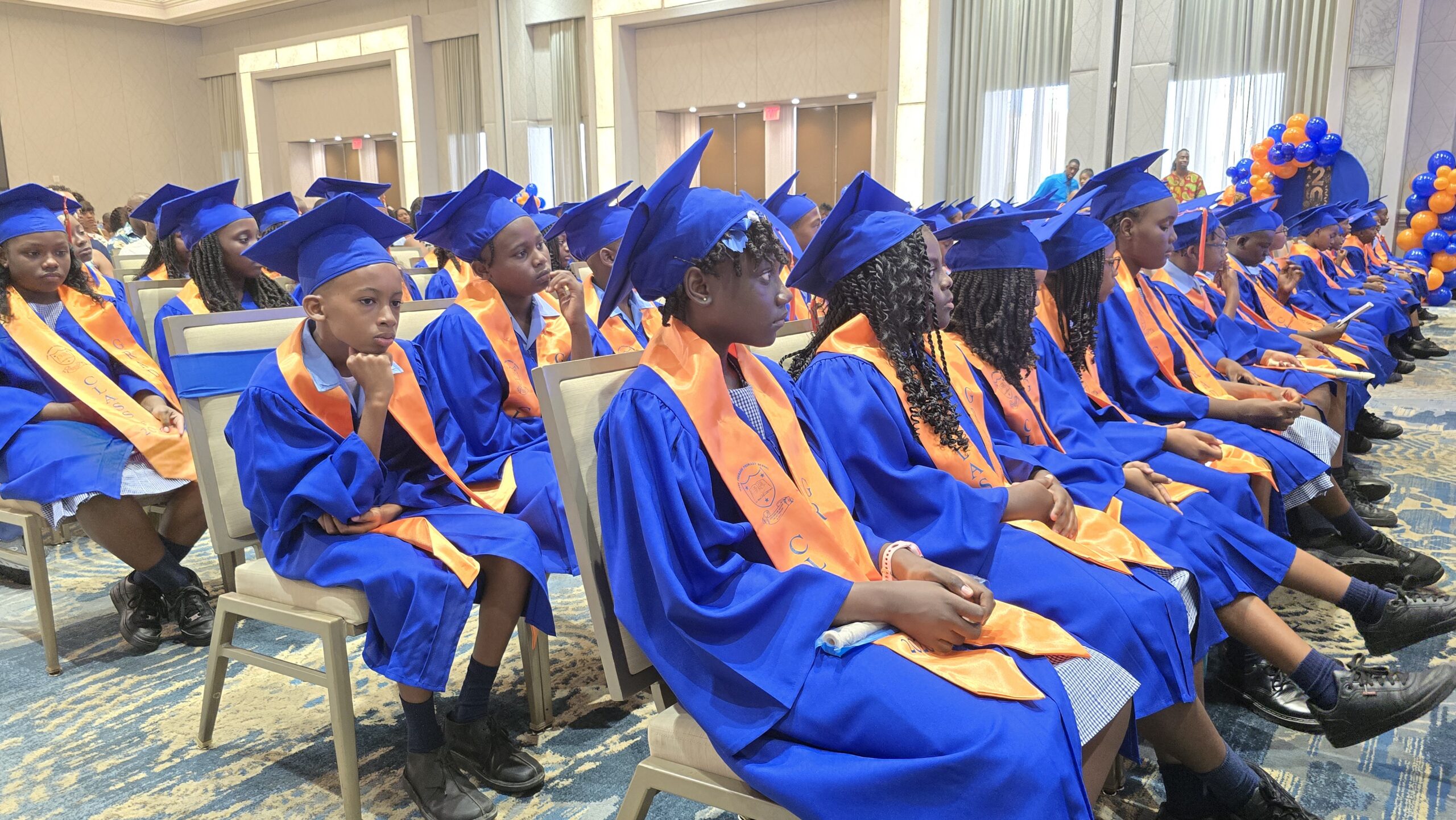
Ninety graduating students of Barbados’ West Terrace Primary School stepped across the graduation stage at the Hilton Barbados Resort Tuesday, marking the end of their primary education and the start of a new academic journey as they prepare to enter secondary school. Addressing the ceremony, Minister of Technological and Vocational Training Sandra Husbands, who also serves as the Member of Parliament for St James South, delivered a call for graduates to welcome change amid a rapidly shifting global landscape reshaped by technological advancement.
Husbands explained that Barbados’ ongoing national education transformation initiative is purpose-built to equip young learners with the full range of skills required to thrive in a future defined by technological innovation, constant adaptation, and lifelong learning. “As a government, as a nation, as educators and caregivers, our core responsibility is to prepare you for that vastly different world that awaits,” she told the crowd of graduates, families and educators. “We stand with you, we work alongside you, and we remain fully committed to helping you succeed no matter what challenges come your way.”
Acknowledging that the transition from primary to secondary education brings growing pains for students, Husbands also noted the sweeping changes the education overhaul has demanded from the nation’s teachers. Educators have had to entirely reimagine their instructional approaches, she said, updating how they deliver content, adopting new methodologies for math instruction, and redesigning learning experiences to foster student growth — all while making considerable personal and professional sacrifices to implement these changes.
Moving beyond traditional academic priorities, Husbands emphasized that modern education must center the unique individual strengths every child brings to the classroom. “We recognize that every child is gifted, but not in the same way. Each of you carries your own distinct set of talents to carry into the future: some are born leaders, some are creative innovators, some excel in athletics, some are visionary artists, skilled builders, talented musicians, compassionate caregivers, compelling communicators, sharp problem-solvers, or driven entrepreneurs,” she said.
She reassured graduates that the reformed education system is structured to create pathways to success for every learner, even for talents that have not yet been identified. “Some of your gifts may still be undiscovered, and we are committed to building customized pathways to nurture those abilities too. When we reshape the education system to meet the needs of every child, every child gets the chance to succeed,” she added.
Looking forward to the evolving job market, Husbands noted that employers are increasingly prioritizing practical soft skills alongside traditional academic credentials. “As technology evolves and industries transform, employers are seeking candidates who can think critically, communicate clearly, collaborate effectively, innovate quickly, and adapt to change. Future success will not rely only on what you know — it will depend on how well you can apply that knowledge in real-world contexts,” she explained.
This shift in priorities is why the government is expanding opportunities for students to build practical skills, technical expertise, creative talent, leadership capacity, and entrepreneurial thinking, Husbands said. The end goal is simple: to ensure every student leaves school with meaningful, tangible options for their future.
The minister also called on parents to adapt their own approaches to support their children through the transition to secondary school, noting that the next academic stage requires a new model of parental engagement. The Ministry of Education Transformation will be rolling out accessible parenting education resources to help caregivers navigate this shift, she said, equipping them to support their children’s growing independence. “Teenage learners moving toward independence will ask more questions, challenge existing ideas, seek greater responsibility, and occasionally make mistakes. This new phase requires a broader, more flexible set of parenting skills,” she added.
West Terrace Primary School Principal Charmain Jones opened the ceremony with an overview of the school’s recent achievements, highlighting the institution’s focus on strengthening core literacy and numeracy skills while integrating technology into everyday classroom instruction. “Our core goal was to build strong reading proficiency and deepen mathematical understanding, with a target of outperforming the national average in both subjects,” Jones explained. “We also prioritized embedding educational technology across all subjects to enhance both teaching and learning.”
Jones also shared the school’s strong performance on the national Common Entrance exam, noting that every graduating student had put forward their best effort. The school’s top overall performer was Riley Layne, who scored 88% in English and 99% in mathematics, while Tiago Renwick earned the highest score in English. The vast majority of students posted strong results in both core subjects: most English scores fell between 70 and 80 percent, demonstrating solid reading comprehension and written expression skills. Of the 91 graduating students, more than 81% — or 74 students — earned an A or B grade on their English essay assessment.
Like Husbands, Jones urged parents to maintain intentional engagement as their children enter secondary school, advising them to balance support with space for growth. “Give your children room to develop, but stay connected. Secondary school brings greater independence, so let your child take on new responsibilities while checking in regularly on how they are adjusting,” she said. “Don’t only focus on grades — watch for signs of stress. Secondary school brings emotional as well as academic challenges, so pay attention to changes in mood, sleep or appetite, not just report cards.”
Featured speaker Pastor John Yarde challenged graduates to pursue their ambitions with intentional planning and purpose. Using Disney’s *The Lion King* as the framework for his address, Yarde urged students to hold fast to their core values as they enter the new environment of secondary school, warning that they will encounter a wide range of outside influences that could pull them away from their goals and personal beliefs. “I challenge you to dream big, but also to plan big,” he told the graduates. “Write your dreams down, and share them with the trusted people in your life who can support you.”