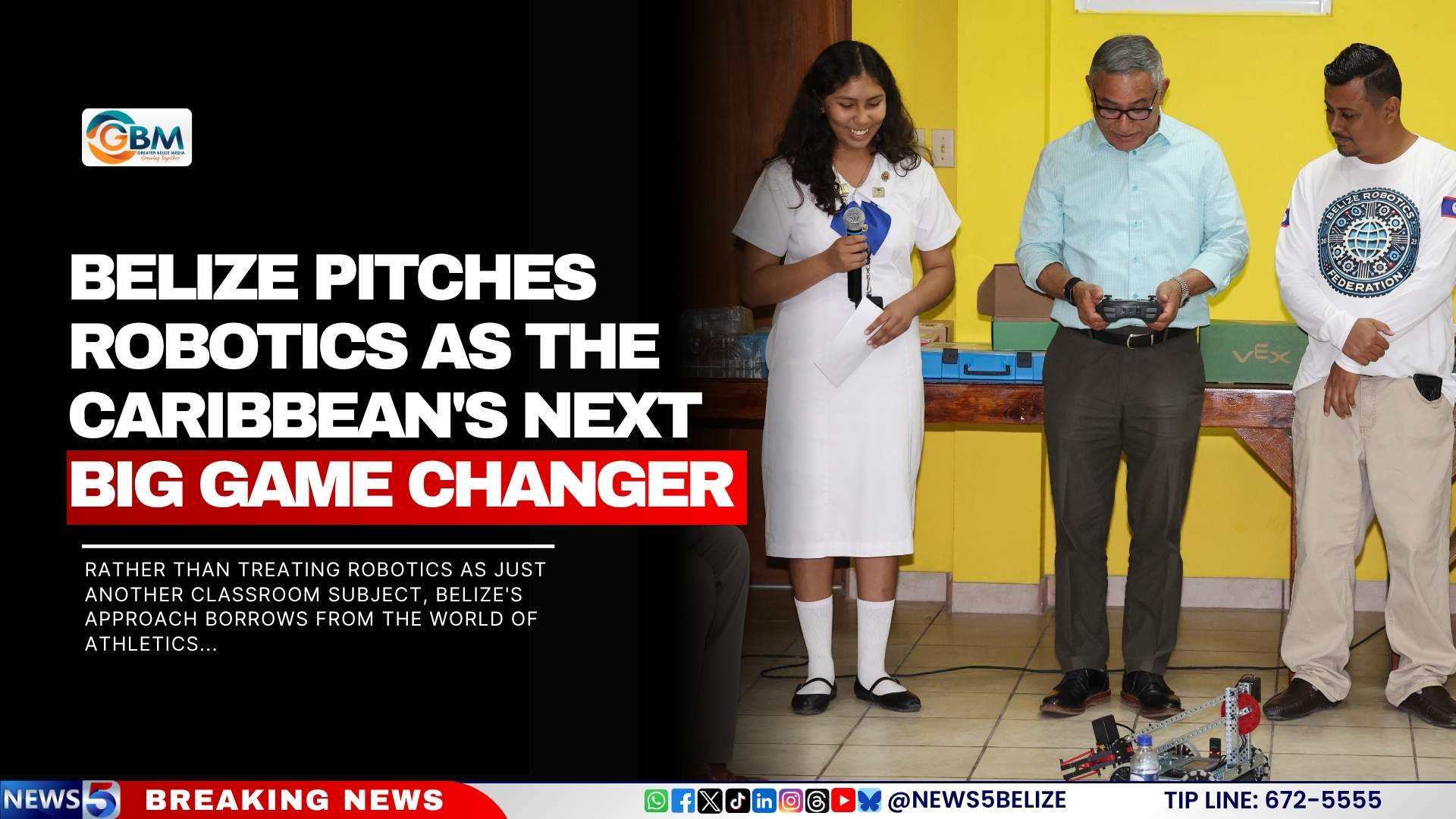
In a landmark push to position technology as a core driver of regional progress, Belize is stepping onto the global stage to share its trailblazing approach to robotics advancement, pitching it as a transformative force that could reshape education, innovation and economic expansion across the entire Caribbean. The small Central American nation brought its nationally institutionalized “Robotics as a Sport” initiative to the first-ever Caribbean STEM Engine for Economic Development (SEED) Summit 2026, where leaders framed the program as a replicable blueprint for preparing youth for the digital workforce of tomorrow while laying the foundation for more resilient, dynamic regional economies.
Hosted by the Caribbean Science Foundation, in formal collaboration with Barbados’ Ministry of Innovation, Industry, Science and Technology and local innovation incubator FUTURE Barbados, the 2026 SEED Summit gathered a cross-sector audience of top stakeholders: educators, research scientists, startup founders, impact investors and regional government officials, all convened to explore how strategic investment in science and technology can unlock inclusive, long-term growth across Caribbean nations.
Leading Belize’s delegation to the summit was Jamie Lee Usher, who serves dual roles as vice principal of student affairs at Saint Catherine Academy and president of the Belize Robotics Federation. During her keynote presentation, Usher spotlighted Belize’s historic distinction as the first country worldwide to grant official national recognition to robotics as a competitive sport—a classification that has helped expand access to robotics programming far beyond niche tech circles, embedding it into mainstream youth development and education frameworks.
Usher’s presentation sparked energetic, productive discussion among regional education and innovation leaders, with Belize formally calling on other Caribbean countries to integrate robotics-focused strategies into their national development agendas. Proponents argue that widespread adoption of similar programs can boost participation in science, technology, engineering and mathematics (STEM) fields across the region, strengthen workforce readiness for emerging digital roles, and open new, sustainable economic opportunities for young Caribbean people who too often face limited professional pathways.
Belize’s community-centered approach to robotics development aligns seamlessly with the overarching mission of the SEED Summit: the collective agreement that intentional investment in education, entrepreneurial ecosystems and homegrown innovation today is the most reliable path to building the new industries and high-quality jobs that will sustain Caribbean economies tomorrow.
Beyond technical coding and engineering skills, Usher emphasized that the sport-centric robotics model cultivates a broad set of transferable soft skills that are critical for long-term success. “Students are pushed to think critically, tackle complex real-world problems, collaborate seamlessly in teams, communicate their ideas clearly, and keep persevering even when their designs fail,” Usher explained in her address. “These are not just the traits that make successful robotics competitors. These are exactly the qualities that the future Caribbean workforce and leadership will need to thrive in a rapidly changing global economy.” Closing out her presentation on the core philosophy that drives Belize’s program, Usher summed up its impact simply: “Skills pay the bills.”