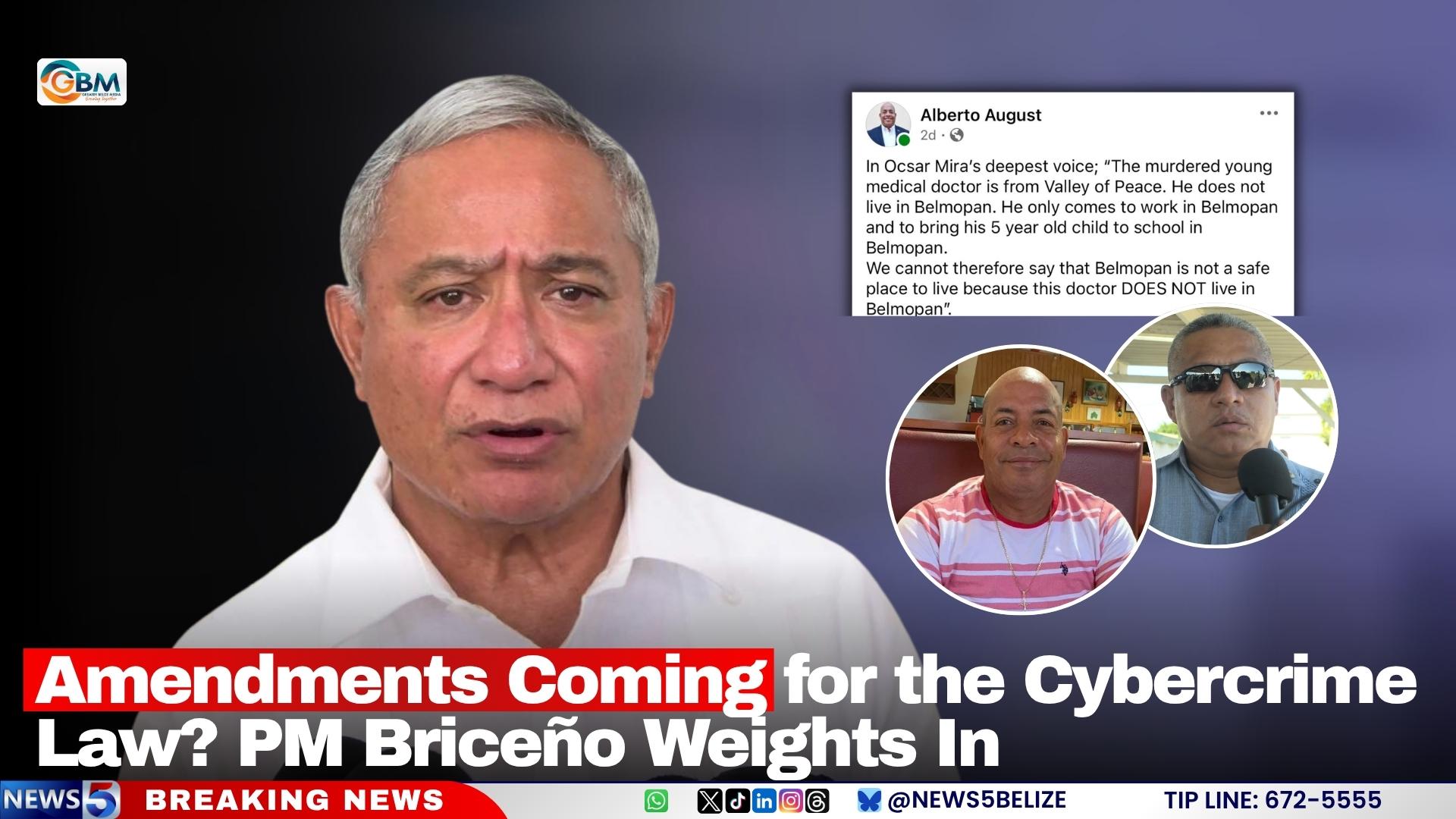
In the wake of a controversial arrest that has sparked debate over overreach and political weaponization of state legislation, Belizean Prime Minister John Briceño has confirmed that proposed amendments to the country’s Cybercrime Act are on track to be introduced as early as the next sitting of the House of Representatives. The push for revisions comes after a high-profile case against opposition figure Alberto August, which ended with all charges being abruptly dropped earlier this week, raising serious constitutional questions about the legislation that enabled his arrest.
On May 30, August, former deputy chairman of the opposition United Democratic Party (UDP), was arrested under Section 15(4) of the 2020s Cybercrime Act following a formal complaint filed by then-Home Affairs Minister Oscar Mira. August was held in police custody for 28 hours, during which law enforcement seized his personal mobile devices as part of their investigation. The case was transferred to Belize’s Director of Public Prosecutions (DPP) for an independent review after a leadership change at the Home Affairs Ministry, and the DPP ultimately determined there was no viable legal basis to pursue charges, leading to their discontinuation this Tuesday.
Speaking to reporters on July 1, 2026, Prime Minister Briceño revealed that he had requested the Attorney General conduct a full review of the Cybercrime Act’s contested provisions after the August case drew public scrutiny. The Attorney General’s review concluded that key sections of the existing law, including the provision used to arrest August, likely violate the country’s constitution. “I asked the attorney general to take a look at it, and he thinks that it is unconstitutional. So quite likely, hopefully, at the next house meeting we’ll have to make some amendments to that,” Briceño told reporters.
The prime minister voiced full public support for the DPP’s decision to drop all charges against August, while issuing a rare caution to sitting politicians about the dangers of allowing state institutions to be perceived as tools for targeting political rivals. “I think the public has a problem when they would feel that the minister is using the state to go after their enemies. We should not go down that road because once you go down that road, others can then take abuse of it,” Briceño said. He was careful to clarify that his warning was not an accusation against Mira, adding that he did not believe the former minister had acted out of political malice, and that law enforcement genuinely believed they had a legal basis to proceed with the arrest. Briceño also praised interim Home Affairs Minister Julius Espat for making what he called the right decision to immediately refer the case to the DPP for independent assessment, confirming that the DPP (a woman, per Briceño’s comments) concluded no charges could be sustained.
The impending amendments mark a major shift in policy just years after the Cybercrime Act was first enacted, and signal that the government is responding to public concern over potential misuse of the sweeping legislation. The case has reignited long-running debates over the balance between national digital security and constitutional protections for free speech and due process in Belize, with the upcoming parliamentary vote on amendments set to be closely watched by civil society groups and political observers across the country.