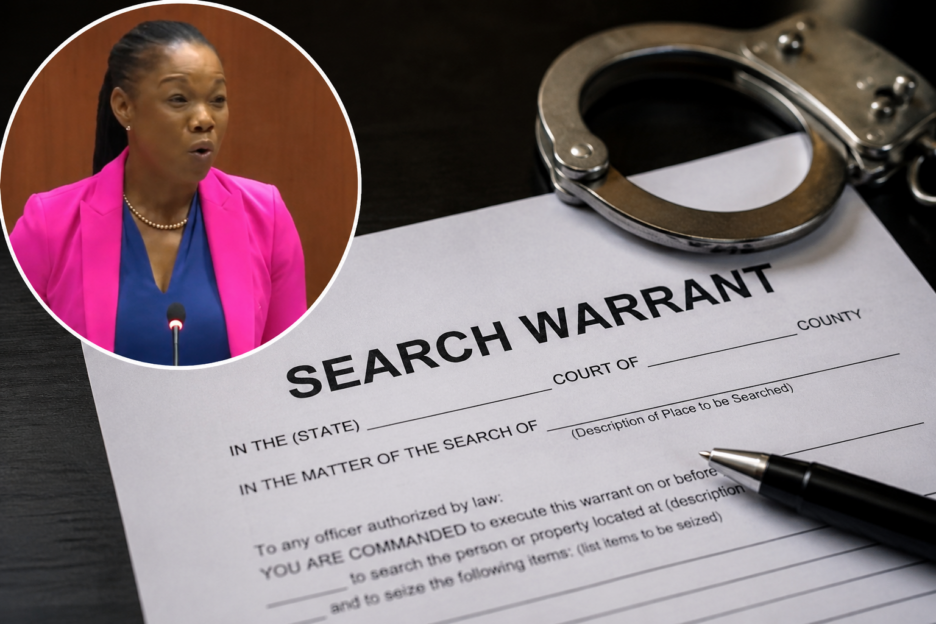
A heated debate unfolded in the national Senate Monday over legislation that would dramatically expand police powers to issue search warrants, ending with the governing majority pushing the measure into final approval despite fierce warnings from the opposition that the change threatens core constitutional privacy protections.
At the center of the opposition pushback was Senator Malaka Parker, who argued that the Magistrates’ Code of Procedure (Amendment) Bill 2026 is far more than a routine update to existing procedural rules. Instead of clarifying and limiting law enforcement authority, the bill broadens the eligibility criteria for search warrants to a sweeping scope: it allows magistrates to grant warrants when there is reasonable cause to believe *any offense* has occurred, rather than restricting this power to serious, indictable crimes as has been long-standing legal precedent.
Parker rejected framing the bill as a necessary modernization, emphasizing that the proposal erodes critical checks on state power by failing to set clear boundaries for expanded police authority. She warned the legislation risks triggering major constitutional challenges, as it rebalances the delicate existing relationship between law enforcement power, judicial oversight, and the fundamental citizen right to privacy. Beyond the expanded warrant eligibility, the opposition leader raised alarms over a new provision that allows police to seize evidence of unconnected offenses discovered during a valid search, without establishing clear legal safeguards for how that process should work. To address these gaps, Parker put forward two key changes: requiring all evidence collected outside the original scope of a warrant to be reviewed by a magistrate within 48 hours to maintain judicial supervision, and calling on the government to draft a full, unified legal code governing search warrants, evidence retention and police procedures rather than making fragmented, piecemeal changes to existing law. “Judicial oversight is non-negotiable to prevent abuse of power and protect fundamental rights,” Parker emphasized. “That’s why police are required to obtain a warrant in the first place.”
Government representatives pushed back hard against these criticisms, framing the expansion as a critical update to match evolving criminal threats. Senate Government Business Leader Shenella Govia rejected claims that the amendment weakens constitutional protections, arguing that outdated legal language has left law enforcement ill-equipped to tackle increasingly sophisticated and organized transnational and domestic criminal activity. “As crime evolves alongside the changing world, our legal framework must evolve too,” Govia said. She explained that replacing narrow references to specific offenses with broad, flexible language ensures the search warrant framework will remain effective as new types of criminal activity emerge. Addressing the provision allowing seizure of unrelated evidence discovered during a lawful search, Govia asked: “If you enter a home under a valid warrant and see a bag of illegal drugs right in front of you, what are you supposed to do? Crime does not stick to arbitrary categories or limits.” She also noted that judicial oversight remains fully in place, because officers are still required to present sworn evidence to a magistrate to secure a warrant before any search can be carried out. Government senators reiterated that the changes are designed to strengthen public safety without eroding existing constitutional privacy safeguards.
Despite the opposition’s vocal concerns and formal proposals for additional protections, none of the proposed amendments were accepted during the bill’s committee stage. Following the debate, the Senate held a third reading and passed the bill, clearing the way for the expanded search warrant provisions to officially become law.